
The best city stories from around this web this week take a look at an unusual building design where residents share top-floor views, the responses to the water supply shortage in Accra, and the nocturnal citizens of Moscow.
We’d love to hear your responses to these stories and any others you’ve read recently, both at Guardian Cities and elsewhere: share your thoughts in the comments below.
Turning housing on its head
Can a building’s design really solve housing inequality? Well, getting rid of the “poor door” would be a good first step. But as City Metric explains, one industrial designer, Shin Kuo, has taken the idea further with his design for a rotating tower, called “Turn to the Future”. The building consists of identical apartment modules which rotate around a spiral axis at designated times to give all its residents equal access to views. Once an apartment gets to the bottom of the spiral, a crane pulls it back to the top of the building to start again – so everyone gets to be in the penthouse position for a while.
Kuo thinks that, before long, the top floors of all residential buildings in cities will be occupied only by the very wealthy – and this design is a way to tackle that. There are some slight technical issues, though: as the apartments move, their doors will have to be locked, and gas and electricity connections would also be cut off.
It’s certainly an interesting concept, with a positive objective. The priority for our urban housing is not top-floor views, though – it’s affordability.
Accra’s water business
“Ghana has water,” writes Shaun Raviv. “It just doesn’t deliver that water to Ghanaians in a safe, drinkable form.” In Accra, citizens facing a lack of decent water access – less than 10% of people in the city have reliable in-house taps – and the threat of waterborne diseases are increasingly reliant on 500ml plastic sachets to get their supply. These sachets of purified water are sold on the streets by people like “Johnnie Water”, who is the focus of this insightful piece from Raviv in Mosaic.
Walking New York
What role does walking play in our urban lives? What have been your most memorable walks in your city – and why? This week’s issue of the New York Times magazine - entitled Walking New York – asks these questions and many more about the pedestrian experience in the Big Apple. From personal stories of important and life-changing walks in the city to the discussion of making streets safer for pedestrians, this is an urban walker’s treasure trove. “Walking is not merely a way to get around New York. It is the way to be a New Yorker,” explains Nathaniel Rich in an essay on the history of New York underfoot. There’s also an interactive where you can share your own stories of walks in the city.
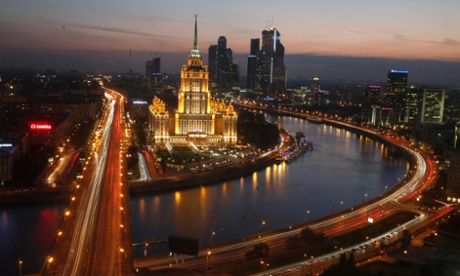
Moscow’s night owls (and rabbits)
“A time of romance and a time of fear, a time of sleeplessness and a time of vice: the night means many things to many people,” writes Maryam Omidi. But who are the people that stay up all night? A two-part feature on Moscow’s nocturnal citizens in the Calvert Journal this week introduces us to a graffiti artist, horse rider, florist, social worker, cab driver and bouncer – among others.
“We get the emos, the goths and others who we call the ‘night freaks’,” a 24-hour bookshop owner says of his nocturnal clientele. “One time this guy in a rabbit costume came in, headed straight to the psychology section and started taking selfies of himself. Then he just ran away.”
Homeless shelters in Seattle
In Seattle, young students have spent the last few months working with the residents of Nickelsville, a homeless community which moves around the city looking for available land, to help improve their living conditions. As Adele Peters writes in Fast Co Exist, the teenagers – from the Seattle Youth Violence Prevention Initiative – have collaborated with volunteers from a local architecture practice to come up with designs for mobile, insulated, tiny houses for the community, as part of a project led by the local youth skills-building organisation, Sawhorse Revolution. The project’s leader, Sarah Smith, explains that design allows the city’s young people to engage with homelessness in a practical, hands-on way.