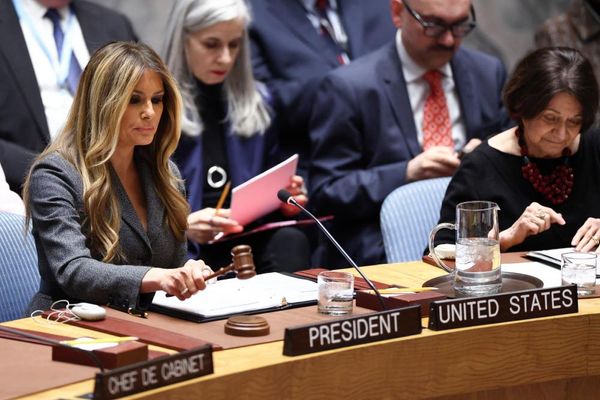
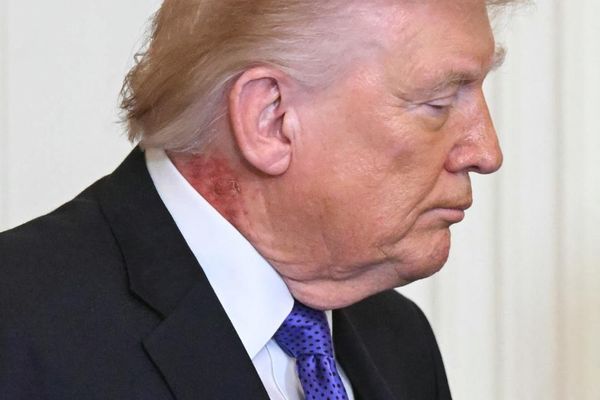
Just as trauma is said to turn hair grey overnight, the election has abruptly aged the Conservative party. Theresa May and her ministers are not physically altered, but their whole enterprise feels more decrepit than it did just a month ago.
This partly reflects exposure of the Tories’ extraordinary reliance on older voters. Labour finished the campaign ahead with every age cohort under 50, and won among under-40s by a country mile. In demographic terms, May’s party has a stronger purchase on the past than the future.
But there is also a sudden intellectual haggardness to the May project. On her accession last year, the prime minister acted as if the European referendum had reset the political clocks. The ruthlessness with which May dismantled the Cameron regime, sacking its officers and shredding its policies, indicated her belief that 23 June 2016 was day one of a revolutionary Brexit calendar.
But the public did not forget that the Conservatives have been in power for seven years. Some Tory MPs hardly count the first five, believing them contaminated by coalition with Liberal Democrats. But that hankering for ideological purity was one obstacle to understanding quite how many voters feel ground down by austerity and demoralised by visible decay of the public realm.
If the point was not adequately made by the loss of a parliamentary majority, it was driven home by the Grenfell Tower fire and its harrowing aftermath. May is on the hook for the full legacy of Tory neglect. She is discovering, as Gordon Brown did when taking over from Tony Blair, that it is hard to signal a clean break from a government in which you have served at the highest level.
May’s fate also resembles Brown’s in the speed with which a reputation for competence was lost and the precipitous decline from respect to ridicule that followed. Her stiff reserve, once positively interpreted as seriousness of purpose, has become a caricature of icy insensitivity.
Whether that is a fair judgment has little bearing on May’s future, since most Tory MPs have decided that her good name is irretrievably lost. The succession race has not formally begun, but the limbering up is well under way.
May remains in office for now because rival factions in her party have their various reasons for keeping her there. All recognise that there is no public appetite for a self-indulgent contest that would necessarily halt the business of government. All worry, too, that a mishandled transition might trigger some chain reaction of events resulting in another general election and Jeremy Corbyn seizing Downing Street.
Radical Brexiteers are wary of new leadership for fear of reopening avenues of European integration that they hoped the election would seal forever. Philip Hammond’s speech at the Mansion House today, underlining the need for transitional arrangements to avoid sudden rupture, will heighten suspicion that the scattered forces of remain are mustering once more.
Brexit-softening Tory moderates have the opposite concern: leadership bids pitched at the party faithful would ignore the anxiety of voters who abandoned May precisely because of her uncompromising, Ukip-infused rhetoric on all things European.
There is also a theory that a caretaker leader whom no one expects to stand again might as well soak up some of the public anger that would otherwise damage her replacement. It is better, in this view, to let May hobble on through a gruelling year or two and, when the outline of a Brexit settlement is clearer, present the electorate with a fresher candidate.
Then there are MPs who cannot countenance a contest that Boris Johnson has any prospect of winning. The foreign secretary’s suitability for the top job is not as widely recognised as his vanity lets him imagine, but there is a clan in parliament that believes in his unique powers of electoral magnetism. He is the Tory who won the mayoralty in Labour-heavy London. Twice.
Both sides in last year’s referendum campaign say Johnson’s endorsement added a percentage point or two to the leave tally. His supporters say there is no one else on the Conservative benches with star quality sufficient to win back a restless audience drifting away from the gloomy Tory show.
The counter-argument is that the “Boris” brand of stagey charisma belongs to a different, less dangerous age. Johnson would be the unserious candidate for serious times. His ribald comedy statesman act – equal parts Silvio Berlusconi and Sir Toby Belch – is dated. The election exposed mistrust in the Tories’ capacity for caring and their motive in pursuing Brexit at any price. It is doubtful that the remedy is a leader who cares about nothing more than his own ambition, and who backed Brexit only to serve that purpose.
Sensible Tories, alert to the hazards of a chaotic Brexit and to the political ruin awaiting a party that relishes chaos, see Johnson as a relic. He embodies an old-school Tory ethos of cavalier entitlement, government by essay crisis and parlour-game bluff. It is an attitude that May despised in Cameron’s ruling clique. To the extent that there is any loyalty left to the current leader among Tory MPs, it is strongest among those who want her to stick around long enough for younger MPs to gain some prominence; long enough to launder Conservative culture in generational change; long enough to avoid the grotesque spectacle of David Davis, Philip Hammond and Boris Johnson cavorting in a competition to be the most modern dinosaur on the dance floor.
The moderates look on in envy at the relative rehabilitation of the party’s image in Scotland, effected by Ruth Davidson. But Davidson is liberal and pro-European. Those traits are not unusual for her generation – she is 38 years old. They are also values to which English Toryism under Theresa May has come to look hostile.
The election has triggered a leadership crisis for the Conservatives, but it has also exposed a deeper generational weakness: the Tories can enact the Brexit they have promised to their current supporters, or they can appeal to different, younger audience. They can have continuity or renewal, defending their past or defining the future. They can’t have both.