Big Sean’s latest single, I Don’t Fuck With You, is No 1 on Billboard’s R&B/hip-hop chart. Its first half is unremarkable – a slightly misogynist breakup song with an earworm beat that was originally intended for Justin Bieber. But then E-40’s guest verse kicks in. As is usually the case when he raps, his breath control, tone, lyrics, and tempo are spot on. He’s ridiculously fast, but you can still understand what he’s saying, and it’s substantive. That he leaves Big Sean in the dust isn’t news; he leaves everyone in the dust. But here’s the kicker: E-40 is 47.
Some of hip-hop’s biggest, most influential names are middle-aged, including Dr Dre (49), Jay Z (45), TECH N9NE (43), Snoop Dogg (43), Eminem (42), Big Boi (40 next month), and Wu-Tang Clan (over 350, combined). The genre is now in its fifth decade, and the people who liked it when they were in school haven’t abandoned it. In fact, middle-aged fans are hungry for it, as evidenced by the rise of the classic hip-hop format on radio – rap oldies, analogous to the classic rock format – that have been pioneered by the new incarnation of Los Angeles station KDAY. The New York Times calls it “one of radio’s first format rushes in years.”
Many rappers are paranoid about their age. Jay Z famously declared “30’s the new 20” when he was 36. Eminem, Nicki Minaj, Nelly, and many other MCs have lied about their age to reporters, while one St Louis rapper whose age I inquired about a few years ago asked, with a straight face, if I wanted his real age or his “Hollywood age.” Such factual sleight of hand is understandable, considering hip-hop’s longtime obsession with youth. In recent years, rappers like Bobby Shmurda, Chief Keef and Vince Staples have generated substantial buzz while they were still teenagers. (Staples said he has no plans to be rapping at age 40).
Rock’s transition to suburban weekend warrior soundtrack wasn’t exactly smooth. For example, as the Rolling Stones turned from counter-cultural rebels to an ungodly wealthy touring act, they were the subject of endless “dinosaur” bits. But those jokes have largely died down, and the Rolling Stones remain an obscenely hot ticket. Bob Dylan and Paul Simon, meanwhile, are just two examples of singer-songwriters who released classic albums decades after their heyday. Yes, hip-hop sprang up alongside youth-focused art forms like b-boy dancing and graffiti, but that doesn’t mean it’s a youth-only genre. At its heart it tends to speak toward struggle – internal, societal, romantic – which makes it similar to the blues, a genre in which the average touring musician is an octogenarian.
It’s understandable that rap fans with mortgages don’t necessarily want to hear songs about picking up women in clubs anymore. But hip-hop has evolved along with its fans. Jay Z has very self-consciously taken on more adult themes over the years, while Eminem’s (not always successful) attempts to grow up have happened before our eyes. Rap music is a broad church, which is why, even as young performers keep it fresh, innovative and vital, older artists move in the direction of venerated elder statesmen. Who’s to say that rappers don’t simply get better as they push toward 50, or even 60 or 70? It’s not so much that rappers can’t be old, it’s just that it’s never been tested.
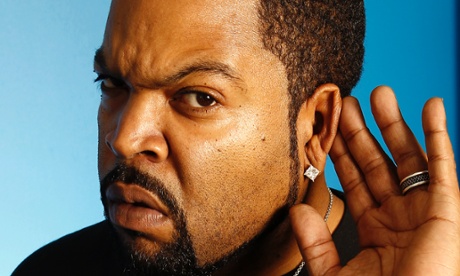
The sky’s the limit, agreed Ice Cube when I talked to him a couple years ago. He’s now 45, and said he would have no problem as a lounge act someday. “I’d be the one to test it,” he said. “I’d give you tickets for the show in Vegas.”