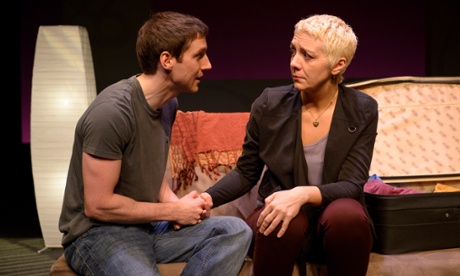
Actor-turned-playwright David Ireland has been carving out a niche as a kind of potty-mouthed Richard Curtis. His specialism is the domestic romcom; his preferred setting a living room where insecure characters misconstrue each other over the furniture. In this respect, his model is the classic comedy of manners, except that rather than social niceties, his preoccupations are with the murkier end of human behaviour: religious prejudice, racism, sexual deviation . . . if there’s a taboo, Ireland is all too willing to break it.
In some of his work, this tendency has led to the needlessly vulgar, but in this co-production between the Tron and Belfast’s Lyric, he successfully laces a shallow boy-meets-girl narrative with a sharp insight into the generational conflicts of a post-Troubles Northern Ireland. It’s rude, ribald and, in Conleth Hill’s well-acted production, raucously funny.
At issue is the socially unseemly age difference between Declan Rodgers’s 25-year-old Stevie and Karen Dunbar’s 49-year-old Martha after they meet in a Belfast Starbucks (she reading a book about bereavement, he a study of the Holocaust) and experience an immediate sexual attraction.
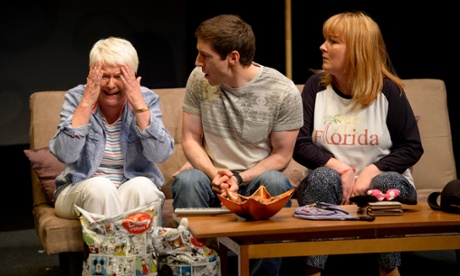
For the other women in Stevie’s life, this relationship creates a terrible tension. Abigail McGibbon as big sister Rebecca and Carol Moore as mother Dorothy are delighted Stevie has found a nominally Protestant partner from Glasgow – a step up from his Irish Catholic ex – but they can’t reconcile themselves to a woman who fulfils none of their expectations about what such a girlfriend should be. She is neither the romanticised figure of cultural purity imagined by an Ulster Scot nor the young would-be wife imagined by a doting mother.
We don’t see enough of the central couple’s chemistry to make us fall in love with them ourselves, and the story has a rather too easy happy ending, but there’s plenty of great observational comedy along the way.
-
At Tron, Glasgow, until 25 July. Box office: 0141-552 4267