Sometimes, factors like age, past injury, or personal comfort can prevent my personal training clients from getting onto the floor for traditional core exercises. Fortunately, there are plenty of ways to build strength in the core while staying upright.
In fact, incorporating standing core exercises into your routine is important even if you are able to do moves like sit-ups, crunches, or planks. Since we don’t do a lot of everyday movement while lying down, training the abs while standing builds functional strength that translates into easier walks, faster runs, steadier squats, and a more stable body overall.
These are my four favorite standing core exercises that I give to nearly all of my clients. They’ve also got a place in my own core routine. If you’ve got a dumbbell, you can give them a try too.
How to do the 4 standing core exercises
Get clearance from your medical team before trying this workout. Be sure to execute each exercise with proper form. If you’re a beginner, consider meeting with a certified personal trainer for guidance on these moves. A good trainer can provide form corrections, modifications, and progressions specific to you and your body.
You’ll need one moderately-heavy dumbbell for these exercises. You should be able to complete at least 10 reps with good form before resting. If you aren’t able to do that, switch to a lighter weight. If you can complete more than 15 reps without feeling fatigued, choose a heavier weight.
Perform 10-15 reps of each exercise for 2-3 sets, resting briefly between each set. Core exercises are generally safe to do daily, but start off by doing this workout 3-4 times a week. Gradually add days as your strength improves. You can also add sets and reps to make the workout more challenging.
The exercises are:
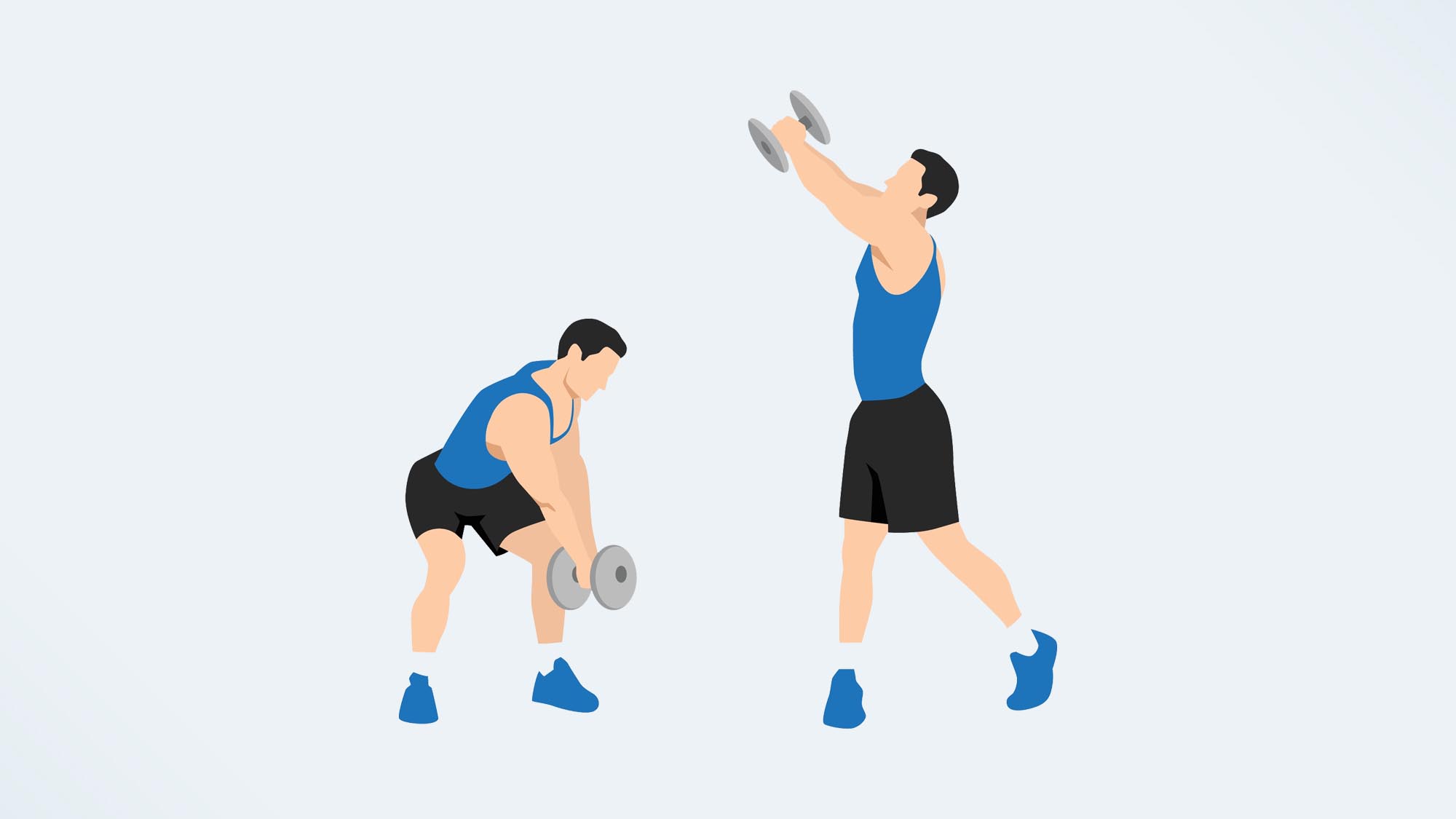
1. Dumbbell reverse woodchop
- Stand tall with your feet hip-width apart.
- Hold a dumbbell by the center handle with your two hands.
- Bend your knees slightly.
- Engage your core.
- Bring the dumbbell to your right hip.
- With control, swing the dumbbell towards your right shoulder.
- Bring the dumbbell back to your right hip.
- Continue for 10-15 reps, then repeat on the other side.
2. Weighted marches
- Stand tall with your feet hip-width apart.
- Hold a dumbbell in your right hand.
- Engage your core.
- Bring the dumbbell to your shoulder and press it towards the ceiling.
- Lift your left leg to a 90-degree angle.
- Pause briefly.
- Lower your left foot back down to the floor.
- Lift your right leg to a 90-degree angle.
- Pause briefly.
- Lower your right foot back down to the floor.
- Continue marching for 10-15 reps per side.
3. Dumbbell halos
- Stand tall with your feet hip-width apart.
- Hold a dumbbell between your two hands.
- Engage your core.
- Bring the dumbbell towards your right shoulder.
- Circle the dumbbell behind your head, bringing it to the left shoulder.
- Bring the dumbbell to your chest.
- Circle the dumbbell behind your head in the opposite direction, bringing it back to the right shoulder and chest.
- Continue alternating between the two sides for 10-15 reps per direction.
4. Dumbbell Pallof Press
- Stand tall with your feet hip-width apart.
- Engage your core.
- Hold a dumbbell by the center handle with your two hands.
- Bring the dumbbell to chest level.
- Extend your arms in front of you, keeping the dumbbell aligned with your chest.
- Pause briefly.
- Bring the dumbbell back towards your body.
- Continue for 10-15 reps.
Benefits of the 4 standing core exercises
These moves take core work off the ground, making them more accessible for seniors and those with mobility issues. They all address deep core strength and target the transverse abdominis, internal obliques, and pelvic floor muscles. They also work more surface-level muscles in the core, like the rectus abdominis and external obliques.
Since the exercises all strengthen the core in a standing position, they more closely resemble everyday movement and activity. The reverse woodchop trains the core for rotational power, while the halo and pallof press train the core to resist rotational forces and keep the body stable.
The weighted marches also train the core for full body support, including a balance element that adds an extra challenge for deep core stabilizing muscles. Since balance is a chief concern among older adults, this is an especially helpful exercise for anyone approaching their senior years.
More from Tom's Guide
- Not sit-ups, planks, or crunches: I do this simple Pilates exercise every single day to build a strong and stable core and work on my hip flexor mobility
- Not sit-ups or lunges — I use this simple Pilates exercise to sculpt strong obliques, inner thighs and hip stabilizers
- 'I’m a Pilates instructor, and I recommend these 5 core exercises to help older clients build strength and improve posture'