Often, I am asked: can you teach social entrepreneurship? I think what people mean when they ask me this is: can you give future entrepreneurs their business ideas? Can you teach light bulbs? Of course not.
If someone doesn't have the ambition, curiosity and unrelenting need to get to the metaphorical "there" (wherever there is for them), of course, we as educators cannot help. To some extent, this is why globally higher education programmes for social entrepreneurship remain few and far between. It's not for everybody.
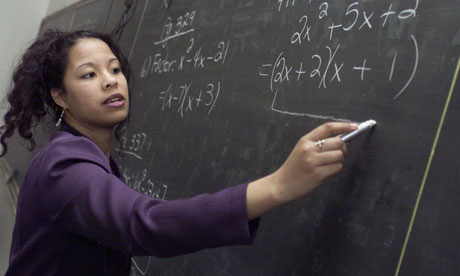
What we can teach are tangible skills – how to analyse the environment around you for opportunities – political and economic ones. We can teach business planning, financial literacy and how to measure your social and environmental impact. We can expose students to critical theories, as well as how to use notions of precariousness and being on the outside as places of power.
I am in the last week of the admissions process for our new MA in social entrepreneurship at Goldsmiths. I have a learned a lot, and I'm generally the sort of person who thinks I know it all.
I took up my new post as director of the MA late in this year's recruiting season. With universities under unprecedented financial pressure, I had literally zero to spend on marketing our new programme.
I did what I could to harness the power of the UK's established social enterprise network to get the word out. And I had help from my friends at Social Enterprise London, the Social Enterprise Coalition and the Social Enterprise Magazine. There was also tremendous support from my academic and research colleagues, notably professor Fergus Lyon at the Third Sector Research Centre, professor Alex Murdock at London South Bank University, and Alex Nicholls from the Said School of Business, University of Oxford.
Now for the astounding results: we've had more than 60 applications from almost 20 countries including Russia, Saudi Arabia, India, Thailand, China, Japan, Colombia, Nigeria, Uganda, US, Mexico, Sweden, Ireland, France, Germany, Spain, and Portugal, and of course, Britain. The youngest student to receive an offer is 23 and the oldest is 45.
Over a quarter of applicants have started new social enterprises. And they come from all sectors. Applicants have worked for places such as IBM, Unilever, BBC and Oxfam. It's left me with a tremendous feeling of hope for what's to come, and gratitude for the collective effort of those across the social enterprise sector.
Alibeth Somers is a lecturer is social entrepreneurship and director if the MA in Social Entrepreneurship at the Institute of Creative and Cultural Entrepreneurship, Goldsmiths College
This content is brought to you by Guardian Professional. To join the social enterprise network, click here.