Does the snoring sound different tonight? Loud, irregular, punctuated by unsettling silences. Maybe you've woken yourself up gasping for air, or your partner has nudged you awake countless times. These nighttime disturbances could be warning signs of something far more serious than poor sleep.
Sleep apnea does far more than disrupt your rest – it directly threatens your cardiovascular health, leading to hypertension, heart failure, stroke, and life-threatening arrhythmias.
Proper diagnosis and sleep apnea treatment can reduce these cardiac risks substantially.
How Does Sleep Apnea Affect Your Heart?
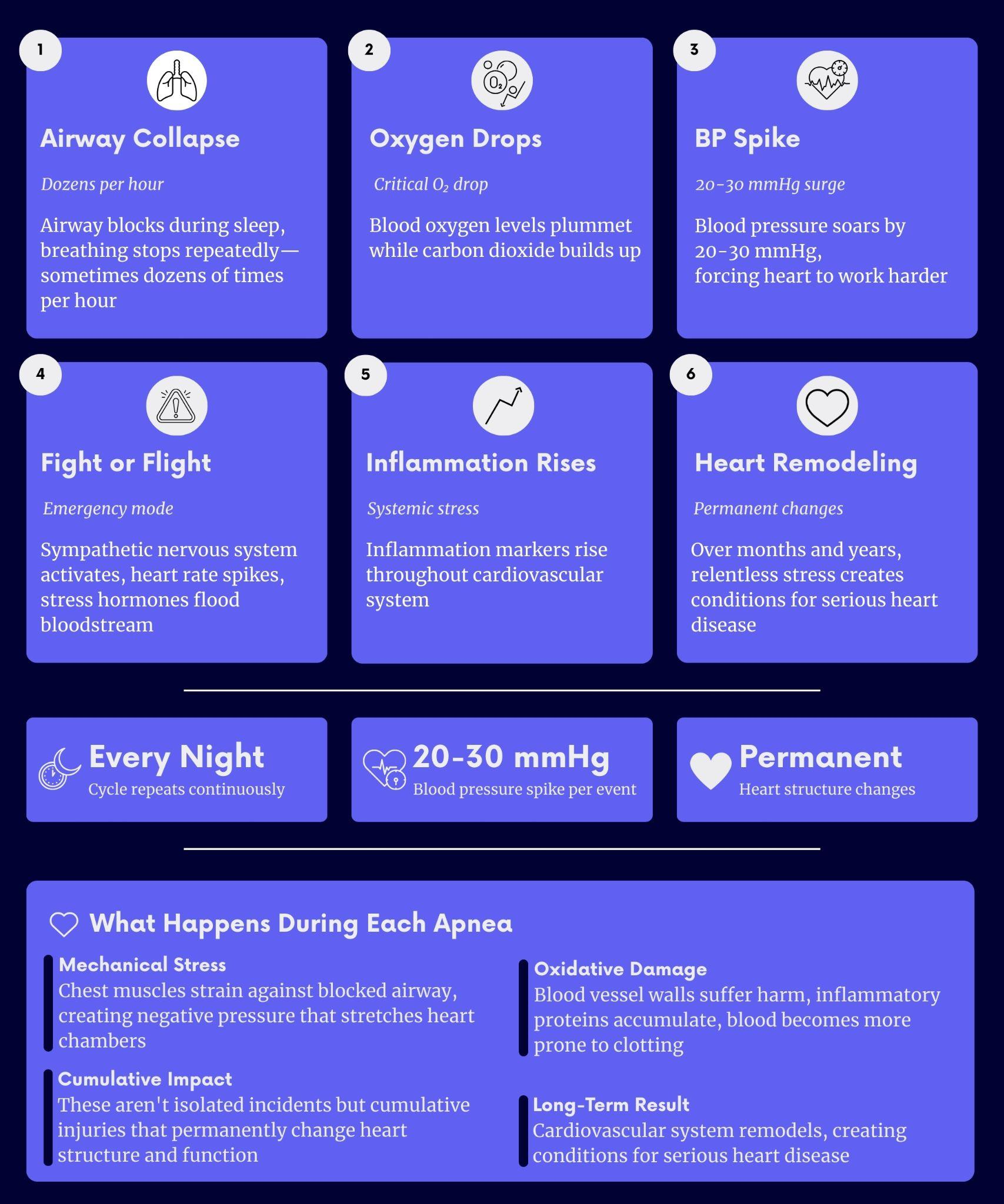
Sleep apnea creates a nightly assault on your cardiovascular system. When your airway collapses during sleep, breathing stops repeatedly, sometimes dozens of times per hour. Blood oxygen levels plummet while carbon dioxide builds up, triggering an emergency response that jolts your body awake just enough to resume breathing. Each episode sends blood pressure soaring by 20-30 mmHg, forcing your heart to work harder precisely when it should be resting.
This cycle activates your sympathetic nervous system – your body's "fight or flight" response. Heart rate spikes, stress hormones flood your bloodstream, and inflammation markers rise. Over months and years, this relentless stress remodels your cardiovascular system, creating conditions for serious heart disease.
What Happens to Your Heart During an Apnea Event?
During each breathing pause, your chest muscles strain against a blocked airway, creating negative pressure inside your chest cavity. This puts direct mechanical stress on your heart, stretching chambers, and affecting blood flow efficiency. Meanwhile, oxygen deprivation triggers a cascade of damage – oxidative stress harms blood vessel walls, inflammatory proteins accumulate, and your blood becomes more prone to clotting.
Which Heart Conditions Are Linked to Sleep Apnea?
Sleep apnea sharply raises your risk for multiple cardiovascular conditions. Research has established clear connections between untreated sleep apnea and some of the most common and dangerous heart problems affecting adults today.
Can Sleep Apnea Cause High Blood Pressure?
Absolutely. More than 50% of people with obstructive sleep apnea have hypertension, and 30-50% of people with high blood pressure also have sleep apnea. Medical experts recognize sleep apnea as a primary identifiable trigger for hypertension.
Sleep apnea-related hypertension is particularly concerning because it resists standard treatments. Approximately 75% of people with treatment-resistant hypertension have underlying sleep apnea. Most people's blood pressure naturally dips during sleep, but sleep apnea patients experience the opposite. Repeated spikes throughout the night, eliminating the cardiovascular recovery period their hearts need.
Does Sleep Apnea Increase Atrial Fibrillation Risk?
People with sleep apnea face two to four times the risk of atrial fibrillation compared to those without the condition. AFib, characterized by rapid, irregular heartbeats in the heart's upper chambers, affects an estimated 6 million Americans (projected to reach 12 million by 2030).
Repeated oxygen drops and pressure changes during apnea episodes cause the heart's upper chambers to stretch and remodel, creating an environment where abnormal electrical signals trigger irregular heartbeats. Studies show patients with untreated sleep apnea have much higher AFib recurrence rates, but treating sleep apnea alongside AFib substantially improves outcomes.
What's the Connection Between Sleep Apnea and Heart Failure?
Sleep apnea increases heart failure risk by 140%. The strain is particularly hard on the right side of your heart, which must pump blood through your lungs. When airways collapse repeatedly, your heart works overtime, circulating blood through oxygen-deprived tissues. Over time, this weakens the heart muscle and reduces pumping efficiency.
50-75% of people with heart failure also have sleep apnea, though many cases remain undiagnosed. Central sleep apnea, where the brain temporarily fails to signal breathing muscles, is especially common in heart failure patients.
Can Sleep Apnea Lead to Stroke?
Sleep apnea more than doubles stroke risk, with some studies showing hazard ratios as high as 2.5 for ischemic stroke. A landmark 20-year study found people with moderate to severe sleep apnea were 3.7 times more likely to suffer a stroke, even after adjusting for obesity, smoking, and cholesterol. Research specifically examining men shows a three-fold increase in stroke risk for those with moderate to severe sleep apnea.
The risk doesn't end with the first event. Research shows 70% of stroke survivors have sleep apnea, far higher than the 30% prevalence in the general population. Untreated sleep apnea after stroke increases the risk of recurrent stroke, longer hospitalizations, and poorer functional recovery.
Who's at Greatest Risk for Sleep Apnea-Related Heart Problems?
Age amplifies sleep apnea's cardiovascular effects. Sleep apnea can affect people at any age, but the sleep apnea-heart disease connection is strongest in people under 60. Younger patients show more pronounced associations between breathing disruptions and hypertension onset, suggesting earlier intervention could prevent decades of cumulative cardiac damage.
Between 60-90% of people with sleep apnea are obese, but you don't need to be overweight to have the condition or its cardiac complications. Men tend to experience sleep apnea earlier in life; women's risk increases sharply after menopause. People with existing cardiovascular conditions face compounding risks. The difference between treated and untreated sleep apnea is stark. Every month of treatment adherence reduces stroke risk by approximately 2%.
What Should You Do If You Suspect Sleep Apnea?
If you recognize the warning signs – loud snoring, gasping during sleep, morning headaches, or persistent daytime exhaustion – schedule an evaluation with a healthcare provider experienced in sleep disorders. These symptoms are your body's warning system alerting you to a condition requiring medical attention.
Professional diagnosis involves a sleep study measuring breathing patterns, oxygen levels, heart rate, and brain activity during sleep. These studies can be conducted at sleep centers or in your own home using portable monitoring equipment.
Sleep apnea treatment options have expanded considerably. Continuous positive airway pressure (CPAP) therapy remains highly effective, and alternative treatments now exist for those who can't tolerate CPAP. Options include oral appliances that reposition the jaw, surgical interventions, and newer neurostimulation therapies that work with your body's natural breathing mechanisms.
Protect Your Heart by Treating Sleep Apnea
Sleep apnea represents a modifiable cardiovascular risk factor. You can take action to reduce its impact on your heart health. The connection between sleep apnea and heart disease is too serious to ignore, but also too treatable to accept as inevitable. If nighttime symptoms sound familiar, or if you've been diagnosed with hypertension, AFib, or other cardiac conditions without a clear cause, consider sleep apnea evaluation as part of your cardiac care.
Addressing sleep apnea gives your heart the recovery time it needs to keep you healthy for years to come.