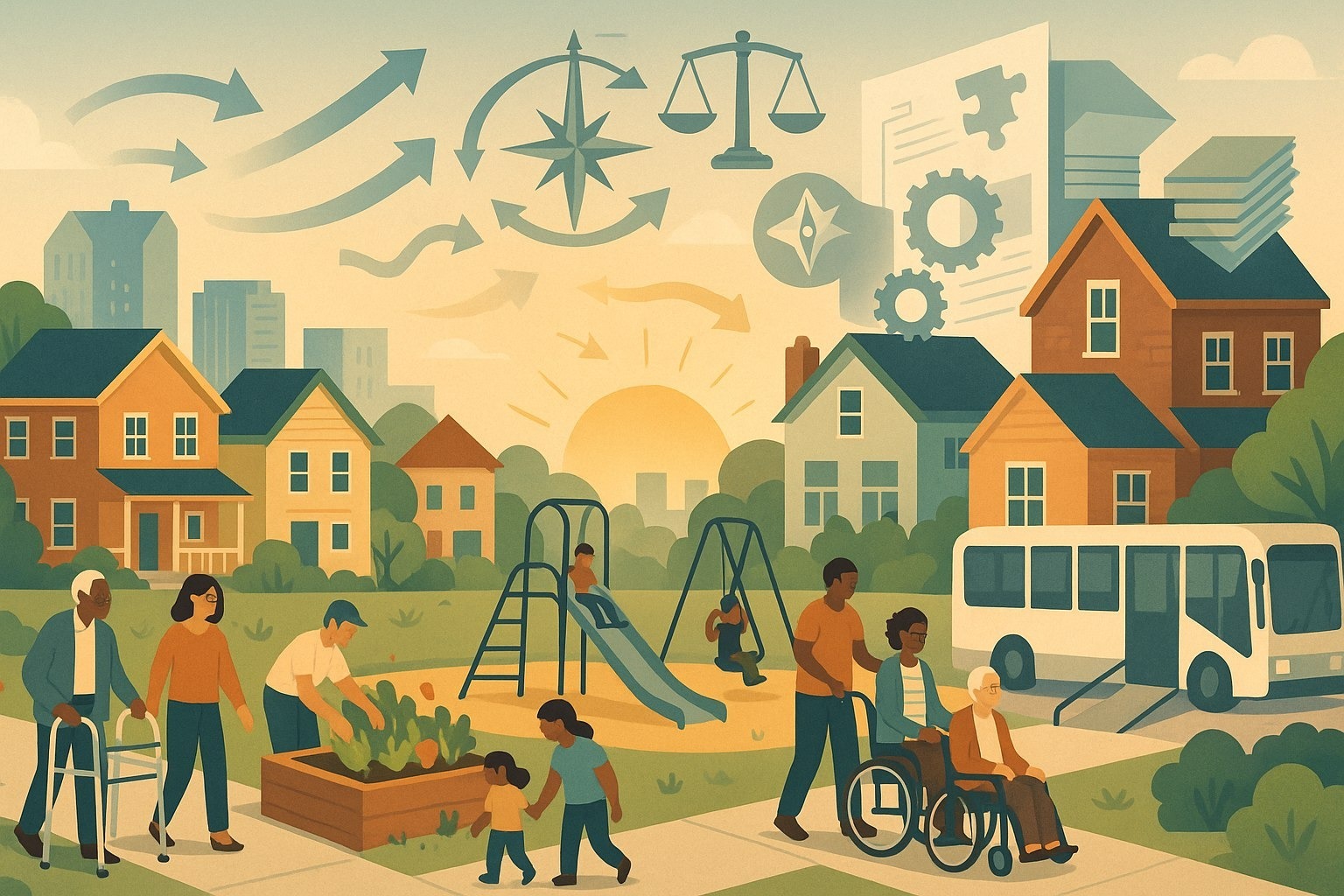
You have likely been feeling it lately in the big city when walking down the street. The pavements appear a bit overcrowded, the skyline is full of cranes like never before, and the dinner party discussion always revolves around the same thing: rent.
A huge change in the way we occupy our cities is taking place. It is not only about increasing prices—although that is the most vocal part of the discussion—but about a fundamental shift in the density and demographic composition of our cities. With growing numbers of people rushing to cities in pursuit of employment, culture, and community, the strain on our already limited housing resources is reaching a boiling point.
Yet here is the great question keeping urban planners up at night: Can our cities really sustain this change? Are we creating a better working future, or are we simply stuffing even more people into systems created in another time?
The Weight on Our Streets
When talking about the housing crisis, we tend to imagine apartment buildings and zoning regulations. However, there is another layer to this issue sitting just under our feet.
Not all new high-rise buildings are vertical neighborhoods, but they are an enormous strain on city plumbing, electricity supply, and transportation systems. Most of our favorite cities are running on infrastructure constructed fifty or even a hundred years ago. They were not designed to handle as many people as we have today.
This leads to the ugly truth about the modernization of a living, breathing city. It is not as easy as merely digging a hole and dropping in a larger pipe. The logistics involved in upgrading utilities in a crowded neighborhood are complex. The magnitude of the civil construction work required to modernize our old water and sewage systems is overwhelming; it may take years of phased construction that disrupts traffic and daily life. But without this invisible support system, even the most beautiful new housing developments will fail.
The Density Dilemma: Up vs. Out
Therefore, when infrastructure is stretched, why not simply spread out?
In past decades, sprawl was the solution. We developed further and further out of the city center, forming suburbs where every errand demands a car. However, we now know how environmentally disastrous and socially isolating sprawl has turned out to be. It consumes natural habitats and locks us into a high-carbon lifestyle.
The trend we are experiencing today is a return to basics. When done correctly, we are discovering that density is the most sustainable manner of living. It permits improved transit, increases walking, and decreases the carbon footprint per person. The difficulty lies in doing density well. It is about abandoning the "concrete jungle" stereotype and entering into "green density," where vertical gardens, rooftop parks, and clever design give high-density living an aura of airiness and humanism.
Rethinking the "Home"
It is the change in place, perhaps, but the change in lifestyle that is the most interesting. The classical vision of the nuclear family in a detached house or a private flat does not suit everybody anymore. There are more single-person households, digital nomads, and an aging population facing an epidemic of loneliness.
This discrepancy between housing stock and lifestyle has spawned a new wave of innovation. There is a shift towards access rather than ownership of housing, just as we have come to think of music or transport.
This is where the notion of community-based living comes in. Co-living spaces are increasing dramatically as a remedy to loneliness and affordability issues. They provide residents with private bedrooms alongside high-quality communal kitchens, lounges, and workspaces. These are not merely adult-friendly dorm rooms, but carefully crafted communities that help people connect in a world that is becoming increasingly isolating. Resource sharing ensures residents have access to better amenities than they could afford individually, while simultaneously minimizing their impact on the environment.
Smart Creation instead of Hard Creation
Our cities must become smarter to manage this transition. It will not be possible to build our way out of this crisis with just concrete and steel; we must get ahead through technology and policy.
Cities like Rotterdam and Singapore are already ahead of the pack with climate-resilient architecture, where buildings can resist floods and heatwaves while generating their own energy. We are witnessing the emergence of the "15-minute city," in which urban design ensures that all amenities a resident requires are accessible within a 15-minute walk or bike ride.
This will take a shift in attitude. We need zoning regulations that permit mixed-use neighborhoods (so your coffee shop is down the block, not a drive away) and adaptive reuse rules that enable us to transform vacant office buildings into lively homes.
The Path Forward
Therefore, can the present shift be sustained?
The honest answer is: not yet. But it can be.
As long as we keep doing business as usual—ignoring the pressure on infrastructure and constructing isolated boxes in the sky—our cities will collapse under the pressure. Nonetheless, with a lean toward the innovation that this crisis is compelling us to undertake, we stand a chance of creating something better.
We can build cities not as workhouses, but as living ecosystems where connection, sustainability, and quality of life come first. It will take time to handle the construction, to be open to new modes of living, and to expect our leaders to do a better job of planning.