When multiple champion Garry Kasparov played first-time finalist Nigel Short in the 1993 World Chess Championship match, the Russian was expected to crush the Briton and he did it.
If joint world No. 1s Viswanathan Anand or Vladimir Karmnik had faced the then world No. 5 Peter Svidler in the title match in 2008, Anand or Kramnik would have been overwhelming favourites.
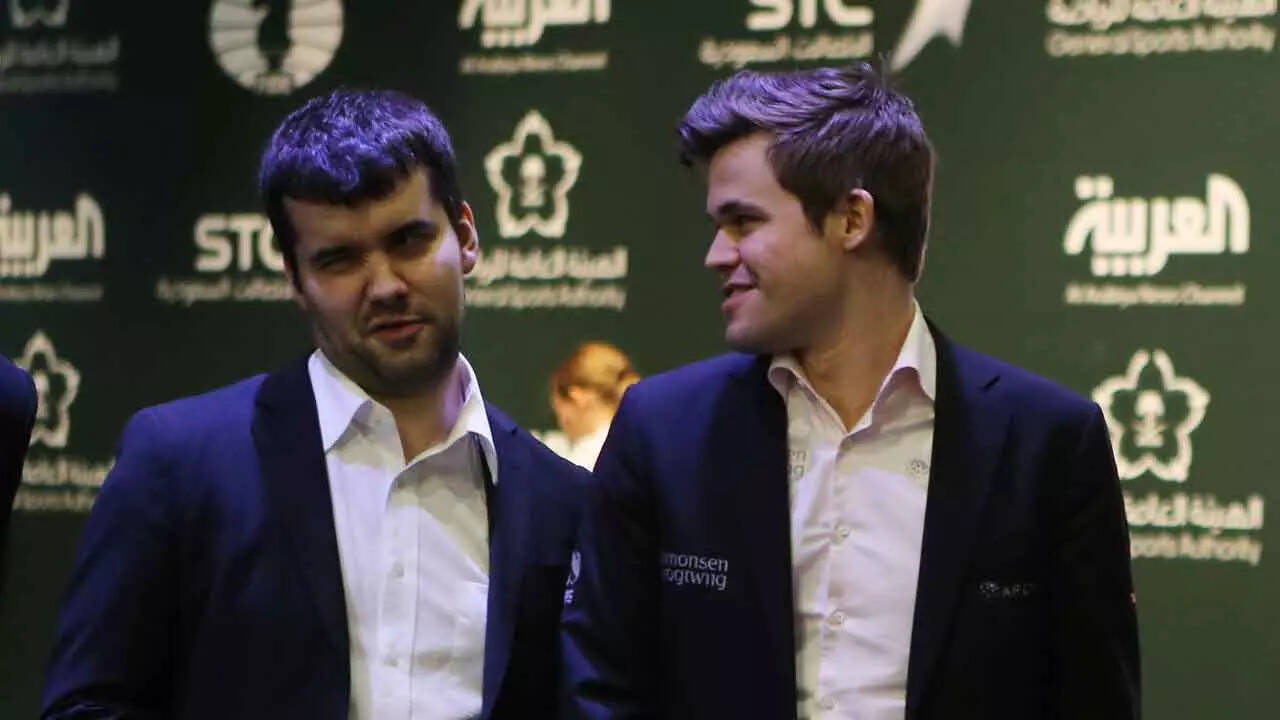
However, when multiple and reigning champion Magnus Carlsen (Elo 2855) faces first-time finalist and world No. 5 Ian ‘Nepo’ Nepomniachtchi (Elo 2782) in their 14-game title match starting in Dubai from Friday, the Norwegian is not a favourite by huge margin.
That also partially explains the evolution of chess. The difference of Elo 73 between them is not considered too much now; but the difference of Elo 36 between Anand/Kramnik (2799) and Svidler (2763) was significant then. Carlsen’s unconvincing wins in the last two matches — both times needing rapid tiebreaks — have also contributed to his waning odds.
The Covid-19 situation has also added new dimensions to this match. For, the two contestants have not played many over-the-board tournaments in two years and online games of shorter time controls have forced them to re-examine their beliefs about certain lines and variations. They will have to adjust from ‘behind the curtains’ T20 to an in-person Test match zone.
During a pre-match press conference, Carlsen said, “As a player you are trying to find ideas everywhere. Now, there are some blitz games that are ‘polluting’ the database, but you can’t really avoid (looking at) them.”
It’s unclear if this data explosion and the addition of a neural network in the chess algorithm will give chess fans more open and dynamic positions than the Carlsen-Karjakin match in 2016.
Those who want Carlsen being dethroned from the perch after his eight-year reign believe that Nepo’s association with Carlsen’s preparations will play a role like it did when Kramnik and Carlsen outplayed Kasparov (2000) and Anand (2013) respectively.