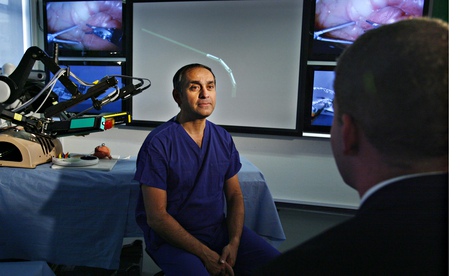
London’s healthcare consumes around a fifth of the NHS budget for England. On Wednesday, at the behest of mayor Boris Johnson, eminent surgeon Lord Darzi launched his second plan in seven years for wholesale reform of the city’s health systems.
London’s NHS is a patchwork of brilliance and failure; loss-making hospitals with seemingly intractable care quality problems sit alongside trusts providing some of the finest specialist care in the world. Networks of GPs achieving extraordinary results in some of the poorest communities in Britain work down the road from practices with a single GP that should not be part of 21st-century healthcare.
Seven years ago Darzi published his Framework for Action, commissioned by NHS London. Then, his plan for moving substantial care from hospitals to GP-led polyclinics was largely thwarted by GP opposition, but his call for trauma, hyper acute stroke and heart attack services to be centralised in specialist units achieved results that attracted international attention. Moves to rationalise acute services further were blocked by Andrew Lansley when he became health secretary in 2010.
Johnson asked Darzi to lead his London Health Commission to fill a vacuum. The abolition of NHS London has left the capital with no strategic direction and no one with the clout to drive through change. Johnson is attempting to exert influence far beyond his formal powers.
The most striking features of his report – Better Health for London – are the robust action demanded on the root causes of ill health and the strong focus on children rather than older people.
Alongside its widely-reported call for public spaces to be made smoke free, the commission wants a crackdown on tobacco trafficking, mandatory traffic-light labelling on restaurant menus, borough-led piloting of minimum alcohol pricing, and for London to make the case to government for the power to levy “sin taxes”.
The maps of childhood obesity across the capital are terrifying. London has the highest rates of childhood obesity of any comparable global city, and the highest proportion of obese children in all the regions of England. One in three children in year six are overweight or obese. Healthy eating messages in schools are overwhelmed by the temptations of more than 8,000 fast food outlets – with around 800 more opening every year.
More than a quarter of London’s children live below the poverty line, and their life chances are significantly undermined by the age of three. Darzi is pushing for new models of care to support parents of vulnerable young children, a crackdown on junk food outlets and the publication of data on school health and wellbeing. He cites Glasgow and Brighton as examples of cities which are successfully supporting parents in poverty in raising their children.
The biggest difficulty in the report’s recommendations is how to make it all happen. Some of the proposals come close to asking the London region of NHS England to behave as if it was the old strategic health authority. While some form of strategic body is desperately needed, it is far from clear that this is the right solution.
In the long term, the answer must surely be for the London mayor to play a major role in convening and leading reform of the capital’s health system. For now, Darzi recommends the mayor personally leads a group to prepare a delivery plan, and appoints a London health commissioner.
It says a great deal about the clout the post of London mayor has accumulated over the last 14 years that Johnson can now think of leading the capital’s health service without the formal powers. If it shows signs of working, this may well encourage other city leaders, and bodies such as the combined authority for Greater Manchester, to help fill the strategic void in the NHS. The London Health Commission may mark the beginning of an important change.
Are you a member of our online community? Join the Healthcare Professionals Network to receive regular emails and exclusive offers.