The late John Smith once confided that, though he had been engaged in political strife for decades and served in cabinet, all that experience had left him woefully ill-prepared for the relentless exposure he would face as Labour leader, for a brief two years (1992-94), as it turned out.
Chuka Umunna’s career got nowhere near as far as that, before the pressure of 24/7 media scrutiny of his family – far worse than Smith (highly protective of his wife and three teenage daughters) had to endure – forced him to abandon his own bid to lead the party on Friday.
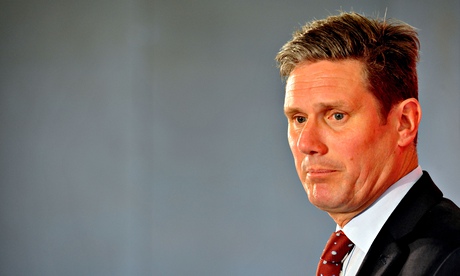
So what about Keir Starmer, newly elected MP for Holborn and St Pancras, whom some desperate Labour activists are trying to draft into the contest as a battle–hardened barrister and ex–director of public prosecutions, with a tough reputation untainted by political failures of the past decade?
Would it be madness to make a man who has been an MP for just a week leader of his party when it faces an unprecedented triple challenge – from the SNP in Scotland, Ukip in northern England and the Tories in the south? Or would it represent a fresh start in a short-termist age, when last year’s Britain’s Got Talent celebrity may be on the scrapheap this year, a has-been at 18?
There was a time when politicians were deemed in their prime at 55, having worked their way up through junior office and hard knocks. The wartime generation, which survived in cabinet until the 80s – Denis Healey, Willie Whitelaw and Lord Carrington – had seen and suffered a good deal more.
All that has now gone. Twentysomething politicians in 2015 have not flown Lancaster bombers or bayoneted a German, let alone dug coal or created a business. Instead they have read PPE at Oxford and been ministerial special advisers. Voters have acquired disdain for “professional politicians” who have what Nigel Farage, a City metal trader, likes to call “no experience of real life”.
Starmer has had a real and distinguished career. But parliament is notorious for being unkind to those who enter it in middle age with an outside reputation. Would that CV and posh knighthood (he received a KCB in 2014) be a handicap or a bonus? How would the controversies of his five-year stint as DPP play among voters who have barely heard of him – let alone of Labour’s first secular saint, Keir Hardie, after whom he was named by progressive parents?
Why not give it a try? As a freshman senator from Illinois, Barack Obama took an outrageously impudent gamble in challenging Hillary Clinton’s political machine for the Democratic nomination in 2008. David Cameron was not the frontrunner to succeed Michael Howard in 2005. William Pitt the Younger was 24 when he first became PM in 1783, but held the job, virtually without a break, until his death in 1806. They were not quiet times.
Nor are our own, with domestic and foreign perils all too obvious in 2015. So the hard–nosed realist’s answer to the “Call Keir” camp will surely be: “Too risky.” As John Smith, himself a criminal lawyer, ruefully discovered, the pressures of the job are far more intrusive than those on a DPP occasionally immersed in controversy.
Most major parties in Britain – the habit is not so pronounced elsewhere – have spoilt potential leaders who were promoted too far, too fast. Neil Kinnock and William Hague are obvious examples, Ed Miliband, too, since last Friday morning’s humbling. Charles Kennedy, Lib Dem leader at 39, dealt with the pressures his own destructive way.
On a practical level, Starmer doesn’t know many people or much that matters in SW1. He could be seen wandering around the Palace of Westminster this week as friendless and lost as most other new MPs. He doesn’t know how the place works, the procedures or the nearest loo.
He’s seen it all on TV – as we all do nowadays – but that’s not the same. The roughest criminal case in Snaresbrook crown court has nothing on a rowdy PMQs, where the noise and confusion are deafening. But law and politics have always been first cousins. He can speak the language.
Yet will he actually be any good as a politician? Does he have common sense as well as intellect, the common touch, which matters, too? Is he fast on his PMQs feet or too reflective? Can he even make a political speech? How good is he with the different skillset required for TV? Is he witty? I’ve heard him once or twice and I’m not sure.
At 52, Starmer is at least a grownup who knows his own mind. Being DPP must be a lonely job, as leadership usually is. Chances are he will decide as a grown-up that it’s too soon; or, as Dan Jarvis, an untainted new broom with a very different CV (a major in the Parachute Regiment), decided: family comes first.
But sometimes a politician, even a novice, thinks he hears the call of destiny and answers it, as Ed Miliband did. “There is a tide in the affairs of men,” Shakespeare has Brutus say, “which, taken at the flood, leads on to fortune.”
It didn’t do either of them much good. Think hard, Sir Keir. There’s plenty of time, and Labour isn’t going anywhere.