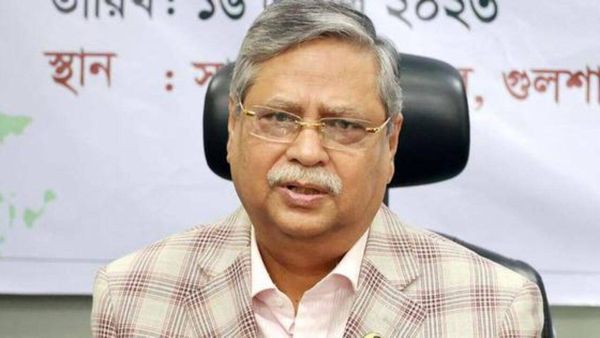
India wrapped up its flagship AI summit in Delhi this weekend with dozens of countries pledging to “democratise” artificial intelligence, an issue Prime Minister Narendra Modi made the front and centre of his pitch to top leaders and tech CEOs.
The agreement caps a week in which India sought not only to showcase its domestic capability in AI and tech but also to position itself as a third option in the global AI race, which has been framed as a contest between Silicon Valley and Beijing.
But experts say it’s hard to quantify just how close the highly anticipated summit has brought India to its actual ambitions.
The New Delhi Declaration, endorsed by 89 countries and international organisations, commits signatories to what it calls the “democratic diffusion” of AI: expanding access, building skills and promoting cooperation rather than concentrating power.
Experts say the declaration highlights AI diplomacy's new focus on access and inclusion, beyond just safety concerns from rapidly advancing AI capabilities.
“The summit placed inclusion at the centre of the AI agenda,” says Heather Dawe, head of responsible AI at UST, an AI and technology transformation solutions company.
“Government officials and tech leaders have delivered a unified message – AI must reflect shared values. That mirrors the (last year's) Paris Declaration’s clear focus on inclusivity and human rights,” she added.
That emphasis shows how far the conversation has shifted since the first UK-hosted summit, which centred heavily on safety and catastrophic risk. Delhi’s edition was explicitly branded around “impact”, with the slogan “AI for all” repeated across sessions and speeches.
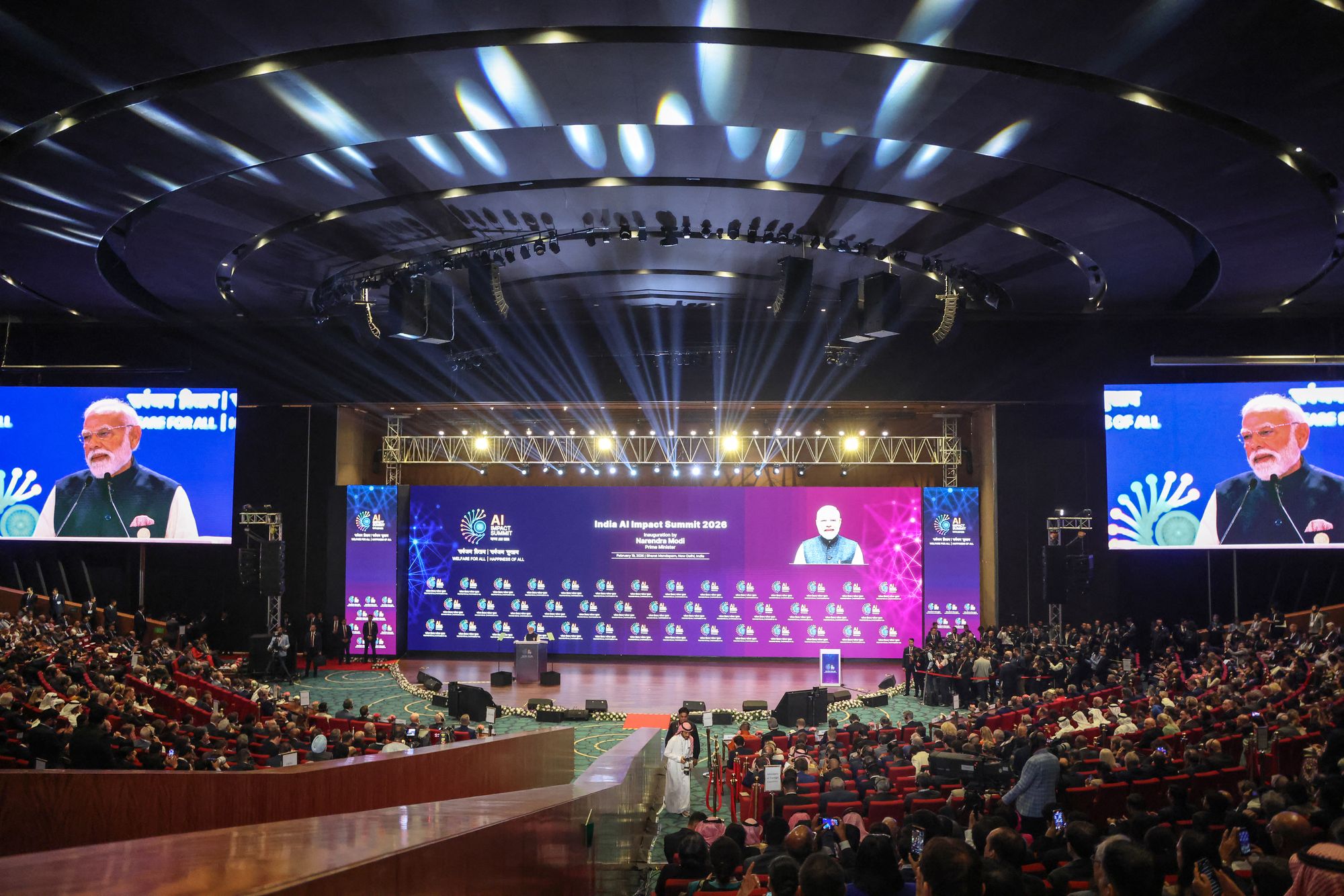
Modi described AI as a “global common good” that “must be democratised” and made “a medium for inclusion and empowerment, especially in the Global South.”
United Nations secretary-general António Guterres backed the call, warning that the future of AI “cannot be decided by a handful of countries or left to the whims of a few billionaires” and insisting that “AI must belong to everyone.”
Technology executives signalled they were open to stronger governance.
OpenAI chief executive Sam Altman called for the creation of an international body, modelled on the International Atomic Energy Agency, for “international coordination of AI”, as he warned rapidly advancing systems could soon be powerful enough to help create new pathogens.
India’s technology minister Ashwini Vaishnaw called the summit a “grand success” and proof of “confidence in India’s role in the new AI age”, citing 20 world leaders, delegates from over 100 countries and more than 250,000 attendees.
The leaders of the two dominant powers in the AI race, Donald Trump and Xi Jinping, were not present at the summit, though they were represented by officials and companies who signed the declaration. The gathering became an opportunity for a push for a third front and reduce dependence on both.
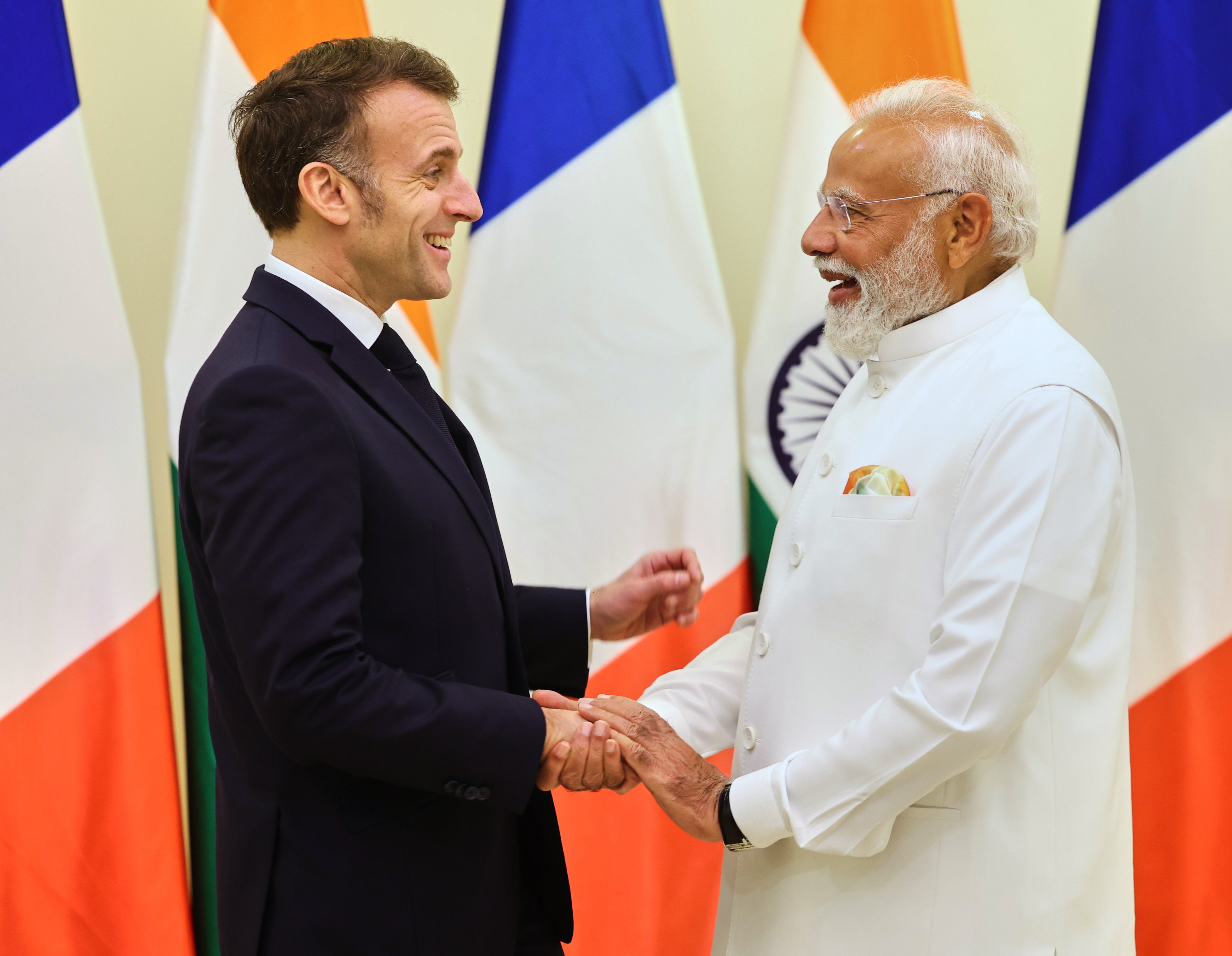
“We don’t want to be dependent on a totally US or totally Chinese model,” French president Emmanuel Macron, who was on a busy two-city trip to India, told the summit. “We really believe that we need a broader one, and we want to be part of the solutions, and we want to have players being part of the solutions,” he added.
Analysts say the summit showed how much US and EU ties have strained after Trump’s repeated threats over Greenland, pushing several countries away.
Sean O hEigeartaigh, director at AI: Futures and Responsibility Programme at University of Cambridge wrote in a LinkedIn post that many people in the US “genuinely don’t seem to get how much Greenland changed things for EU and other relevant countries.”
He added that the most important conversations at the summit were around coordination between “middle powers”.
“It suddenly seems just about possible that a coalition might assert itself that might provide an (in my view welcome) third pole in the ‘AI race’, though many big challenges on that path.”
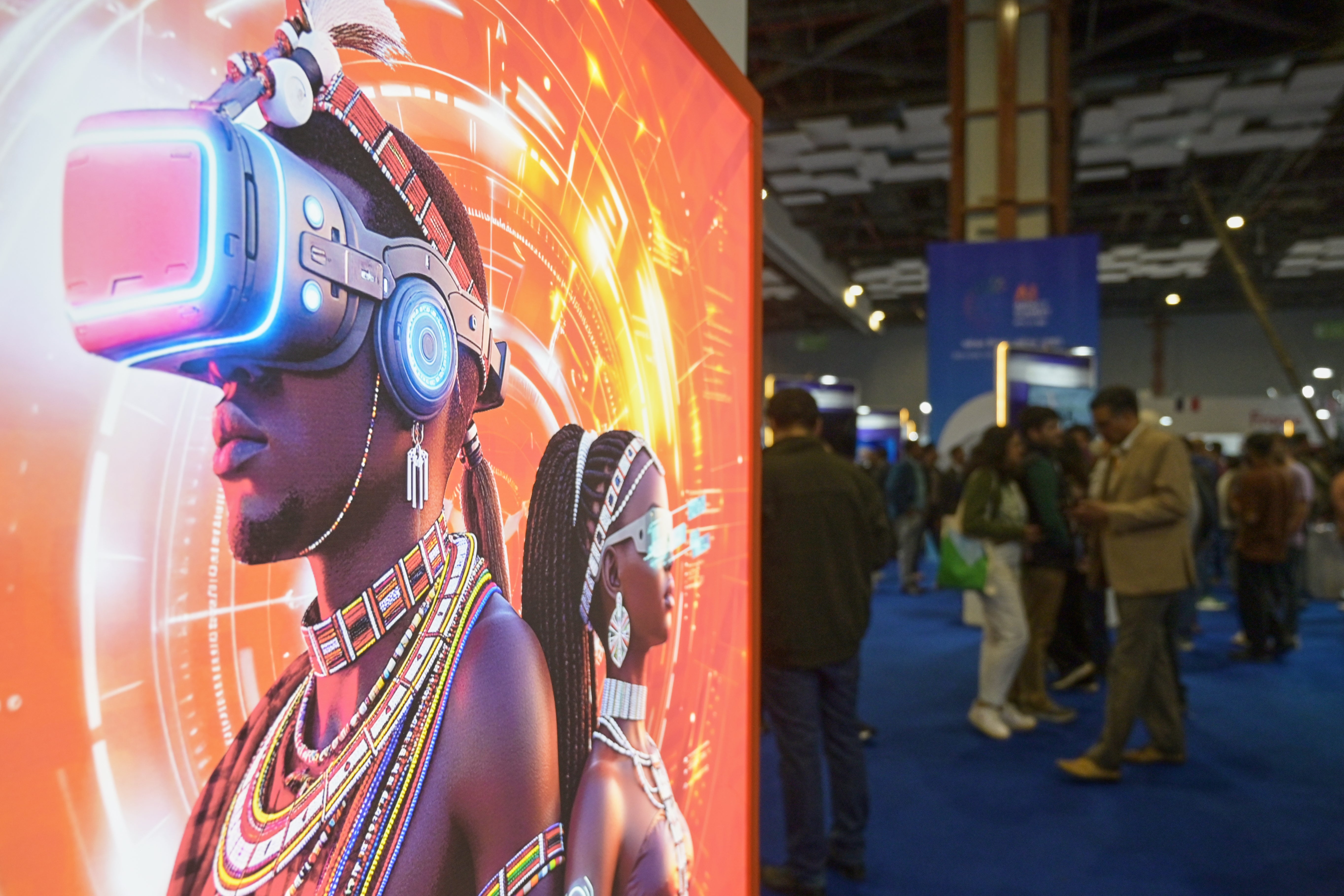
For India, becoming an alternative also means greater control over AI systems that its huge population uses in the time of geopolitical uncertainties and trade tensions with the US.
Across panels and product launches, the word “sovereignty” appeared repeatedly. Several foundational models trained from scratch on Indian data were unveiled, aimed at bringing AI to Indians in their languages.
Rishi Bal, chief executive of BharatGen, the government-backed consortium behind one such multilingual model, defines sovereignty as “control and access”.
It means “the ability to be guaranteed that you will always have access to that product, service in this case. AI… the ability to know what has gone inside of that AI so that when you deploy it, it actually works in exactly the way that you want… and sovereignty is the ability to service that AI to do the things that you want and have the keys to that AI,” he told The Independent at the summit.
For Bal, sovereignty is also cultural. “The frontier models today speak like West Coast America,” he says. “I think every nation is going to want an AI that speaks like them, that reflects their culture, their value and their perspective.”
“Now we see AI in the future consisting of a wide variety of artificial intelligence, and they’ll come in a wide variety of sizes and functionality.”
Lack of advanced manufacturing in India is also a concern.
The country does not currently manufacture advanced AI chips domestically and remains dependent on global semiconductor supply chains. It is not positioned to match the frontier spending of Silicon Valley or Beijing. Instead, the strategy being articulated is one of localisation and deployment at scale.
However, the summit did secure billions in investment. Reliance Industries and the Adani Group each outlined plans of roughly $100bn over the coming decade. OpenAI, Anthropic and Google also announced plans to expand their India operations.
Karan Girotra, a professor of operations, technology and innovation at Cornell Tech, says these figures, while providing a much-needed boost for India’s AI sector, are dwarfed by the money American companies are putting in annually.
“These numbers sound big, but remember, the big four US companies are talking 800 billion in the next year,” he says. “So this is 100bn in the next 10 years. So let’s calibrate that.”
For Girotra, India’s advantage lies in market scale and talent rather than headline spending. “India is a big market, probably the third biggest market for most technology companies,” he says. “One important thing that AI does is it brings the cost of knowledge work down, which means a lot of things like medicine, teaching can be made accessible to many more people.”
That focus on deployment was echoed by Indian billionaire Nandan Nilekani, who co-founded Indian technology giant Infosys and played a key role in creating India’s digital public infrastructure.
“India will be where you'll see most of the deployment of AI in a tangible way… where farmers are able to make more money, where children learn better, where healthcare is better,” he says. “The world needs this to be shown and the AI companies need this to be shown because they have to show real stuff where this is working at scale for people.”
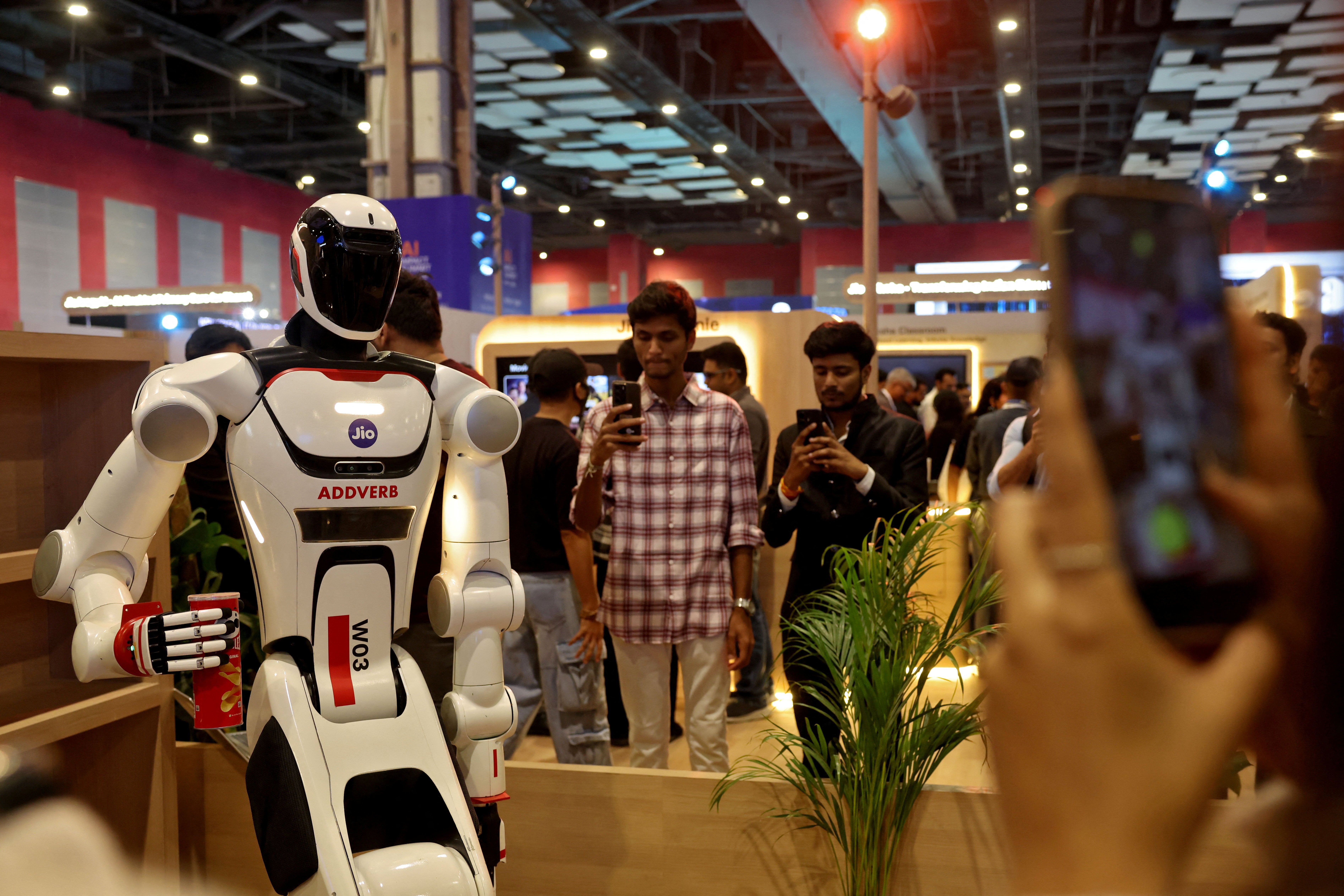
The massive attendance at the summit, which also caused some chaos and traffic jams, reflected this ambition. Large numbers of students brought in on school buses, women entrepreneurs and developers attending in significant numbers, and packed sessions stretched beyond scheduled hours.
Technology commentator Nikhil Pahwa says the longer-term impact of the summit is not just what comes out in the declaration and speeches, but the fact that people are talking about it.
“If every government department in both state and centre starts thinking about how to integrate AI into their workflows, that will mean that there is rapid adoption of AI,” he says.