Today, too many families around the world are not getting enough vital nutrients in their diet. The World Health Organization (WHO) estimates that more than two billion people lack key vitamins and minerals, particularly vitamin A, iodine, iron and zinc.
It's holding whole communities back – children don't develop fully, parents can't work, and too much money is spent on the medical treatment of nutrition-related health problems. While many countries will reduce income poverty by 2015 in line with the Millennium Developmental Goals, less than a quarter of developing countries are on track to achieve the goal of halving undernutrition.
The fortification of staples and condiments has been practiced in North America and Europe since the 1920s. In these regions, it has contributed significantly to the virtual eradication of pellagra, goitre, beriberi and scurvy. What's more, the World Bank and Copenhagen Consensus ranked food fortification as one of the best investments in development in terms of cost effectiveness, because it improves people's health while indirectly boosting productivity and economic progress.
However, donors and policy makers often ask whether food fortification can work on a large scale in developing countries. They also question whether the evidence is strong enough to invest limited resources in rolling-out and improving fortification programs.
Adding iodine to salt
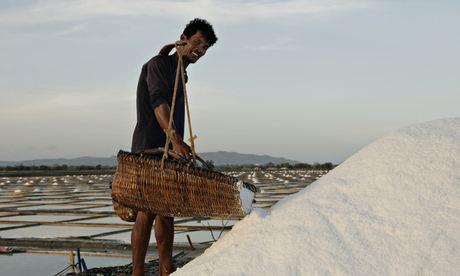
To answer these questions, let's first look at the case for 'salt iodization', or fortifying salt with iodine. Iodine deficiency is one of the leading causes of preventable mental handicaps worldwide, and leads to a typical reduction in IQ of 10-15 points.
Thanks to universal salt iodization (USI), which has been implemented around the world, the number of countries classified as 'iodine deficient' decreased from 54 in 2003 to 32 in 2011. What's more, the number of households in developing countries using iodized salt has risen from 61% in 2002 to 72% in 2012.
The implications of this for improved productivity are enormous. And it has all been done for relatively low levels of investment. The cost to iodize salt has been estimated at between US$0.5-10 cents per person per year. For every dollar spent the resulting benefits, in terms of increased productivity and a reduction in spending on health care, are valued at more than $26.
While other food fortification schemes have not been implemented on such a large scale, fortifying flour with critical micronutrients such as iron and folate has now been made mandatory in 79 countries. It is estimated that 31% of the world's industrially milled wheat flour is now fortified with at least some iron or folic acid through mandatory and voluntary efforts.
Impressive results
The evidence of the impact of these activities on people's health in the developing world is scarce but growing. In 2012, an estimated 38,417 birth defects were prevented when the local flour was fortified with folic acid – an average of 105 per day. In Chile, researchers compared the annual cost of the rehabilitation and treatment of children with spina bifida with the cost of adding folic acid to flour. The results showed that, for every $1 invested in adding folic acid to flour, $12 were saved in medical treatment and care.
These impressive results go some way to showing the huge health benefit of fortifying food with micronutrients. However, the evidence of the impact needs to be further quantified and, more importantly, communicated effectively to donors and policy makers. GAIN and our partners are constantly working to improve programs, quantify results and share learnings.
And in those countries where food fortification projects have yet to be implemented, and where existing food supplies fail to provide adequate levels of nutrients in people's diets, GAIN will look to establish new programmes to help improve people's health and boost economic development.
Greg S. Garrett is director of Large Scale Food Fortification, GAIN.
• GAIN will be talking about large-scale food fortification and the lessons learned so far at the Micronutrient Forum in Ethiopia, 2-6 June 2014. For updates, follow @GAINAlliance #MNForum.
Content on this page is produced and controlled by the Global Alliance for Improved Nutrition.