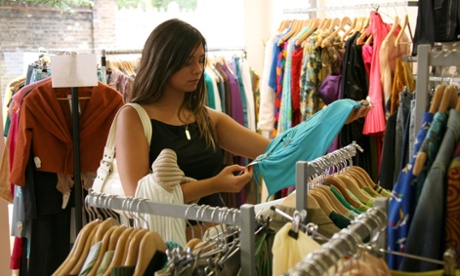
The generally accepted idea behind high street fashion stores is that you walk in empty handed and leave juggling bags of shiny new things. However, brands including The North Face, Puma and H&M now want consumers to walk into their stores with bags full of old and unwanted clothes.
No longer the sole remit of charity shops, as Marc Gunther explains in his piece on clothing bin wars, all three brands have launched take-back programmes and have a contract with I:CO (I:Collect), a global Swiss-based firm that collects, sorts and recycles garments.
Until now textiles from old clothes (if they’ve been saved from landfill) have mainly been downcycled into filler material for insulation, carpet padding or stuffing for toys. In a truly “closed loop” system of production however, these textiles could be processed and made back into new yarn, textiles and clothes over and over again. With cotton production linked to Nasa images of the dried up Aral Sea basin, which was once the world’s fourth largest lake, the environmental benefits of continuously recycling fibres is clear.
While it might seem like a utopian vision, scientists at Stockholm’s Royal Institute of Technology have already developed a way of recreating cotton and the result is a yellow dress that’s far removed from the dowdiness often associated with ethical fashion. However, huge technical hurdles do remain around issues like separating blended fibre garments, dyes and other contaminants. Even if solutions for these problems were found overnight, to become truly closed loop requires consumers who are willing to play their part.
Join the experts for a live chat
Join us in the comments section of this page on Thursday 23 October, from 1.30pm - 2.30pm BST for a live chat with a panel of experts who will be here to discuss questions including:
- Is there a business case for recycling post-consumer waste into new textiles?
- How does the globalised nature of the fashion industry impact on incorporating post consumer textiles in new collections?
- How can we create demand among designers for post-consumer textiles?
- What are the challenges and limitations of using recycled garments in new collections - is the quality good enough? Is the dye uptake affected in recycled fibres? Can colours be removed and changed?
- Could high street brands realistically move from a product to service based business model to keep resources in domestic economies for longer?
On the panel
Lewis Perkins, senior vice president, Development and Textiles and Apparel at the Cradle to Cradle Products Innovation Institute. Prior to joining the Institute, Perkins consulted on creating programs and awareness for environmental and social initiatives. He led the “green” charge as director of sustainable strategies for the Mohawk Group, a leading carpet manufacturer and commercial division of Mohawk Industries.
Phil Townsend, Sustainable Raw Materials Specialist for Marks & Spencer.
Leigh Mapledoram, programme area manager for textiles and public sector at WRAP. In August 2014, Mapledoram became responsible for the Sustainable Clothing Action Plan (SCAP) and for delivery of the SCAP 2020 Commitment, which aims to reduce the carbon, water and waste footprints of clothing in the UK.
Cyndi Rhoades, founder and closed loop executive officer of Worn Again. She has led the company from its early days in upcycling to its current closed loop technology and systems development phase, working with brands such as Virgin Atlantic, Eurostar and McDonald’s on a series of products and projects.
Rien Otto, founder and creative director of Dutch aWEARness. Dutch aWEARness and its partners within the European Commission’s innovation project, EcoProFabrics, are working on a circular track and trace management system for the textile supply chain.
Anna Crawley, creative director of the Fara Workshop, a social enterprise designing one-off fashion pieces made from donations. The Fara Workshop also runs apprenticeships, educational projects and workshops to engage the local community in sustainable fashion and design.
More to be confirmed
How to join
The live chat is completely text based and will take place on this page in the comments section below, kicking off on Thursday 23 October, from 1.30pm - 2.30pm BST. You can submit any questions in advance using the form below, or tweet them to @GuardianSustBiz using #askGSB and we’ll put them to the panel on the day.
Read more like this:
- Cotton production linked to images of the dried up Aral Sea basin
- Traditional fashion calendar fuels overconsumption and waste
- There is more to closed-loop textile recycling than technological innovation
- Advertisement feature: Recycling and reusing textile waste in fashion
The sustainable fashion hub is funded by H&M. All content is editorially independent except for pieces labelled advertisement feature. Find out more here.
Join the community of sustainability professionals and experts. Become a GSB member to get more stories like this direct to your inbox