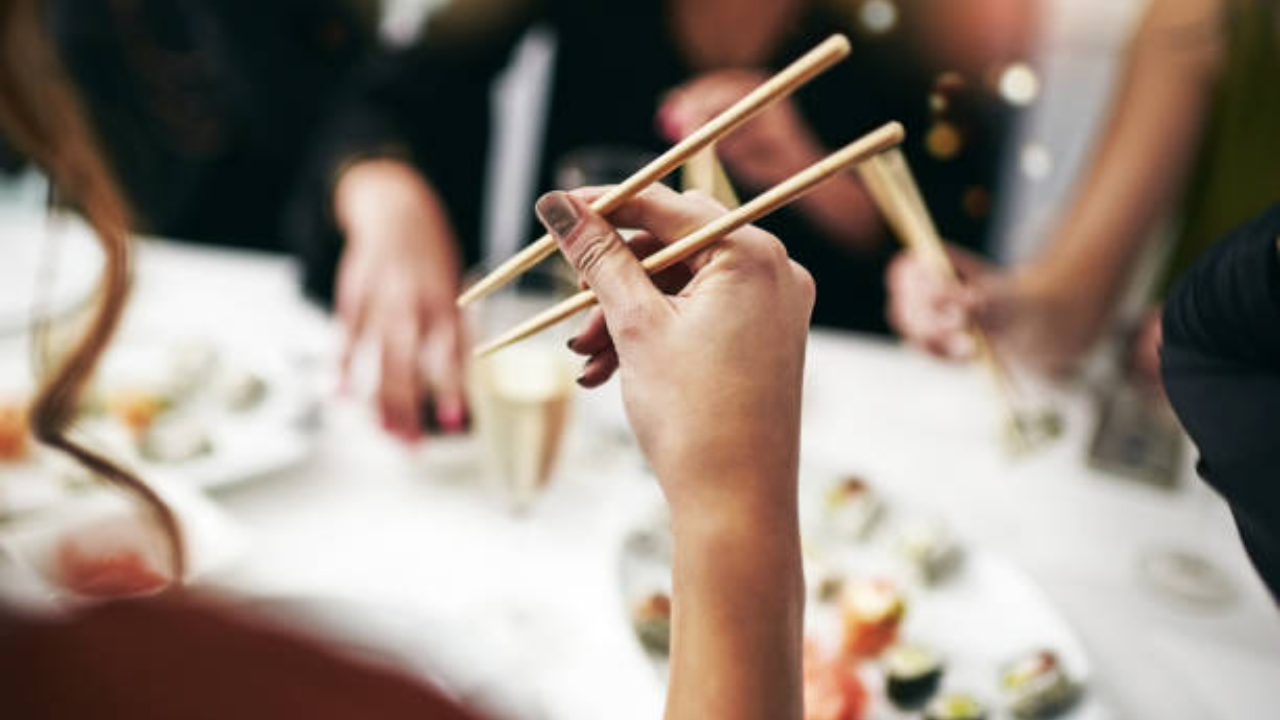
Eating with chopsticks, a tradition common to most Asian cultures, has drawn interest for its possible effects on weight management. This process facilitates slow eating, conscious eating, and control of portions, all of which are beneficial in weight loss methods.
Let us learn how to eat with a chopstick first before we find out how chopsticks manage weight:
Hold the first chopstick steady. Place one chopstick between your thumb and the base of your index finger. Rest it on your ring finger for support. This is the stationary chopstick.Hold the second chopstick like a pen between your thumb, index, and middle fingers. This is the moving chopstick.Move the top chopstick up and down while keeping the bottom one still. The tips should align for better grip.Pinch small amounts of food gently. Don't squeeze too hard, or the food will fall through.Transfer food slowly to your mouth. Hold a bowl near your mouth for support.Don't stab food with chopsticks. Don't cross them when holding.Begin with large, easy-to-hold foods such as dumplings. Progress to rice and noodles as you get better.Put chopsticks parallel on a chopstick rest when not in use.Chopsticks regulate the speed of eating
The rate at which we consume food has a great impact on our body's satiety signals. Studies show that it takes about 20 minutes for the brain to detect fullness after food consumption. Fast eating may cause overeating before the body recognizes satiety, leading to excessive calorie intake. On the other hand, slow eating provides sufficient time for these signals to occur, helping in portion control and preventing overeating.
The use of chopsticks naturally slows down eating because of the skill involved in using them efficiently. This slower pace interferes with the body's internal satiety signals, possibly resulting in less food consumption.
See more: Weight Loss Tips to Lose Inches of Stubborn Belly Fat in a Healthy Way
It encourages mindfulness and portion control
Chopsticks encourage mindful eating by requiring attention to the process of eating. This increased awareness can result in improved detection of hunger and fullness signals, leading people to enjoy their food and identify satiety more efficiently. Mindful eating has been linked with healthier eating habits and enhanced weight management results.
The use of chopsticks can impact portion size and meal structure. Foods that are commonly eaten with chopsticks, including vegetables, lean meats, and rice, tend to follow healthy dietary recommendations. This promotes the intake of nutrient-dense foods in the right portions, aiding in weight loss.
While incorporating chopsticks into meals can be beneficial, it's essential to consider individual preferences and cultural contexts. For those unaccustomed to chopsticks, the initial learning curve may slow eating, but proficiency could lead to a return to usual eating speeds.
See more: How to gain weight: Tips on weight gaining through proper diet and nutrition