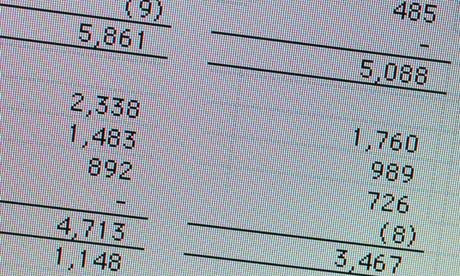
Earlier this month, Malcolm Prowle argued that public sector accounts need to be more relevant to citizens rather than accountants. In local government few would disagree in principle, but the statutory requirements for council accounts to include statements on the complicated finances such as the collection fund and housing revenue account makes this very difficult in practice.
The application of International Financial Reporting Standards (IFRS) to local government is regarded by many as making council accounts even more unintelligible; the primary focus is on financial stewardship not public accountability. Somewhat understandably, a number of finance directors hold the view that annual accounts are produced for auditors, analysts and students rather than the public. Our recent research shows that a third of senior officers and elected members don't find council accounts useful.
In the absence of any planned change to the local government accounting framework, there are steps that councils can take to improve their annual accounts. They can group and present their information differently, cutting the clutter and performing an independent review of the accounts from a user's perspective.
It is a little idealistic to think improvements to the presentation of the accounts will give rise to a groundswell of public interest in local government finances. Of course are few out there who will ever have a forensic interest in the accounts, leading to no more than a handful of requests for copies each year. Councils also point to the numerous alternative ways in which they engage with the public through, for example, their elected members, council and local public meetings, consultations and publishing large amounts of information on the website.
So should councils give up on trying to make accounts more user friendly? Certainly not.
As well as the current government's focus on encouraging citizens to take a greater interest in what councils are doing, research shows that complaints and freedom of information requests are rising sharply (up 20% last year). Particularly in these difficult times, demand for information on how councils are spending taxpayers money is on the increase.
If councils are constrained by formal presentation rules, what else can they be doing to make them more accessible? I would suggest that councils focus on improving two areas within their annual accounts: the explanatory foreword and the annual governance statement (AGS).
The explanatory foreword introduces the financial statements that follow, telling the story behind the numbers as well as providing a picture of the financial health of the council and its future prospects. The AGS, meanwhile, provides a narrative around the governance and controls used to manage the risks of failure and achieve strategic objectives. Taken together, these two statements can provide a useful public summary of what is being spent and how this spending is safeguarded.
Our research shows that many councils are not yet grasping this opportunity; much can be done to improve these important statements.
As a sector, local government is unusual in that it does not have to produce annual reports. Annual reports were encouraged by the Audit Commission as a public accountability mechanism, but since the Audit Commission's assessment of councils ended the number of authorities producing annual reports has fallen dramatically.
The decline is regrettable. Producing an annual report is a key way for councils to show their commitment to making all relevant information publicly available in the most accessible way. A comprehensive report, produced each September, would include audited financial information, key performance indicators, risks and how they are managed, environmental issues and any other information that the council believes others should see.
With pressure on council funding and resources it would be difficult to argue a case for expensive glossy reports. The International Integrated Reporting Committee (IIRC) is developing advice for international corporate reporting and the Chartered Institute for Public Finance and Accountancy (CIPFA) is considering its applicability to the public sector. One of the IIRC's points is around a "technology enabled" annual report. We see this as a suitable recommendation for local government: having a annual report, prominently displayed on the website with concise, user-friendly information and links to other areas on the site where the public can find out more.
There need not be significant additional cost in producing a web-based report and it could be argued that it could prevent a certain number of other time consuming ad hoc requests for information, including under the Freedom of Information Act.
Our research into council governance shows that local authorities have well established governance systems and processes that have developed over the last 10 years, but need to have more transparent and accessible public reporting – particularly in the AGS and explanatory foreword to the accounts. Above all, a well-executed annual report will demonstrate that the council is doing all it can to be accountable to the public.
Paul Hughes is a director and public sector governance lead at Grant Thornton
This content is brought to you by Guardian Professional. Join the local government network for comment, analysis and best practice direct to you