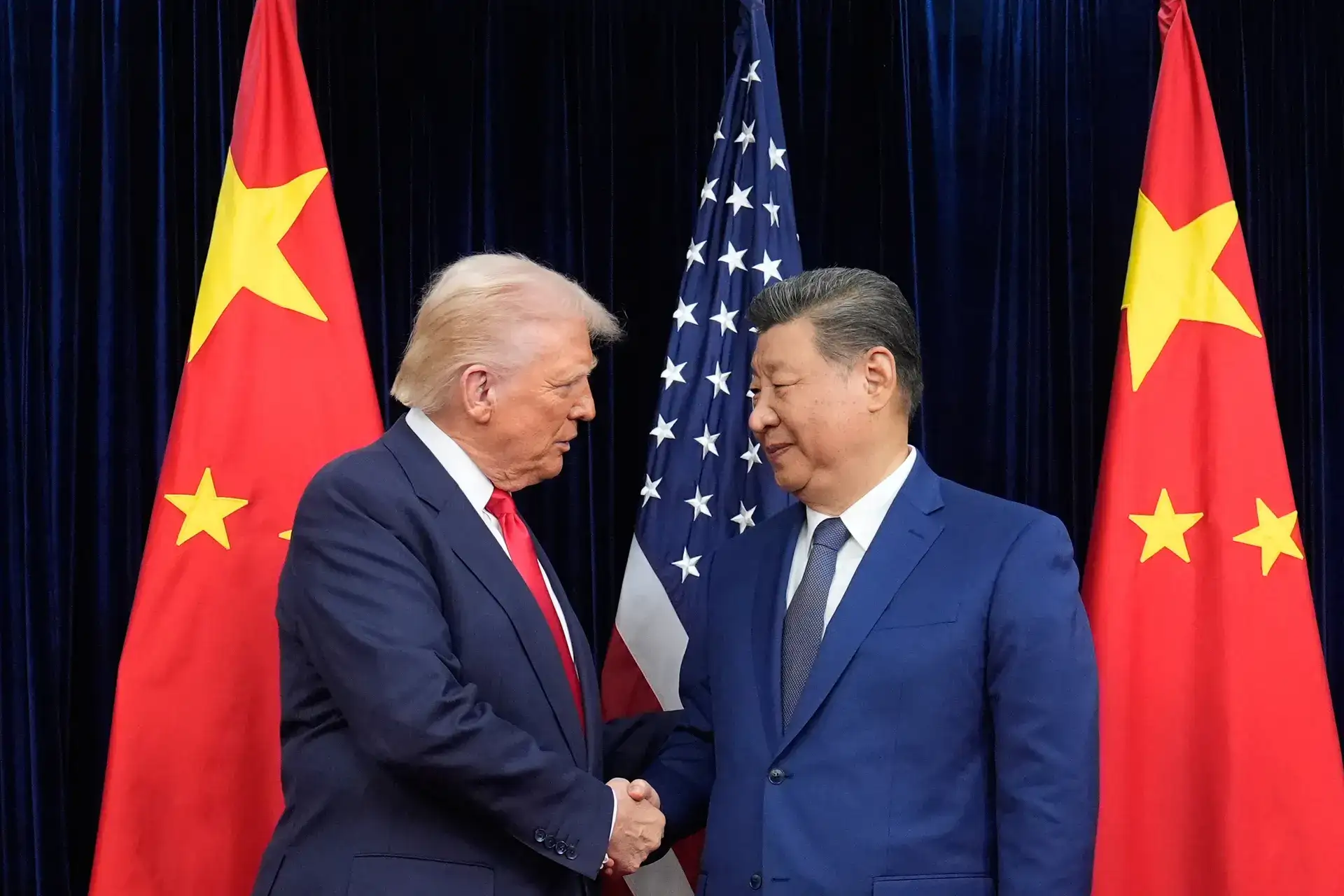
More than ever before, Donald Trump needs a grand slam during his May 14-15 trip to China to compensate for damage to his reputation caused by the war he started with Israel against Iran, and to prepare for midterm elections in November. But is Beijing in the mood to load him with trophies that he can wave before his constituents?
The meeting is being seen by many quarters as a negotiation over delicate economic issues like supply of Chinese rare earths, China’s quest for hi-tech goods like Nvidia chips, access to the US market for EV brands like BYD, and Boeing’s efforts to sell up to 500 jets to Beijing.
The US has reportedly suggested the creation of a ‘board of trade’ to manage commerce in non-sensitive goods. It remains unclear whether China — which has increasingly routed goods through intermediary countries like Vietnam, Malaysia and Mexico to reduce tariff exposure — will agree.
Each of these issues is important. But politicians view international parleys as opportunities to bolster their personal influence and advance their long-term objectives. This is why Xi Jinping and Trump need to accommodate each other’s political agendas before reaching a broader agreement. Trump, for instance, would be politically rewarded if he can persuade China to expand purchases of soybeans and other agricultural goods from US farmers.
Xi would be careful not to provoke Trump, since the US remains China’s biggest export market, buying about $308 bn worth of goods. The Xi-Trump meet has strong implications for India. If they reach a significant understanding — which is unlikely — it would reduce India’s bargaining power.
If it fails, Trump may be tempted to consider India’s role as a China counterweight more seriously. Some remarkable developments have taken place since the two met in Oct 2025 and talked on Feb 4. The US has not been able to subdue Iran, protect its allies in West Asia, or persuade its European allies to join efforts to break Iran’s chokehold on the Strait of Hormuz.
These have raised questions about Trump’s policy of bargaining from a position of strength. The US has realised that Pakistan’s mediation role is limited, and wants China to persuade Iranian leaders to enter a deal. Chinese satellites and GPS systems have enabled Iranian missiles and drones to damage US military bases and infrastructure of allies like the UAE and Saudi Arabia.
Expecting Beijing to withdraw support from Iran would be unrealistic. China is a beneficiary of Iran’s war efforts, which have exposed limitations in the US military and provided more strategic information to Beijing than its spy agencies could have gathered in years. Iran, along with Russia, accepts payment for oil in renminbi, crucial to Beijing’s efforts to promote the idea of petroyuan.
Renminbi climbed to its strongest level in 3 yrs on May 7, rising past the ¥6.80-a-dollar mark. It could strengthen further, reaching ¥6.50 a dollar by early next year, as China intensifies renminbi-based transactions. Trump had earlier threatened to impose 200% tariffs on countries seeking to abandon the dollar in international trade.
He can scarcely repeat that threat while seeking Beijing’s help to resolve the Gulf crisis. China has suffered losses from US actions such as interception of ships, including oil tankers, in Hormuz, and Washington’s attempts to expand its influence in Venezuela, to which Beijing has extended nearly $100 bn in loans. Beijing is likely to mediate with Iran only if restrictions on Iranian oil flows are eased.
Despite his formidable grip over the Communist Party of China (CPC), Xi is under pressure to demonstrate his ability to extract concessions on Taiwan. He will seek assurances from Washington to curtail the supply of sophisticated weapons to Taipei. During his call with Trump in February, Xi emphasised that the Taiwan question is the most important issue in China-US relations.
Much of the friction in the relationship could ease if Trump publicly agrees to limit future arms sales to Taiwan. But he may avoid doing so because it would reinforce the impression that the US under Trump is reluctant to stand by its allies.
Besides, the world’s biggest semiconductor firm TSMC has invested heavily in Arizona. Whatever the outcome of the meeting, there’s unlikely to be any respite in the arms race and technological competition between the world’s two largest economies. China is seeking to exploit growing European unease toward the US to deepen ties and gain access to advanced technologies.
At the same time, Beijing is likely to ensure that Trump returns to Washington with some ‘achievements’ — provided he’s willing to make concessions such as easing restrictions on Chinese tech companies.
The writer was ToI’s Beijing correspondent.