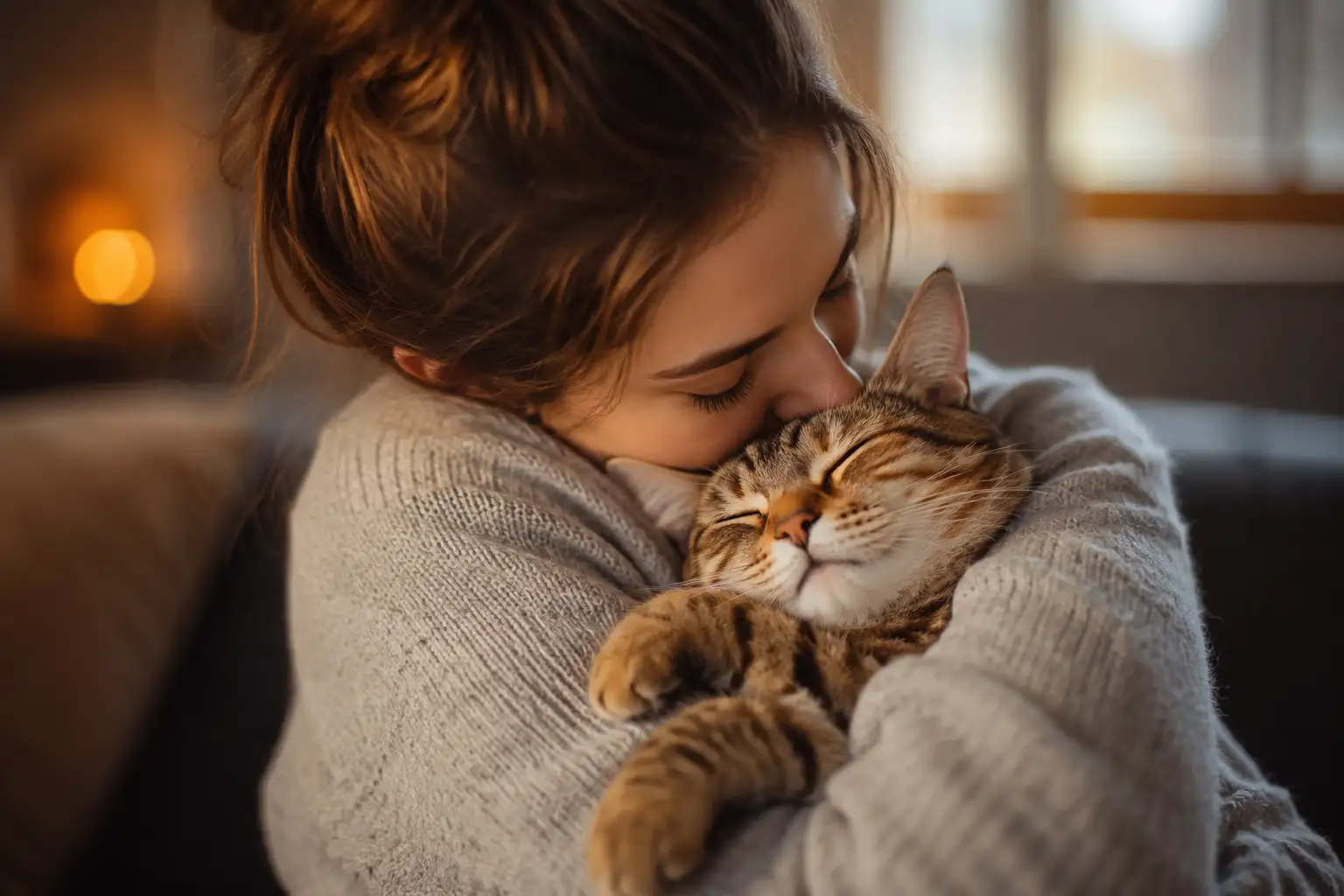
Cats have a reputation for doing things on their own terms, but that doesn't mean they aren't loyal. In fact, cats now live in millions of American homes, with the latest data from the American Veterinary Medical Association showing they are among the nation's most popular pets. While dogs often get the spotlight for unconditional loyalty, scientists and veterinarians say cats form deep emotional bonds too—they simply express them differently.
If your cat waits by the door, follows you from room to room, or curls up beside you every evening, those behaviors may be signs of genuine attachment rather than coincidence. As more Americans spend time at home with their pets, researchers are learning that feline loyalty is far more complex—and more rewarding—than the old stereotypes suggest.
Why do some people think cats aren't loyal?
For decades, popular culture has painted cats as distant, independent, and interested only in food. That image has been reinforced by movies, television, and countless internet jokes comparing cats with eager-to-please dogs. But animal behavior experts say the comparison isn't entirely fair because the two species communicate affection in different ways.