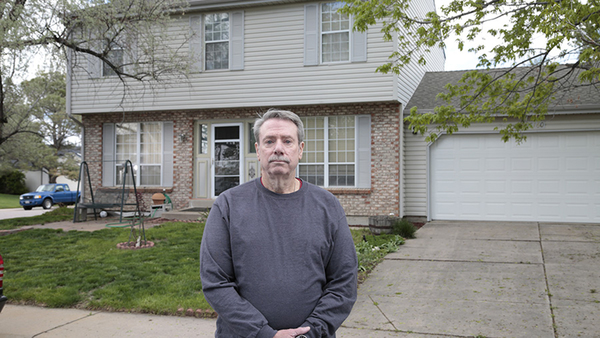
CENTENNIAL, Colo. _ Greg Glischinski and his wife, Sheri, have lived in their two-story brick and wood Colonial-style house for more than three decades. The retirees, both in their 60s, want to stay where they are for the rest of their lives.
But their house has no bedroom or full bathroom on the first floor. It is on a cul-de-sac, and public transportation options are limited. As they grow older, the Glischinskis may need in-home assistance with tasks like bathing, dressing and preparing meals _ an expensive proposition.
"It's a huge problem for boomers," said Greg Glischinski, 66. "Quite frankly, I don't know what we're going to do."
Turns out the kids who listened to rock 'n' roll on their transistor radios and watched spellbound as men walked on the moon _ the first American generation raised in the suburbs _ want to grow old there.
In fact, the American suburbs, built for returning GIs and their burgeoning families, are already aging. In 1950, only 7.4 percent of suburban residents were 65 and older. By 2014, it was 14.5 percent. It will rise dramatically in the coming decades, with the graying of 75.4 million baby boomers mostly living in suburbia.
But car-centric suburban neighborhoods with multilevel homes and scarce sidewalks are a poor match for people who can't climb stairs or drive a car.
"Most (boomers) are in a state of denial about what really is possible and what's reasonable for them as they age," said John Feather, a gerontologist and the CEO of Grantmakers in Aging, a national association of foundations for seniors.
Mildred Warner, professor of city and regional planning at Cornell University, said too many Americans are "living in a Peter Pan world." People become "more feeble" as they age, she said, and communities need to plan and budget for that.
But state and local officials are largely unprepared to handle heightened demands for transportation, affordable housing and long-term care. One study estimated that spending on public transit would have to increase 81 percent, to $8.6 billion, by 2030 to meet the needs of seniors who want to stay in their homes.
Some researchers foresee conflicts between seniors and families with school-age children over increasingly scarce government resources. Many working- and middle-class retirees, some of whom are trapped in their suburban homes because they are still underwater _ they owe more on their mortgages than their homes are worth _ won't be able to afford to modify them to make them livable in old age. Some live in areas where the cost of renting or buying elsewhere would be higher than what they already pay. And subsidized housing for seniors is in short supply in the suburbs.
"The graying of suburbia is going to become the central challenge of the country and the suburbs," said Lawrence Levy, executive dean of the National Center for Suburban Studies at Hofstra University in Hempstead, N.Y. "Most suburbs are not ready. They don't have the resources, experience or ability to deal with these big issues."
This year, the oldest boomers started turning 70. The youngest will be 52. By 2035, there will be 77 million Americans aged 65 and over, up from about 48 million in 2015.
Nearly two-thirds of boomers in metropolitan areas lived in the suburbs in 2014, and most want to age there, according to national surveys.
Demographers agree that as people age, they tend to stay where they are. "Older people don't move that much," said William Frey, demographer and senior fellow at the Brookings Institution's Metropolitan Policy Program.
"The boomers might have moved into the city for a while to feel their oats, go to college or sample the nightlife. But typically they moved back to the suburbs when they had kids and pretty much stayed there," Frey said. And now, because boomers are such a big group, the senior population is set to surge all across the country.
Boomers are expected to live longer, and retire later, than earlier generations. But they also have higher rates of chronic disease, and don't have the retirement savings their parents did. Many members of the generation that sang "I hope I die before I get old" have not planned for old age.
More than 1 in 4 households age 55 to 64 has no retirement savings from a 401(k), an IRA or a pension, a recent federal report found. Their median net worth is about $9,000, and 91 percent of them have less than $25,000 in financial assets. Nearly half of boomers are still paying off their homes, and 8 in 10 hold some form of debt, according to a 2015 study by the Pew Charitable Trusts. (Pew also funds Stateline.)
The Glischinskis, in Colorado, had built up their 401(k)s and were feeling good about their financial future until they both were struck by serious health issues.
"We've had to cash out our retirement nest eggs to pay bills," Greg Glischinski said. "You try to plan, but all of a sudden, something else gets in the way."
Retirees who want to stay in the suburbs will have to cover the rising costs of property taxes and utilities, and they may have to shell out big sums to retrofit their homes if they become frail or disabled. One study found that it can cost $800 to $1,200 to widen a doorway to accommodate a wheelchair, $1,600 to $3,200 for a ramp, and up to $12,000 for a stair lift. Major remodeling, such as adding first-floor bedrooms or bathrooms, can cost much more.
Some empty nesters will sell their suburban homes and move into hip urban downtowns, but they are an affluent, niche market.
For Wendell Cox, of Demographia, a public policy consulting firm, the idea that a wave of aging boomers will flood downtown neighborhoods is "a lot of hype and baloney."
"Most people aren't going to move to Washington (D.C.) and pay $1 million for a condo," Cox said. "If they do move from the suburbs at all, it usually will be farther out."