WASHINGTON — As President-elect Joe Biden labors to rescue the nation's ragged coronavirus response, no challenge looms larger than rallying Republicans and Democrats behind a unified effort to wear masks and take other basic steps to control the pandemic.
Months of political disputes over face coverings, social distancing and other public health interventions have turned even the simplest precautions into partisan flashpoints.
And relentless attacks by President Donald Trump and his allies have sapped trust in public health leaders and institutions such as the Centers for Disease Control and Prevention and Food and Drug Administration, even as the pandemic rages out of control in wide swaths of the country.
"We need to tone down the political rhetoric ... but we are digging out of a huge hole," said Dr. Richard Besser, who heads the Robert Wood Johnson Foundation and previously led the CDC. "Once you've lost trust, it's very hard to get it back."
Biden, who made unity a central message of his successful campaign, issued an urgent plea this week to Americans to put aside partisan fighting over the virus.
"We could save tens of thousands of lives if everyone would just wear a mask for the next few months. Not Democratic or Republican lives — American lives," Biden said after meeting with members of a newly formed COVID-19 advisory board Monday.
"We have to do this together," he added.
There are signs that some Republican officials are prepared to support mask wearing and other restrictions that could slow the virus' spread.
Earlier this week, amid soaring infections and a crush of patients that threaten to overwhelm hospitals in Utah, Gov. Gary Herbert declared a state of emergency and required state residents to wear masks in public.
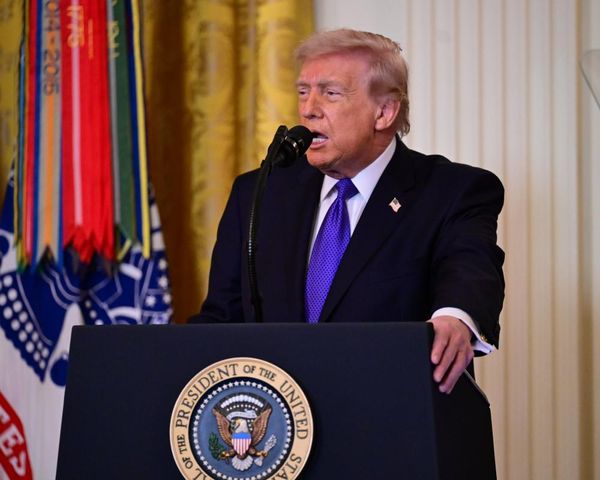
But Trump, who mocked Biden for wearing a mask during the campaign, continues to eschew face coverings at public events and White House gatherings, even as growing numbers of White House staff and guests become sick.
And although surveys show support for mask wearing among Democrats and Republicans, there is substantially more resistance to mask mandates among Republicans in many places. A recent Texas poll, for example, found that while 81% of Democrats say there should be a state law requiring mask wearing in public, just 51% of Republicans feel the same way.
Across the country, many GOP elected officials are still resisting public health restrictions, despite record-setting infection numbers and mounting evidence that masks and other simple steps can substantially slow spread of the disease.
In South Dakota, where new COVID-19 cases have nearly tripled in the last month, the mayor of Sioux Falls, a Republican, this week cast the decisive vote against a new mask mandate.
In North Dakota, also among the hardest hit states, GOP Gov. Doug Burgum refused to issue a mask requirement, even as he moved to allow nurses infected with COVID-19 to remain at work.
Ohio Gov. Mike DeWine, a Republican, faced push-back this week from GOP leaders in the statehouse when he proposed tougher mask rules in response to rising pressure on the state's hospitals.
"These messages have inured sections of the American public to evidence-based messages that need to be heard," said Dr. Irwin Redlener, who directs the Pandemic Resource and Response Initiative at Columbia University.
The messages are impeding efforts to control the current surge of infections, say public health leaders across the country. They are also hard to overcome, especially as Trump continues to stoke partisan divisions over the election results.
"Masks and social distancing have unfortunately been weaponized politically," said Dr. Max Michael, dean of the University of Alabama at Birmingham School of Public Health. "You can't flip a switch and make that go away."
Former Utah Gov. Mike Leavitt, a Republican who served as Health and Human Services secretary under President George W. Bush, also said Biden has his work cut for him, especially since public health is primarily a state and local responsibility in the U.S.
"He is really going to have to seek a partnership with state and local officials. That starts with good presidential communication," Leavitt said.
The former health secretary, who backs a more robust public health response to the pandemic, said restoring scientists and public health leaders to the forefront should also help.
Biden has repeatedly said that experts who have been sidelined by Trump, such as National Institute of Allergy and Infectious Diseases director Dr. Anthony Fauci, would play a central role in leading his pandemic response.
The president-elect has also made clear he plans to model good public health practices, such as mask wearing and adhering to limits on large gatherings.
That kind of "positive social pressure" can make a big difference, said Dr. Rebekah Gee, the former Louisiana health secretary.
"It's easy to underestimate the influence of a leader's behavior, but it's so important," Gee said, arguing that Louisiana Gov. John Bel Edwards' consistent use of a mask has helped keep state residents focused on health precautions.
The new Biden administration will need other trusted messengers, as well, said Stacy Stanford of the nonprofit Utah Health Policy Project.
"We have to get through to communities that are often resistant to government interventions," Stanford said. She noted that public health messages from people like Brigham Young University football Coach Kalani Sitake, who has urged Utahans to practice social distancing to slow the spread of COVID-19, may be far effective in a place like Utah than anything a Democratic president could say.
Another former red state healthcare official suggested a national memorial for the victims of the virus to bring the country together and rally Americans behind a more unified, consistent public health response.
But Biden's most powerful tool for convincing more Americans to take precautions may simply be the virus itself.
As new infections approach 150,000 a day, threatening to overwhelm nearly every state in the country, growing numbers of Americans know now someone who has been sickened.
"People are seeing how serious this is," said Don Palmisano, executive director of the Medical Association of Georgia, that state's largest physicians' group. "That's going to make a difference."