After Alan Jones’ extraordinary comments that Australia needs another stolen generation, it’s worth revisiting Kevin Rudd’s speech of apology. No, not the famous one from 2008 but a far less controversial address he delivered a year later about the so-called forgotten Australians – the people subjected to institutional abuse as wards of the state during the 20th century.
“[W]e come together today to offer our nation’s apology,” Rudd told the parliament in November 2009. “To say to you, the Forgotten Australians, and those who were sent to our shores as children without your consent, that we are sorry. Sorry – that as children you were taken from your families and placed in institutions where so often you were abused.”
The rhetorical echo of Rudd’s earlier “sorry speech” is not, of course, a coincidence. The abuse of the British child migrants stemmed from the same eugenicist logic: as Coral Dow and Janet Phillips argue in their 2009 background note for the Australian parliament, the official Child Migrant Programme that sent 150,000 children to Commonwealth countries – mainly Australia and Canada – was intended “to maintain the racial unity of the Empire and populate the Dominions of Canada, Rhodesia, New Zealand and Australia, with good white stock.” On that basis, children deemed to be neglected in Britain were removed from their parents and shipped out to the colonies, to be raised in residential institutions.
Dow and Phillips explain:
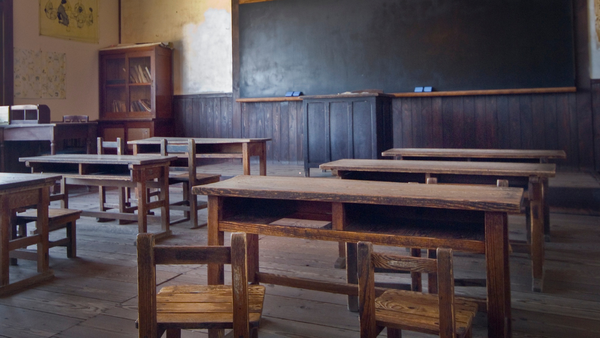
Most were placed in the care of Barnardos, the Fairbridge Society, the Church of England and the Christian Brothers. The House of Commons Health Committee concluded that children were placed in large, often isolated, institutions and were often subjected to harsh, sometimes intentionally brutal, regimes of work and discipline, unmodified by any real nurturing or encouragement. The institutions were inadequately supervised, monitored and inspected.
Like Indigenous kids removed from their families, the British child migrants were often falsely told their parents were dead. There were also more than 500,000 Australian citizens taken from their families and put into institutional care. They, too, were often subjected to sexual abuse, suffering trauma that haunted them for the rest of their lives.
“We look back with shame” Rudd continued, “that many of these little ones who were entrusted to institutions and foster homes instead, were abused physically, humiliated cruelly, violated sexually. And we look back with shame at how those with power were allowed to abuse those who had none. And how then, as if this was not injury enough, you were left ill-prepared for life outside – left to fend for yourselves; often unable to read or write; to struggle alone with no friends and no family. For these failures to offer proper care to the powerless, the voiceless and the most vulnerable, we say sorry.”
Two obvious points come to mind when comparing the forgotten Australians and the stolen generation.
The first is that it’s difficult to imagine anyone subjecting the (now often elderly) survivors of British child migration to the vilification directed at the stolen generations. Alan Jones says that Indigenous children were removed from their parents for their own protection. It’s certainly true the white officials taking the kids made that claim – but, of course, precisely the same justification was offered for ripping British child migrants from their families. Could anyone imagine Jones demanding that more white kids be stolen?
If Rudd’s speech about the forgotten Australians isn’t nearly as well known as his apology to Indigenous Australia, it’s because no one sees the former as in any way controversial. On the contrary, it’s almost universally regarded as a decent (albeit long overdue) gesture toward people subjected to unthinkable abuse.
By contrast, recognition of the stolen generations continues to infuriate people like Jones.
An apology to white people seems normal and natural. An apology to black people does not – even though, as Larissa Behrendt notes, the removal of Indigenous children is still going on and in greater numbers than ever before.
Yet there’s a second, more positive, point to take from the comparison – simply, that social justice is not a zero sum game. Aggrieved conservatives will often complain that the acknowledgement of racism means that injustices committed against whites are ignored. Actually, though, the campaign for acknowledgement of the forgotten Australians received a massive boost from the 1995 inquiry into the removal of Aboriginal children, as non-Indigenous survivors heard echoes of their own treatment in the testimony provided by the stolen generations. The struggle of black Australians provided a template that enabled white child migrants to press their own claims.
There are lots of Alan Joneses’ around at that moment: wealthy and entitled conservatives, intent on fanning white anxieties about a changing world, as if any gains for Indigenous people necessarily come at the expense of the non-Indigenous. Actually, nothing could be further from the truth.
This article was amended on 18 February 2016 to make reference to the 500,000 Australian citizens also taken from their families and put into institutional care.