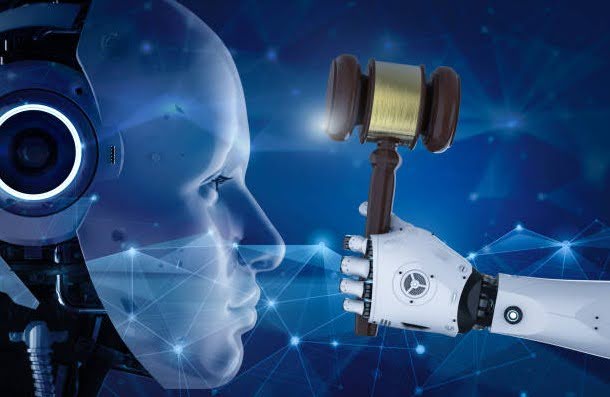
The question used to sound like science fiction. Now it’s something you hear in boardrooms, classrooms, cafés, and group chats. Can AI really replace human judgment? Or is it just another tool pretending to be smarter than it actually is?
Scroll through the news and you’ll see the tension everywhere. Algorithms recommend what we watch, where we eat, even who we date. AI writes emails, designs logos, diagnoses illnesses, and predicts stock prices. It’s fast. It’s efficient. And, frankly, it’s getting unsettlingly good.
Interestingly, the debate isn’t about whether AI is powerful anymore. That part’s settled. The real issue is whether it can decide in the same way humans do- with context, emotion, ethics, and lived experience shaping every choice.
Notably, I was thinking about this while staying at Margate Suites last year. The hotel had automated check-in, AI-powered room pricing, and a chatbot that handled guest requests. It worked flawlessly. But when a guest missed a flight and needed a late checkout with no extra charge, the system said no. A human manager said yes. That tiny moment said everything.
What AI Is Actually Good At
Let’s give credit where it’s due. AI is exceptional at processing massive amounts of data. It spots patterns humans would miss. It never gets tired. It doesn’t forget details. It doesn’t panic under pressure.
In medicine, AI can analyze thousands of scans in seconds. In finance, it detects fraud before a human auditor even opens a spreadsheet. In logistics, it predicts supply chain disruptions weeks in advance.
As one tech researcher famously put it, “AI doesn’t get distracted- it gets better the more you feed it.” That’s the appeal. Feed it data, and it improves. Feed it more, and it sharpens.
But here’s the catch: AI doesn’t understand why something matters. It only knows that it statistically does.
A key takeaway is that AI excels at optimization, not interpretation. It can tell you what’s most likely to happen. It can’t tell you what should happen.
The Judgment Gap
Human judgment isn’t just about logic. It’s about values.
We weigh emotions, cultural norms, social consequences, moral limits, and personal experience- often without even realizing it. A teacher might break a rule because a student is struggling. A doctor might override a protocol because a patient is scared. A business owner might lose money to preserve a relationship.
AI doesn’t do that. It doesn’t care about intention. It doesn’t feel regret. It doesn’t sense awkwardness in a room.
And that matters more than people think.
During the pandemic, several companies deployed AI to decide which employees to lay off. The systems were efficient. Coldly accurate. But they failed to consider caregiving responsibilities, mental health, or the long-term impact on team morale.
The decisions made sense on paper. They failed in reality.
When AI Gets It Wrong (But Sounds Confident)
One of the most dangerous traits of modern AI is confidence.
It doesn’t hesitate. It doesn’t say “I’m not sure.” It produces fluent answers, polished recommendations, and convincing logic- even when it’s completely wrong.
That’s because AI doesn’t know what it doesn’t know.
A journalist once asked an AI model to summarize a court case. It invented legal outcomes that never happened. When challenged, it doubled down. No apology. No uncertainty. Just more invented facts.
Humans, by contrast, pause. We hedge. We say things like “I could be wrong” or “that doesn’t feel right.”
That instinct is judgment. And it’s incredibly hard to replicate.
The Illusion of Objectivity
People love to say AI is neutral. That it’s free from bias. That it’s more objective than humans.
That’s a myth.
AI is trained on human data. Human language. Human history. Human decisions. Which means it absorbs human prejudice, blind spots, and structural inequalities- just at scale.
If historical hiring data favors certain demographics, AI will too. If past policing data reflects discrimination, AI predictions will reinforce it. Not because it’s malicious- but because it’s mathematical.
As one sociologist put it, “AI doesn’t eliminate bias. It industrializes it.”
Humans can question their assumptions. AI can’t. It doesn’t reflect. It doesn’t challenge itself. It just calculates.
The Middle Ground: Collaboration, Not Replacement
This is where the conversation usually lands- and for good reason.
The future isn’t AI versus humans. It’s AI with humans.
At Muse by Tom Aikens, for example, advanced reservation systems and demand forecasting tools help optimize bookings and reduce waste. But menu changes, guest experience, and creative decisions still come from people. From chefs. From managers. From staff reading the room in real time.
Technology supports. Humans decide.
That model appears everywhere. In hospitals, AI flags risks, but doctors make the call. In law, software scans contracts, but lawyers interpret them. In marketing, algorithms analyze behavior, but humans shape the story.
Interestingly, the most successful organizations don’t try to remove judgment- they protect it. They automate routine tasks so people can focus on nuance, ethics, creativity, and empathy.
Can AI Ever Develop Real Judgment?
Some researchers think it will. Others strongly disagree.
One school of thought argues that as AI models grow more complex, they’ll simulate reasoning so convincingly that the distinction won’t matter. If it behaves like judgment, feels like judgment, and produces similar outcomes- who cares?
Another camp says that without consciousness, AI will never truly judge anything. It doesn’t experience consequences. It doesn’t understand meaning. It doesn’t live in the world- it observes it through data.
A philosopher once said, “Judgment isn’t a function. It’s a relationship with reality.”
AI doesn’t have that relationship. It doesn’t fear mistakes. It doesn’t learn through embarrassment. It doesn’t develop intuition from childhood memories or social friction.
It doesn’t have a gut.
The Risk of Over-Delegation
One of the biggest dangers isn’t that AI will replace human judgment- it’s that humans will stop using their own.
We already see it. People trust GPS even when it’s wrong. They follow recommendations they don’t understand. They accept algorithmic scores without questioning how they were calculated.
Over time, judgment atrophies.
Why think critically when the system already decided? Why reflect when the answer arrives instantly?
This is how dependence forms. Not through malfunction- but through convenience.
A key takeaway is that the more we outsource thinking, the harder it becomes to reclaim it.
The Emotional Layer AI Can’t Touch
Judgment lives in emotions more than people admit.
It’s in the pause before speaking. The discomfort when something feels off. The instinct to protect, forgive, hesitate, or take a risk.
AI can analyze sentiment. It can simulate empathy. It can generate comforting language.
But it doesn’t care.
And caring changes decisions.
A teacher stays late. A nurse bends a rule. A founder refuses to fire someone going through grief. These aren’t optimal choices. They’re human ones.
They shape trust. Culture. Loyalty. Meaning.
No dataset captures that.
So, Can AI Replace Human Judgment?
Short answer? No.
Longer answer? It can replace parts of it. It can outperform humans in narrow domains. It can advise. It can predict. It can recommend.
But replacement implies equivalence. And judgment isn’t just about arriving at an answer- it’s about understanding the cost of that answer.
AI doesn’t live with consequences. Humans do.
That difference isn’t technical. It’s existential.
Near the bottom of this whole conversation is something simple: people don’t want perfect decisions. They want understood ones.
At Restaurant St. Barts, for instance, dynamic pricing tools help manage bookings and staffing. But when a regular guest requests a last-minute table for an anniversary, the system might reject it. A human host might find a way.
Not because it’s efficient. Because it feels right.
And that’s the point.
AI can calculate probabilities. Humans carry responsibility.
Until machines can experience regret, compassion, doubt, and accountability- until they can feel the weight of a decision- they won’t replace judgment.
They’ll just keep borrowing it.