Summary
- David Cameron has survived his first significant parliamentary showdown with Eurosceptics, although 27 Tories defied the whip and the government only avoided defeat over a joint rebel/SNP attempt to ensure that “purdah” rules apply during the EU referendum because Labour abstained. Four former ministers who served in cabinet with Cameron were among the rebels, including Liam Fox, who voted against his party for the first time in his 23-year parliamentary career. In a statement Alex Salmond, the SNP’s international affairs spokesman, accused Labour of lacking “backbone”
Labour have yet again chosen to abstain on a key vote- they need to find a backbone and become an effective opposition in parliament.
The UK government has already caved on its proposal to have the EU referendum on the same day as the Scottish and other elections- but now because of Labour, we’ve missed the opportunity to defeat the government on purdah restrictions.
It was clear that the Tories were angling to hijack Scottish elections with the EU referendum and the united opposition had blown them off course.
That’s all from me for tonight.
Thanks for the comments.
List of Tory rebels
Here are the Tory rebels. I’ve taken the names from the Labour documents
They include four former ministers who served in cabinet with David Cameron: Liam Fox, Cheryl Gillan, David Jones and Owen Paterson.
The 25 MPs who rebelled.
Adam Afriyie
Richard Bacon
John Baron
Bill Cash
Philip Davies
Nadine Dorries
Richard Drax
Liam Fox
Cheryl Gillan
Zac Goldsmith
Philip Hollobone
Gerald Howarth
Stewart Jackson
Bernard Jenkin
David Jones
Edward Leigh
Tim Loughton
Stephen McPartland
Anne Main
David Nuttall
Owen Paterson
John Redwood
Andrew Rosindell
Bob Stewart
Andrew Turner
And the two tellers.
Steve Baker
Christopher Chope
Labour has released a list of the Tory rebels.
List of Tory rebels on Sir Bill Cash's amendment 11 on Purdah: Amdt 11 Government Rebels (27) Tellers Steve (cont) http://t.co/MLaq5Sht48
— Labour Whips (@labourwhips) June 16, 2015
There were 27 Tory rebels, according to Sky.
26 Tory eurosceptics voted against the Maastricht paving bill in November 1992. 27 voted against scrapping purdah for referendum in 2015
— Faisal Islam (@faisalislam) June 16, 2015
I’m told that figure includes two tellers.
Liam Fox tells me he voted for Cash amendment. First time he's defied Tory whips for the 1st time in 23 years: 'I had no choice'
— Paul Waugh (@paulwaugh) June 16, 2015
The SNP reckon around 25 Tory MPs rebelled. All their 56 MPs were there and were voting to reinstate the “purdah” rules, a source said. Labour said they cannot be sure how many Tory MPs rebelled because they were abstained, so they were not in the lobby. According to the Telegraph’s Christopher Hope, the Tories think they kept the rebellion down to below 20.
Tory sources telling me 15 to 20 Conservative MPs backed rebel Bill Cash amendment. Philip Hammond's arm twisting has worked (to a degree).
— Christopher Hope (@christopherhope) June 16, 2015
The Press Association is saying at least 30 Tories are thought to have voted against the government over “purdah”.
Here’s some Twitter reaction to the vote on “purdah”.
From the Guardian’s Patrick Wintour
Six weeks in, Labour rejects chance to defeat Cameron on purdah during European referendum. Either morale booster spurned, or principled.
— Patrick Wintour (@patrickwintour) June 16, 2015
From the Mail’s Matt Chorley
Tories win vote on EU Ref but only because Labour abstained. Lab will claim upper hand but abstention also disguises their own divisions
— Matt Chorley (@MattChorley) June 16, 2015
From Sky’s Faisal Islam
Labour's position, essentially, is it accepts assurances of the Europe Minister's letter on purdah, focussing fire on referendum date issue
— Faisal Islam (@faisalislam) June 16, 2015
Nigel Farage, the Ukip leader, says the result is a disgrace.
In a country that believes in fair play, the government’s removal of purdah during the EU referendum campaign is a disgrace.
— Nigel Farage (@Nigel_Farage) June 16, 2015
David Jones, a Conservative former Welsh secretary, says three former Welsh secretaries voted with the rebels. That must be himself, John Redwood and Cheryl Gillan.
Three former Welsh Secretaries voted for Amendment 11 #EURefBill
— David Jones (@DavidJonesMP) June 16, 2015
'Around 25 Tory MPs rebel', Labour claims
Labour whips are backing up the figure of around 25 Tory rebels.
Tory rebellion of around 25+. That would be @David_Cameron's maj of 16 gone. Govt need now to live up to assurance they have given on purdah
— Labour Whips (@labourwhips) June 16, 2015
Updated
Chris Ship says around 25 Tories voted against the government.
Intel from Tory rebel: about 25 MPs have voted for amendment/against govt ... #EURef
— Chris Ship (@chrisshipitv) June 16, 2015
That suggests MPs from other parties joined them and the SNP.
Government defeats Tory rebels with majority of 191
The Tory rebels have lost. The government defeated Sir Bill Cash’s amendment by 288 votes to 97 - a majority of 191.
But I presume the SNP voted with the Tory rebels. They have 56 MPs. That suggests 40-plus Tories may have voted against the government.
We will get a proper breakdown soon.
Updated
Labour whips tweeted this earlier.
Prime Minister on estate trying to personally persuade Tory MPs not to rebel in last ditch attempt to ward off rebellion on Amendment 11
— Labour Whips (@labourwhips) June 16, 2015
MPs are now voting on the rebel amendment - amendment 11.
Salmond says Treasury permanent secretary threatened to sue him over his book
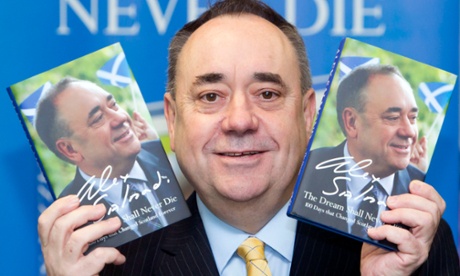
In a second speech in the debate Alex Salmond, the SNP international affairs spokesman and former Scottish first minister, revealed that Sir Nicholas Macpherson, the permanent secretary to the Treasury, threatened to sue him over remarks in his book about the independence campaign, The Dream Shall Never Die: 100 Days That Changed Scotland Forever. Salmond told MPs:
I should say Sir Nicholas Macpherson threatened to reach for his lawyers when he saw an advanced copy of a book I published recently, available £12.99 in all good book shops. He was considering matters for legal option for redress, he said in a letter to the editor of the Scottish Sun newspaper [which was serialising the book].
I’m pleased to say in the interests of freedom of speech that the articles went ahead, as did the book, and as yet we haven’t heard from Sir Nicholas’s legal representatives or from Sue, Grabbit and Runne, or whoever the permanent secretary of the Treasury uses these days.
In advance of the referendum Macpherson took the unusual step of releasing a letter he had written to George Osborne saying he would advise against the rest of the UK forming a currency union with an independent Scotland. Salmond was advocating a currency union, and he was furious with Macpherson’s intervention. In his book he subsequently wrote:
Just after the election of 2011, I had a meeting with George Osborne and Sir Nicholas in the Treasury. Normally at these sorts of meetings there is an element of political sparring between the politicians while the civil servants stay suitably inscrutable. This meeting was different. Osborne was full of bonhomie while Macpherson radiated hostility.
I have no means of looking into the soul of the permanent secretary to the Treasury but my guess is that a background reason for his intense level of politicisation may well lie in his family’s extensive land interests in Scotland.
Updated
Sir Edward Leigh, a Conservative MP, told the Commons earlier that the spending rules in the EU referendum bill meant the Yes (to staying in the EU) camp could outspend the No camp by £17m to £8m. That is because, although both campaigns get equal public funding, the political parties are allowed to spend on the basis of vote share at the general election. Leigh said this meant the Tories would be allowed to spend £5m, Labour £4m, Ukip £3m, and the Lib Dems £2m.
My problem, and I do think this is a really serious issue that needs to be addressed by the House - our problem is that the official Yes campaign could potentially have a funding pot of up to £17m as opposed to a limit of £8m for the No camp. And that is a huge difference in resources and could well affect the outcome and even if it doesn’t affect the outcome it will lead people to feel that this is not a fair campaign.
Jacob Rees-Mogg says he'll support govt tonight in vote on #EURef - but warns it'll have to come back with something much stricter on purdah
— Chris Ship (@chrisshipitv) June 16, 2015
Here is Mark Reckless, the Ukip policy chief and former MP, on Labour’s decision to abstain.
No surprise Labour abstaining on govt evading purdah. They want this to run and run. Govt efforts to rig referendum will drive votes to UKIP
— Mark Reckless (@MarkReckless) June 16, 2015
It looks as if we will get the votes before 7pm. John Penrose, a Cabinet Office minister, is winding up now in the second part of the debate.
Afternoon summary
- Ministers are braced for a serious backbench revolt when MPs vote later this evening on a move to ensure that “purdah” rules apply in full during the EU referendum bill. Under the government plans the “purdah” rules, which should apply in full during all referendums under Labour’s Political Parties, Elections and Referendums Act, will be suspended for the EU referendum. Tory Eurosceptics say this means the contest will be unfair. In a debate David Lidington, the Europe minister, announced that the government would amend the bill in the autumn to stop the government paying for campaigning activity in the last four weeks before the poll. (See 4.34pm.) But several Tory MPs, including the former defence secretary Liam Fox, have criticised this concession as unsatisfactory, and there is expected to be a vote at around 7pm. Labour will abstain, but there are claims that up to 40 MPs could rebel. I will be covering the vote.
-
Harriet Harman, the acting Labour leader, has put the party at the head of opposition to the government’s plans to scrap the Human Rights Act. In a speech she said:
There is a broad alliance of people and organisations in this country who will defend human rights. We will be part of that but we will work with those of other political parties because support for the Human Rights Act is not just the preserve of the Labour Party. We believe that, together, we can prevent the government eroding human rights. Their policy is intellectually incoherent and, worse, it’s wrong in principle.
She also admitted that defending human rights was not always popular.
Defence of those rights will not always be popular. And sometimes will be deeply unpopular. As US Chief Justice Frankfurter observed as long ago as 1950: “The safeguards of liberty have frequently been forged in controversies involving not very nice people.” We must defend the rights of every individual - those we don’t agree with or approve of, as well as those we do agree with and approve of. We have to protect the minority from the majority.
-
Shabana Mahmood, co-chair of Yvette Cooper’s Labour leadership campaign, has said that the campaign will not engage in any unattributable briefing. Following complaints about someone from either the Cooper or Andy Burnham campaign describing Liz Kendall as part of the “New Labour Taliban”, Mahmood said:
If anyone is speaking on behalf of the campaign, they will do so explicitly on the record. There will be no unattributed negative briefings about other candidates because that’s not the kind of politics Yvette has ever wanted to champion.
Labour has just confirmed that it will abstain when MPs vote on rebel Tory amendment on “purdah” later.
The Press Association’s Tim Sculthorpe says the debate could end early.
Hearing whispers the debate could end early and voting could begin in around an hour. #euref
— Tim Sculthorpe (@timsculthorpe) June 16, 2015
Michelle Obama, the US president’s wife, has been visiting Number 10 for tea with David Cameron. She has been visiting the UK to promote her Let Girls Learn initiative. In a relate move, the Department for International Development has announced an initiative to help 450,000 children in the Democratic Republic of Congo to get a primary school education.
PM and Sam Cameron have got the First Lady over for tea pic.twitter.com/3YCwgxG5De
— James Tapsfield (@JamesTapsfield) June 16, 2015
As promised earlier, here is an excerpt from the Labour MP Tulip Siddiq’s maiden speech. She is MP for Hampstead and Kilburn.
My mother came to Britain because this was a safe haven for her. Her story tells us that immigration is not simply an economic phenomenon. Britain has been seen for many years as a safe haven for political freedom. We must not let that slip away. An ill-conceived net migration target that includes refugees and asylum seekers is, frankly speaking, immoral, and it should put us to shame.
In my constituency we have shown our welcoming attitude to migrants from Ireland and to refugees fleeing political persecution in Nazi Germany. I am proud to say that that tradition stands today in Salusbury World, the only refugee centre to be based in a primary school. In my constituency of Hampstead and Kilburn, we recognise the link between aspiration and immigration. We recognise that public services will be put under pressure because of a larger population. We recognise that housing will be put under pressure, but we still recognise the benefits of immigration, and how it enriches us ...
My fear is that the EU referendum will become a proxy referendum on immigration. Both topics require a cool head and a moral compass. I believe that Members on both sides of the House need to work together to ensure that we give people the right choice to make the right decision when it comes to voting in the EU referendum.
You can read the full speech, and the maiden speech from Andrea Jenkyns (the Tory MP who beat Ed Balls), here, on the Hansard website.
EU referendum cannot become a "proxy" vote on immigration. Fantastic maiden speech by @hampsteadlabour's @TulipSiddiq pic.twitter.com/RwS9Sr7uPT
— Ben Nunn (@BenNunnUK) June 16, 2015
Updated
This is what David Lidington, the Europe minister, said during his speech early explaining what the government would do address the “purdah” concerns.
We are committing ourselves to bring forward amendments at report stage to write into the bill measures that will provide reassurance ...
We will ensure there is a clear mechanism that in those four weeks before polling day government will not undertake a range of activity that most would regard as the province of the campaigns, such as issuing mailshots, running commercial advertising campaigns and emailing voters in one way or another. There are various ways in which this could be done; some colleagues have talked about a code of conduct ...
We could, alternatively to a code of conduct, provide for language on the face of the bill to restrict government activity to particular named forms of publication, or to prohibit the government from taking part in specific forms of communication.
We will not be bringing forward the report stage on this bill until the autumn. And that means that we will have ample time for ministers to consult with parliamentary colleagues in all parts of the House in order to understand their concerns and views more closely and to try to frame a set of amendments at report stage that command the widest possible consensus within the House.
Updated
The Press Association’s Tim Sculthorpe explains why the “purdah” vote will not take place until 7pm.
So even though MPs turned up, the amendment on purdah will not go to the lobbies until at least 7pm.
— Tim Sculthorpe (@timsculthorpe) June 16, 2015
It's because the Cash amendment changes sched 1, which is now being considered under this section of the programme motion.
— Tim Sculthorpe (@timsculthorpe) June 16, 2015
Though when even MPs can't predict when a division will be called, have to question the way they plan these things...
— Tim Sculthorpe (@timsculthorpe) June 16, 2015
MPs are now debating another group of amendments, dealing with the funding rules that will apply during the referendum. They are not as contentious as the “purdah” amendments.
The Telegraph’s Christopher Hope thinks up to 40 Tory MPs will vote against the government on “purdah” later.
NEW Between 30 and 40 Conservative MPs likely to vote against Government on EU referendum purdah rules today, sources tell me
— Christopher Hope (@christopherhope) June 16, 2015
Vote on rebel amendment has been postponed
Steve Baker, a Conservative, asks why the rebel amendment has not been put to a vote.
Roger Gale, who is acting Speaker, says this could be put to a vote at 7pm.
Updated
The Tory rebel amendment has not been put to a vote.
Lidington says the government will introduce amendments at report stage to provide reassurance that the referendum will be conducted in a way that is fair.
He says there will be a clear mechanism making it clear that, in the final four weeks of the campaign, the government will not undertake activity that ought to be undertaken by the main campaigns: sending out mailshots, undertaking commercial activity, or sending out emails.
He says the government has looked at Labour’s solution, but thinks there could be a technical problem with it. It does not make allowance for the government having to publish something unexpected.
The government does not intend to be a lead campaigner in the referendum, he says.
Lidington is now addressing the “purdah” issue.
Section 125 of the Political Parties, Elections and Referendums Act is not the same as the “purdah” that applies during elections, he says. “Purdah” is a convention. This is a statute that would ban the publication of anything related to the referendum. And “publication” is very widely defined. There would be a “very wide-ranging ban” on what the government could do, he says.
When the Act was drafted in 2000, we were not in the age of Twitter and Facebook. They would now be covered.
He says immigration will form part of the referendum debate. Section 125 would stop the government making any comments about immigration, even if it were being discussed at a Council of Europe meeting. Ministers could even be prevented from responding to court cases, he says.
Bernard Jenkin intervenes. He does not accept that interpretation, he says. If Lidington has legal advice to that effect, he should publish it.
Lidington urges Jenkin to read the wording of Section 125, and apply it to day-to-day government business.
Addressing the Labour amendments saying the Bank of England, the Office for Budget Responsibility and the government should be required to publish reports on the consequence of Britain leaving the EU, Lidington says he does expect the government to publish a document of some form, perhaps a white paper.
But he does not think it is right to make this a legislative requirement, he says.
And it will be for the main campaigning bodies to decide what information they publish.
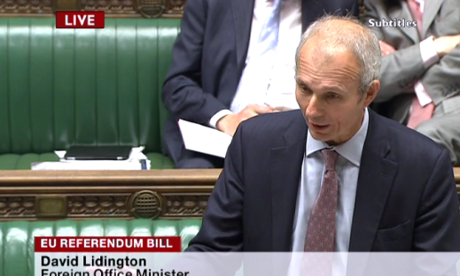
David Lidington, the Europe minister, is summing up now.
He starts by addressing the SNP’s call for a “double majority”.
He says the government will not accept this.
He says the bill does not make provision for what happens after the referendum.
The referendum is advisory, he says.
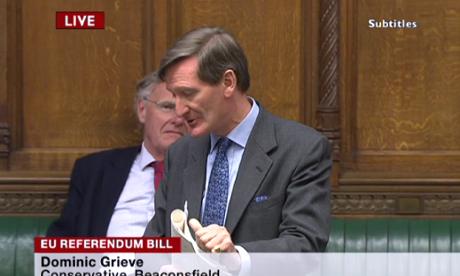
Dominic Grieve, the Conservative former attorney general, says the government has not made a case for exempting the government from the “purdah” rules. The government’s approach has been “cack-handed”, he says.
It would have been better for the government to keep Section 125 of the Political Parties, Elections and Referendums Act (the one that applies “purdah” in referendums) and make the case for any exemptions, he says.
Steven Baker, chair of the new Eurosceptic group, Conservatives for Britain, says he does not want to have to rely on assurances from the government. He wants it to obey the law.
Grieve says he is willing to trust the minister.
But if the government did not produce a clear amendment in the autumn, at that point he would vote for “purdah” to be reintroduced, he says.
Updated
I’ve updated an earlier post, at 2.07pm, with more quotes from Sir Bill Cash. You may need to update to get them to show up.
Kate Hoey, the Labour Eurosceptic, has taken to Twitter to criticise Kenneth Clarke for taking up too much time.
Ken Clarke just spoken for over 25 minutes. Rather selfish when so many members want to speak and so little time #referendum
— Kate Hoey (@KateHoeyMP) June 16, 2015
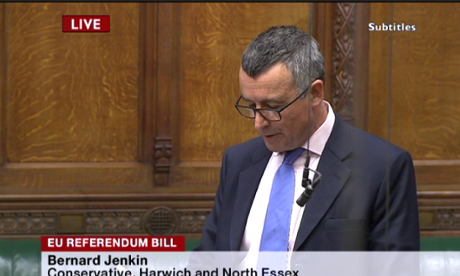
Back in the Commons Bernard Jenkin, the Conservative Eurosceptic, is speaking now. He has been re-elected unopposed as chair of the Commons public administration committee. He says he organised the campaign against a north east regional assembly. At one point he complained to the cabinet secretary about a minister ignoring the “purdah” rules. The cabinet secretary told him it was a matter for the minister. That just shows that “purdah” rules are, if anything, too weak, not too strong.
He says “purdah” did not stop David Cameron campaigning and speaking out in the final days of the Scottish referendum campaign.
But it did stop him using the government machine to make his case, he says. That is how it should be.
Updated
Business for Britain says there is polling evidence suggesting people in Scotland do not support the SNP’s call for a “double lock”. (See 11.07am.)
.@AlexSalmond Scottish voters reject your proposal for a referendum lock pic.twitter.com/aLu0nD12lO
— Business for Britain (@forbritain) June 16, 2015
But the question does seem slightly misleading, because it presents this as an either/or, when in fact what the SNP is proposing is overall majority plus majority in each country. (Majority in each country logically implies overall majority too, but this chart suggests they are opposites.)
Back in the Commons Clarke is just winding up.
He says he does not support the Labour amendment saying the Bank of England should have to publish a report on the consequences of leaving the EU. The Bank will probably carry out work like this, he says. But it should not find itself thrust into the middle of such a contentious public debate.
Earlier the Labour MP Tulip Siddiq gave her maiden speech in the debate. It has had rave reviews from her colleagues. I’ll post some quotes from it later.
Amazing powerful maiden speech without notes from @TulipSiddiq on ensuring EU referendum not a proxy referendum on immigration #labour2020
— stellacreasy (@stellacreasy) June 16, 2015
Fantastic maiden speech by @TulipSiddiq, with her mother, and aunt Bangladesh Prime Minister Sheikh Hasina watching from the public gallery
— Mike Gapes (@MikeGapes) June 16, 2015
outstanding maiden speech by @TulipSiddiq highlighting huge benefits of immigration, cautioning us re EU referendum potential to harm this
— Thangam Debbonaire (@tdebbonaire) June 16, 2015
Outstanding maiden speech by @TulipSiddiq rightly wins plaudits from across the House of Commons @CamdenLabour
— Keir Starmer (@Keir_Starmer) June 16, 2015
I’ve beefed up one of my earlier posts, at 12.51pm, with full quotes from Alex Salmond’s speech. You may need to refresh the page to get them to come up.
Updated
Clarke urges his colleagues to wait until they have actually seen the government compromise on “purdah”, at report stage in the autumn (see 1.04pm), before voting against the government.
They cannot just ignore the risk they could be closing down the government, he says.
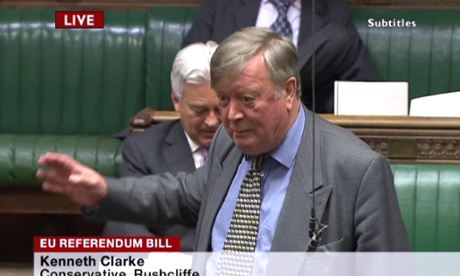
Kenneth Clarke, the Conservative former chancellor, is speaking now.
He says he hopes the Conservative party does not follow the example of Harold Wilson and tear itself apart over this. He says he has remained on good terms with Eurosceptic colleagues.
He says he is suprised colleagues are getting so excited about these matters. These technical issues, like “purdah”, will not affect the result, he says. He urges MPs to keep things in proportion.
Every effort is being made to assure MPs that this will be conducted fairly, he says.
Sir Bill Cash intervenes. So is the Electoral Commission wrong?
Clarke says he once gave evidence to an inquiry about the Electoral Commission. He said it should be abolished as a “useless quango”.
He says Cash has never accepted the result of referendums with which he has disagreed.
After the 1975 referendum, not a single MP changed his or her mind in the light of the result.
In the Commons Mike Gapes, a Labour MP, has just finished his speech supporting his amendments, calling for the referendum to be held before the end of 2016, or before 1 July 2017.
When he finished Alex Salmond raised a point of order saying he had not received David Lidington’s letter. From what he read on Twitter, it was a begging letter to Tory MPs, he said. He said it should have been sent to all MPs.
Catherine Haddon, a research fellow at the Institute for Government, has written a lengthy blog post about the “purdah” issue. She says that both sides in the referendum should agree rules about the role of the civil service and that “purdah” is just one way of addressing this.
Whatever the status of purdah it is clear that some kind of agreement will be necessary. The Scottish referendum guidance was the product of the negotiations over the Act which established the referendum and an agreement between the Scottish and UK government. The same may occur this time between the government and its own rebels and the Labour opposition. A political solution will have to be found to another thorny and confused constitutional issue.
Cash says the government should keep Section 124 of the 2000 Act (the one that says “purdah” applies during referendums) for now, and come back at report stage with new amendments that could introduce exemptions. This is what Liam Fox was suggesting in his speech earlier. (See 1.36pm.)
UPDATE AT 3.10PM: Here are some more quotes from Cash’s speech. I’ve taken them from the Press Association.
The problem that we’ve got here is that this situation that we’re in now is not necessary and I speak more in sorrow than anger about this. And I have spoken to the Minister for Europe and we’ve had a good discussion as we always do and I was grateful for the fact that he did mention in his own letter that he was grateful for the constructive way in which these concerns were raised. But I have to say they haven’t allayed those concerns. I put it this way round - that ultimately it raises a question of trust and the problem that we have been faced with is that there are extremely sound reasons for the provisions in Section 125 [of the Political Parties, Elections and Referendums Act 2000, which guarantee purdah] ...
By the way, this has absolutely nothing to do with Maastricht or anything like that - that was a rebellion because we didn’t have a referendum. This is merely to make sure that the voters get a fair choice, that must be one of our prime duties.They have an absolute right to know that the way in which the referendum is conducted will in no way be recanted or manipulated, no way whatsoever - either way of the argument either yes or no. But by taking this out and then asking us to consider on the basis of consultations yet to come seems to me to be quite bizarre.
Updated
Bernard Jenkin, a Conservative, asks Cash how he responds to the government claims that keeping Section 125 of the 2000 Act would just to too restrictive.
Cash says he does not accept it. If these rules were good enough for the Scottish and Welsh referendums, why are they not good enough for the EU referendum.
Kenneth Clarke asks Sir Bill Cash how far he wants to apply this.
If strictly applied, Section 125 would stop ministers taking advice on a matter relating to Europe? Does Cash want that?
Cash cites what the Electoral Commission said in its briefing to MPs (pdf). The commission said getting rid of Section 125 “could mean that governments and others will be free to spend unlimited amounts of public funds promoting an outcome at the referendum right up until polling day.”
It goes on:
The underlying legislative basis for referendums held under PPERA is that campaigners will come forward to put the arguments for each side of the debate to voters. These campaigners are subject to a regulatory regime including limits on the amount that they can spend during the regulated referendum period. In the Commission’s view, there is a risk that the use of significant amounts of public money for promotional activity could give an unfair advantage to one side of the argument. Unlimited government spending would also undermine the principle of having spending limits for registered campaigners. This has the potential to be particularly significant in the case of a referendum on the UK’s membership of the European Union where there would be four governments in the UK with views on the issue being debated, as well as local authorities who may have strong interests in promoting a particular outcome.
Cash explains what the bill does. It ensures that Section 125 of the Political Parties, Elections and Referendums Act, which ensures that “purdah” rules apply during referendums, will not be in force during the EU referendum.
But Section 125 was there for a good reason, he says. It was about ensuring that referendums are fair. And it applied during referendums held under Conservative-led governments (on AV, the powers of the Welsh assembly and Scottish independence).
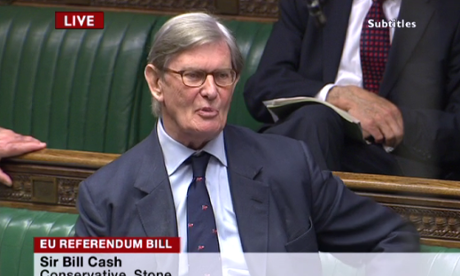
Sir Bill Cash, who tabled the main Tory “rebel” amendment, is speaking now.
Unusually, he is speaking sitting down. He says he has been in hospital for the last four day. Lindsay Hoyle, the deputy Speaker, urged him to stay sitting down for his own benefit.
He says the government has listened on other issues. But, on “purdah”, what it is doing is “a step in the wrong direction”, he says.
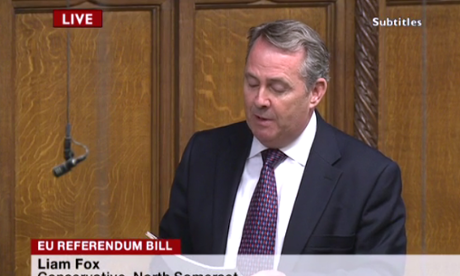
Liam Fox hints he may rebel as he criticises government's compromise over 'purdah'
Liam Fox, the former defence secretary, was the first Conservative to speak in the debate. He welcomed the government’s decision to back down over the timing of the referendum but suggested that its compromise over “purdah” was not acceptable.
It was essential for the referendum to be fair, he said.
It is unseemly at best for the executive to exempt itself from the legal, electoral and constitutional arrangements that it finds inconvenient during any electoral process ...
The fear in this debate is that the government, at all levels, central and local, can use taxpayers’ money to support one side of the debate, potentially changing the course of that debate. And the precedent that that would set would be an extremely unfortunate one in our country.
Fox said that David Lidington’s letter showed that the government was willing to address the concerns about “purdah”. There were two alternatives, he said. The government could carry on exempting itself from the “purdah” rules that normally apply, but set out a new code of conduct to address concerns (which seems to be what the government is suggesting, although Lidington has not been as blunt as that). Or it could accept the Tory rebel amendment (amendment 11) that reinstates “purdah” and then, at report stage, ask the Commons for certain exemptions, he said.
Fox made it clear that he favoured the second approach. The first approach would suit the executive, he said.
The second asks parliament to be given due respect and to set out the exemptions it believes are acceptable.
And he ended with a hint that he may rebel over this.
I have not once in 23 years in the House of Commons voted against my own party on a whipped vote. I urge my right honourable friend to not put those of us in that position tonight to be forced to take an alternative course.
I’ve just the way the Speaker has “grouped” the amendments (ie, the order in which topics are being debated). The key amendment on “purdah” is now being dealt with in the first half of the debate, which means the key vote (assuming there is one) will be at about 3.30pm.
No 10 lobby briefing - Summary
All the questions at the Number 10 lobby briefing were about the EU referendum bill. Here are the key points.
- Ministers will not publish their amendments to address the “purdah” concerns until the bill gets its report stage in the autumn, the prime minister’s spokeswoman said. She said David Lidington had said out the government’s approach in the letter sent to MPs (see 11.57am), but she said it would take a few months to get the details right.
- Downing Street is not ruling out using government money to distribute leaflets highlighting the advantages of staying in the EU following David Cameron’s renegotiation. The Foreign Office is ruling out doing a mass publicity mailshot “in the last four weeks of the campaign”. Asked if the government would rule out doing this at an earlier point in the campaign, the spokeswoman said: “Let’s not get ahead of ourselves. That’s a debate for later on.” She pointed out that Cameron has said the government will not be neutral on this issue.
- She would not rule out the government adopting Labour’s approach to strengthening purdah rules (forcing the government to publish in advance a list of EU-related publications it intended to release - see 9.33am). As an alternative approach, she also would not rule out toughening the codes of conducts for ministers and civil servants to address this issue.
-
She confirmed that the government has not ruled out holding the referendum on the same day as local elections in 2017. The government’s concession only rules out holding it on the day of Scottish, Welsh and Northern Ireland elections in 2016, she said. The amendment refers to legislature elections. The local elections in 2017 are not legislature elections.
Kenneth Clarke, the Conservative former chancellor, intervenes. He suggests to Alex Salmond that Salmond’s secret wish is for the UK to vote to leave the EU, but Scotland to vote to stay. Clarke says he thinks that would be a disaster. And it would led to Scotland leaving the UK, he says.
Salmond says he is wary of Tory MPs telling him what his secret wish is. He points out that Alistair Carmichael, the Lib Dem former Scottish secretary, is in trouble over a leak purporting to reveal the SNP’s secret wish at the election. Salmond says his private wish is the same as his public one, which is for the UK to vote to stay in the EU. But he says Clarke has got a point; if Scotland were to vote to stay, but the UK as a whole were to vote to leave, that would provide the material change of circumstance that would justify a second independence referendum.
- Kenneth Clarke says Scotland would end up leaving the UK if the UK as a whole voted to leave the EU, but Scotland wanted to stay.
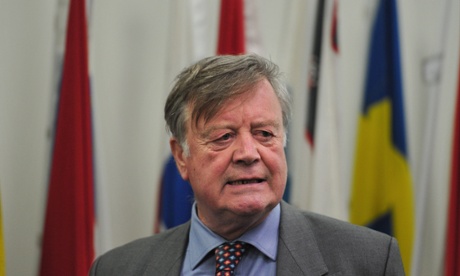
UPDATE AT 2.42PM: Salmond also explained why the SNP thought “purdah” rules should apply. This is what he said. I’ve taken the quotes from the Press Association.
I hear from the government they can’t really function in a purdah period, that government won’t be able to make representations to European Council, that it will be so impossible over the 28 day period. But that’s what happens in each and every general election we have had. I didn’t notice recently, in April and May, that the administration of this country ground to a halt - a lot of people thought it was better not having a fully activated government in the campaign period. If it can be done in each and every general election, then it can be done in this referendum campaign.
He also explained what might happen if “purdah” rules did not apply.
Let’s take a scenario, the possibility, that at some point in the course of the referendum campaign next year or the year after that the No side moves to the front of that referendum. In order to try and get the result the prime minister Cameron would wish of that time, that he wants a Yes result, he needs a last minute initiative. And with no rules or restrictions saying new political initiatives should not be made at a government level in the last 28 days of the campaign, what would be to stop such a prime minister at that time doing a tour of European capitals ... suspending Question Time in the national parliaments and flying as one here to London to announce a new commitment, a new undertaking, a new pledge - a new vow?
To say only if you vote Yes, we will secure these new terms we didn’t mention before the campaign started but now we undertake as good Europeans, and let’s just say that vow was influential in persuading people, or enough people, to switch their vote. And let’s just say that after the dust was settled, all of these European leaders did not really want to go forward with the vow they had made?
How would people in the United Kingdom then view that sort of situation? Wouldn’t it therefore be better in terms of what is on the face of this Bill that explicitly, in the last 28 days, of the campaign period allows people to make a judgment on the arguments that have been properly presented without the use of the government machine to bias the result one way or another.
Salmond, of course, was describing more or less exactly what happened in the final stage of the Scottish independence referendum.
Updated
Alex Samond is now making the argument for the SNP’s “double majority” amendment. (See 11.07am.)
Updated
MPs debate the EU referendum bill
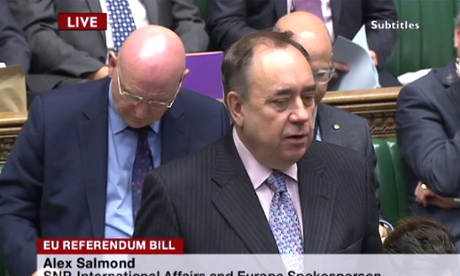
Alex Salmond, the SNP international affairs spokesman, stands up to make a point of order at the start of the debate.
The government amendment ruling out holding the referendum on the day of the Scottish elections is a “starred amendment”, he says (which means it has only just been tabled, and would not normally be called for debate). That is because it was tabled after 9pm last night. Yet MPs will debate it this afternoon. Is that allowed?
Lindsay Hoyle, the deputy speaker, says it is unusual, but allowed.
Updated
I’m back from the Number 10 lobby briefing, and will post a summary shortly.
In the Commons the EU referendum bill debate is about to start.
Lidington says 'purdah' changes will 'put beyond any doubt' fairness of referendum
Guido Fawkes has published the full text of the letter sent by David Lidington to MPs promising to address the purdah concerns. Here is the key passage.
The foreign secretary said during the debate that the government will exercise proper restraint to ensure a balanced debate during the campaign. We have no intention of, for example, spending public money to deliver mailshots to households in the last four weeks of the campaign.
Working out a system that will reassure colleagues and voters that the referendum is a fair fight, yet will preserve the government’s ability to act in the national interest is not straightforward. It is important that it is legally clear and robust.
Therefore, we will work with colleagues over the next few months to understand their specific areas of concern and bring forward at report stage in the autumn government amendments that command the widest possible support within the House and put beyond any doubt that the campaign will be conducted throughout in a manner that all sides will see as fair.
As I said earlier, this does not go much beyond the assurances offered in the second reading debate next week. (See 11.24am.) It is unlikely to be enough to stop Tory MPs voting against the government.
I’m off to the lobby briefing now. I will post again after 12.30pm.
Turning away from the EU referendum bill for a moment, Liz Kendall, one of the four Labour leadership candidates, has written to the party’s general secretary, Iain McNichol, saying the party should make contact with all the supporters it identified during election campaigning and encourage them to get involved in the leadership contest. Here’s an extract from her letter.
Labour members and activists have worked hard in recent years to identify millions of Labour supporters around the country.
We need them to be part of the debate about how Labour renews itself.
So today I am asking you to begin a process of contacting all of those Labour supporters who the party has identified since 2010, and invite them to become party members, registered supporters and affiliated members.
They need to have their say on building a Labour party that can win in 2020. The country needs a strong and effective Labour party – we need as many people who share our values involved in that process as possible.
Ministers promise amendments to address "purdah" concerns
David Lidington, the Europe minister, is trying to address the “purdah” issue by telling MPs that the government will amend the EU referendum bill to ensure that the campaign is conducted fairly, the BBC reports.
Breaking: govt tells Tory MPs it will amend EU ref bill at report to ensure campaign conducted in way "that all sides will see as fair".
— James Landale (@BBCJLandale) June 16, 2015
In email to MPs, EU Minister @DLidington promises system "that will reassure colleagues and voters that the referendum is a fair fight"
— James Landale (@BBCJLandale) June 16, 2015
@DLidington promises: "we have no intention of spending public money to deliver mailshots to households in last 4 weeks of the campaign"
— James Landale (@BBCJLandale) June 16, 2015
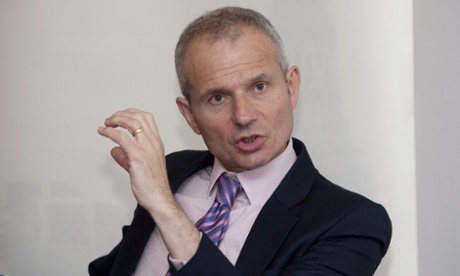
However, it is not clear whether this promise goes beyond the assurances given in the second reading debate last week. (I’ve asked the Foreign Office for clarification, and they are getting back to me.) This is what Philip Hammond, the foreign secretary, told MPs:
I can assure the House that the government have no intention of undermining those campaigns, and they do not propose to spend large sums of public money during the purdah period prescribed by section 125 of the Political Parties, Elections and Referendum Act 2000. A vibrant, robust debate in the best traditions of British democracy is in all our interests. If my hon friend’s concern is that the government are thinking of spending public money to deliver doorstep mailshots in the last four weeks of the campaign, I can assure him that the government have no such intention. The government will exercise proper restraint to ensure a balanced debate during the campaign.
And this is what David Lidington said when winding up.
The question I take from the debate is this: how do we provide the credible assurances that give effect to what my right hon friend the foreign secretary said—that the government will be restrained in their use of public money and have no wish to compete with the umbrella campaign organisations whose job it will be to lead the yes and no campaigns? ... As the cill goes forward over future weeks and months, within the House we will need to consider how we put in place the right framework so that what my right hon friend talked about will be given proper effect, while giving the government the freedom to publish without being constrained in the way I have described.
EU referendum bill debate - Timetable
You can read the EU referendum bill, the explanatory notes, and a document listing all the amendments being debated today here.
The committee stage debate is due to start at 12.30pm.
MPs will start with Clause 1 proceedings. During this stage, they will debate the SNP’s call for a “double majority” lock to be included in the bill, ensuring that the UK only leaves the EU if there is a majority for leaving in England, Scotland, Wales and Northern Ireland individually, as well as in the UK as a whole, and Labour amendments saying the government must say in advance what it intends to publish during the “purdah” period (see 9.33am) and saying that the government should publish reports from the Bank of England and the Office for Budget Responsibility on the consequences of leaving the EU. This section of the debate should take no more than three hours.
Then MPs will debate Clause 3 proceedings, covering “purdah”. An amendment tabled by Sir Bill Cash and 21 other Eurosceptics (mostly Tories, but with some Labour and DUP MPS too) says “purdah” rules should apply during the referendum. The SNP has proposed something similar, and it has also tabled an amendment saying a “referendum fairness board” should be set up to police the “purdah” rules. If any of these amendments are put to a vote, those divisions should take place at 7pm.
UPDATE AT 1.20PM: I’ve just the way the Speaker has “grouped” the amendments (ie, the order in which topics are being debated). The key amendment on “purdah” is now being dealt with in the first half of the debate, which means the key vote (assuming there is one) will be at about 3.30pm.
Updated
There are elections in Wales and Northern Ireland on the same day as the Scottish elections next year, and politicians in those countries have also welcomed the government’s decision to rule out holding the EU referendum then. This is from the Plaid Cymru MP Hywel Williams.
The assembly election next May will offer people in Wales an opportunity to cast their verdict on the Labour Welsh government’s record of managing our vital public services. This issue is of the utmost importance and is worthy of a distinct and rigorous public debate. The same is true of the referendum on the UK’s continued membership of the European Union - something which brings huge benefits to Wales’ economy, our education and agricultural sectors, and some of our poorest communities. The decision to hold these polls on separate days is good news for democracy and debate.
Who knew? @BBCNormanS tells @vicderbyshire "purdah" comes from Persian پرده, meaning "curtain" #victoriaLIVE
— Chris Mason (@ChrisMasonBBC) June 16, 2015
The Ukip MEP Roger Helmer has welcomed the government’s climb-down over the timing of the EU referendum.
V. pleased that Cameron has agreed not to combine Referendum with Election. "OUTs" have the motivation, while the "INs" lack all conviction.
— Roger Helmer (@RogerHelmerMEP) June 16, 2015
And the Lib Dem peer Paul Strasburger thinks the Tories are “at each others’ throats”.
Tories are at each others throats daily over EU referendum. Is the government going to become totally dysfunctional as the vote approaches?
— Paul Strasburger (@LordStras) June 16, 2015
The TaxPayers’ Alliance is also siding with the Tory rebels on the “purdah” issue. This is from its chief executive, Jonathan Isaby.
The whole point of referendums is that the government of the day cedes its power over an issue to the voting public; ministers are deferring to the electorate, so it would be wrong if the government machine were to use taxpayers’ money to skew the outcome one way or the other. If the government is saying ‘we trust the British people to make the decision’, it should not be unduly and corporately trying to dictate what that decision is.
Daniel Hannan, the Eurosceptic Conservative MEP, is taking much the same line as Business for Britain (see 10.01am) on the importance of “purdah”.
The government can the #EUref on any day it pleases; but rigging the rules to allow state resources to be deployed would be outrageous.
— Daniel Hannan (@DanHannanMEP) June 16, 2015
Here is George Osborne, the chancellor, on the inflation figures. (See 10.05am.)
Today we see further evidence of an economic plan that is working, with a powerful mix of low prices and rising wages, which are continuing to grow well above inflation. This is good news for working people and family budgets, and shows the economic recovery is going from strength to strength. Of course the job is not done and we will continue to remain vigilant to all risks, particularly when the global economic situation is so uncertain.
Britain is out of negative inflation, today’s figures from the Office for National Statistics reveal. Here is the start of the Press Association story.
The UK’s brush with negative inflation came to an end after just a month as it rose to 0.1% in May, official figures have shown.
Slides in food and fuel prices have started to ease off, meaning the Consumer Prices Index (CPI) measure of inflation rose for the first time since October, according to the Office for National Statistics (ONS).
CPI had fallen to minus 0.1% in April - the first time it had been negative since 1960. The rise to a positive reading of 0.1% was in line with City expectations.
ONS statistician Philip Gooding said: “Last month CPI turned negative, mainly because of falling transport fares due to the timing of Easter. This month, that fall has been reversed.
“In addition, the falls in food and fuel costs over the last year have eased this month, helping to push inflation up.”
Here is the ONS summary with the key figures. And here is the statistical bulletin with the full details (pdf).
In a news release Robert Oxley, campaign director for the Eurosceptic group Business for Britain (which many expect to have morphed into the Out campaign by the time of the referendum) says that, although the government’s decision to rule out holding the referendum on the day of the Scottish elections next year is “welcome”, re-instating “purdah” is much more important in the bill. He said:
Purdah rules go to the heart of fairness in any democratic vote. By scrapping the rules that prevent the machinery of government being used to unduly influence the outcome of a referendum, the government look like they are stacking the deck. The poll must be fair, otherwise the result will lack legitimacy in many people’s eyes making it impossible for the government to win the argument, not matter what they do. Ministers have clearly been poorly advised on the need for purdah rules and should think again before they damage the credibility of the whole process.
The decision by Downing Street to rule out the EU referendum on voting day for the devolved Welsh and Scottish parliaments next May comes despite – or perhaps because of – a controversial precedent.
There has already been a UK-wide referendum on a devolved parliament election day: the AV referendum on proportional voting on 5 May 2011.
Like the prospect of holding the EU referendum on devolved parliament election day next May, that too was opposed by the Scottish National party. Alex Salmond, then SNP leader, described it as “stupid” because it would weaken campaigning for the the “yes” ticket – one which he backed.
Salmond argued that Scottish politicians who backed AV, for all its faults, would not campaign as vigorously for a yes because they were focused too heavily on the Holyrood contest. “We warned Nick Clegg right at the very start of this, a year ago, not to have them on the same day. He seemed to think it was a smart manoeuvre,” he said at the time.
In the event, Salmond’s side lost that referendum too, but won the landslide for the SNP in the Holyrood election which paved the way for last September’s independence referendum.
There is a significant difference with the two UK referendums however. The Holyrood election in 2011 wholly overshadowed the AV debate in Scotland. Even many of its backers saw AV as weak and it failed to capture voters’ imaginations. The EU referendum would have the opposite effect, likely dominating political debate and overshadowing Holyrood and Cardiff Bay elections in 2016.
Labour says it will not back Tory rebels over "purdah"
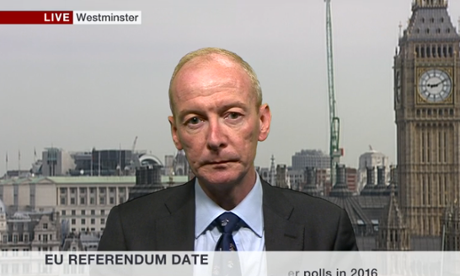
Pat McFadden, the shadow Europe minister, told BBC News in an interview a few minutes ago that Labour would not be supporting the Conservative rebels on the “purdah” issue. Labour thought it was reasonable for the government to take a view in the campaign on whether or not Britain should remain in the EU, he said.
We are not in the same position as the Conservative Eurosceptics who don’t want the government to take a view at all. That is not our position. What we want today from the government is clarity on how they will operate during the referendum period.
He said the Labour amendmenst on “purdah” were designed to get the government to clarify in advance what material it would be publishing during the campaign.
Asked if Labour would vote with the government on this, he said the party would wait and see what ministers said in the debate.
He also claimed the government was making “an awful hash” of its handling of the bill.
Really, the government are making an awful hash of this. Last week we had a debacle over whether or not there would be collective cabinet responsibility for government ministers on the question of whether or not we stay in the European Union. This week we’ve got another mess, this time over the date of the referendum and possibly over the rules under which the government conduct themselves too
In a statement, Alex Salmond, the SNP’s international affairs spokesman and former first minister, says that the U-turn over the timing of the referendum will be followed by “more Tory retreats and defeats”. He said:
The government faced retreat or defeat on this issue.
It was clear that the Tories were angling to hijack Scottish elections with the EU referendum and the united opposition have blown them off course.
This is very much the shape of things to come and has hopefully taught this arrogant Tory government to cease their disrespect towards the nations of Scotland and Wales and the people of Northern Ireland.
There will be more Tory retreats and defeats before this bill is through.
The first government U-turn over the EU referendum bill came very quickly.
Last week, asked to rule out holding the referendum on the same day as next year’s Scottish elections, David Cameron told MPs:
My view is that the timing of the referendum should be determined by the timing of the renegotiation—when the renegotiation is complete, we set a date for the referendum. I do not think it should be determined by the timing of other elections. For instance, it was possible to have the AV referendum and other elections on the same day. I think people are capable of making two decisions.
But there was considerable opposition to this in the Commons and last night, before MPs had even begun line-by-line scrutiny of the bill, Cameron changed his mind. As Nicholas Watt reports in the Guardian, a government source said:
We’ve listened to the views expressed from MPs across the House and agreed that we won’t hold the referendum on the same day as legislature elections.
This is the first illustration we’ve had this parliament of quite how vulnerable Cameron is when the opposition can unite against him. Officially he has a majority of just 16, but Labour, the SNP and the DUP (because elections to the Northern Ireland assembly are also taking place on the same day as the Scottish elections next year) were strongly opposed to the referendum clashing with the Holyrood poll, and some Tories were in their camp too, and, given the arithmetic, Cameron knew that if this went to a vote this afternoon, defeat was inevitable.
But the fun isn’t over. There is another fight looming over whether to allow 16 and 17-year-olds to vote in the referendum, but that won’t reach the Commons until Thursday. This afternoon, as MPs start debating the bill’s committee stage, Cameron faces a revolt over his plan to exempt the referendum from the normal “purdah” rules that restrict government activity in the run-up to an election. Labour, the SNP and Tory rebels have all expressed concerns about this. Ministers are not likely to lose, because Labour’s stance is more equivocal than the Tory rebels’ and it looks as though they will not join forces if it comes to a vote. Also, as the Guardian reports, ministers are expected to offer a concession today, firming up the promise from Philip Hammond, the foreign secretary, that the government will not spend taxpayers’ money on a massive leaflet campaign in the run-up to polling day. But Bernard Jenkin, a Conservative Eurosceptic, told the Today programme this morning that MPs like him would not back down and would insist on “purdah” rules being included in the bill. He told the programme:
It’s about fairness and trust. Who will trust the result of this referendum if the government have been able to deploy their vast resources pushing propaganda through people’s letterboxes?
It’s about journalists ringing up civil servants and saying ‘What does the government mean by this?’ and, instead of saying, as during a general election, ‘I’m sorry that’s a matter for the No campaign or the Yes campaign’ the government uses its entire publicity machine to brief the media, to skew the battlefield in favour of their particular side of the debate. I don’t think anybody in their right mind wants this. I don’t think the government wants it. I think they realise they have opened a bit of a Pandora’s box. They will be looking for a way to resolve this.
But the bottom line is they should restore purdah in this Referendum bill and, if they want to bring forward amendments later in the bill to deal with particular concerns they have got, let’s talk about that. But we can’t back down on this amendment [the one saying “purdah” should be included in the bill].
I’ll be covering the debate in detail.
Here is the agenda for the day.
9.30am: Inflation figures are released.
11.30am: George Osborne, the chancellor, takes questions in the Commons.
12.30pm: MPs start debating the EU referendum bill.
As usual I will be covering the breaking political news as it happens, as well as bringing you the best reaction, comment and analysis from the web. I will post a summary at lunchtime and another in the afternoon.
If you want to follow me on Twitter, I’m on @AndrewSparrow
Updated