Afternoon summary
- With 100 days to go until the general election, the Conservatives and Labour have been campaigning on issues that will confirm suspicions they are both following “core vote” strategies, intended to appeal most to their traditional supporters. Ed Miliband, the Labour leader, has used a major speech to argue that only his party can save the NHS, while David Cameron has given a string of interviews, kicked off by a Telegraph one in which he said that cutting the benefits cap would be the first act of a new Conservative government.
- Alan Miliburn, the Labour former health secretary, has said his party is running a “pale imitation” of its losing 1992 general election campaign as it retreats to its “comfort zone” on the NHS. Liz Kendall, the shadow care minister, has strongly rejected this claim. (See 3.17pm.) Union sources point out that Milburn works for PwC, a private sector consulting firm providing health services to the NHS and that PwC has an interest in government expanding the role of the private sector in health.
- Cameron’s plans to target benefit cuts at the young and vulnerable have come under fire from within his own party. Sarah Wollaston, the Conservative chair of the health committee, said she did not support scrapping housing benefit for 18-to-21-year-olds, after the prime minister toured the television studios detailing some of the Tories’ proposals to cut another £12bn from the welfare budget. Cameron said reducing the benefits cap would encourage more people to find work.
-
Cameron has criticised the archbishop of Canterbury, Justin Welby, for saying he was more shocked by the plight of Britain’s hunger-stricken poor than by suffering in African refugee camps. In an interview, Cameron said that did not make sense.
I don’t accept the comparison between what happens in sub-Saharan Africa, where you’ve got people living on less than a dollar a day, proper, grinding poverty, that is not what we’re talking about. And I don’t think the comparison stands any sense. What’s happened in Britain is more people in Britain are in work, inequality has come down.
-
Cameron has revealed that the government has offered to help the new Greek government collect tax. Describing his conversation with the new Greek prime minister, Alexis Tsipras, he said:
While we’re obviously not ideological soulmates, there was actually one offer I made. Britain has led the world in transparency about tax and companies paying their taxes properly and making sure wealthy individuals pay their taxes properly. That’s something we can work with the new Greek government on, because we have led the world in that and obviously that’s an issue in Greece as well. That offer was well-received.
-
Labour has published details of its 10-year plan for health and care. (See 2.09pm.) In a speech in Manchester, Miliband said the election would decide the fate of the NHS.
Our country’s most precious institution faces its most perilous moment in a generation. A choice of two futures: Continuing with a Conservative plan, which has already led to an NHS in crisis and which threatens the service as we know it. Or a Labour plan to rescue our NHS, invest in its future and join up services from home to hospital.
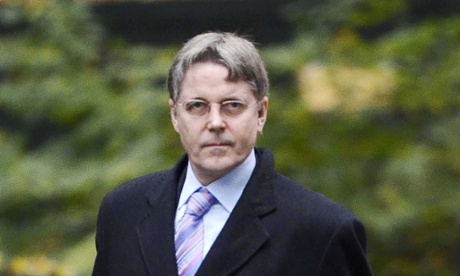
- Sir Jeremy Heywood, the cabinet secretary, has rejected claims that he was to blame for holding up publication of the Iraq inquiry report. (See 4.15pm.)
-
Heywood has been criticised by MPs for interpreting the special advisers’ code in a way that allows them to play a part in byelection campaigns.
Sir Jeremy Heywood brought his position into "disrepute" over his interpretation on rules of when spads can campaign in by-elections say MPs
— Christopher Hope (@christopherhope) January 27, 2015
Wow!. "I don't think you are being honest", Greg Mulholland MP tells Sir Jeremy Heywood, head of the civil service in spads campaigning row.
— Christopher Hope (@christopherhope) January 27, 2015
- The Commons foreign affairs committee has revealed that Sir John Chilcot will give evidence to it on Wednesday next week about the delays in the publication of his report.
-
The government has said it will spend £50m on a national memorial to the Holocaust, a learning centre and and endowment fund. All main parties have backed the announcement, ensuring it will go ahead whoever wins the election. Cameron said:
Today - with the full support of the deputy prime minister and the leader of the pposition - I am accepting the recommendations of the Holocaust Commission. Britain will have a national memorial, a world-class learning centre and an endowment fund to secure Holocaust education forever.
That’s all from me for today.
Thanks for the comments.
Updated
Here’s the Guardian video with an excerpt from Ed Miliband’s speech.
Sir John Chilcot will be giving evidence to a Commons committee himself next week.
Sir John Chilcot to give evidence to the House of Commons Foreign Affairs Committee on February 4 about his delayed report into the Iraq war
— Chris Mason (@ChrisMasonBBC) January 27, 2015
Sir Jeremy Heywood's Iraq evidence - Summary
Here are the key points from Sir Jeremy Heywood’s evidence about the Iraq inquiry.
-
Heywood rejected claims that he was to blame for holding up publication of the Iraq inquiry report.
I do not think I have been responsible for delays to the Chilcot process.
Explaining the role he had played, he said that it had been his job to resolve disputes about what could and could not be published, but he implied this only took some weeks.
There was a disagreement, a discussion between departments and the inquiry as to whether or not certain very sensitive documents, which previously would never have been contemplated for publication, should be published, as [Sir John Chilcot] wanted to. That issue came to me in line with the protocol that was agreed. And over a passage of weeks we resolved that.
- He said that he had adopted a “bias towards transparency” in deciding what could be published and that Chilcot would be able to publish everything he wanted in his report. It would include all Tony Blair’s memos to George Bush, and the Blair side of his conversations with Bush. There were very few redactions in those papers, he said, covering issues like relations with foreign governments which were not material to the inquiry.
- He said he was not aware of any evidence that people criticised in the report were trying to hold it up by delaying their response to the “Maxwellisation” letters from the inquiry. They were entitled to respond to them, he said.
- He said he did not think it would be feasible for the inquiry to publish a narrative report, avoiding personal criticism of individuals, before the election. But if he was asked to look at this, he would, he said.
- He said he did not think it would be wise for parliament to try to subpoena the report and publish it ahead of the election.
-
He said his team would talk to Chilcot after the inquiry was over to consider what lessons could be learnt about management of the inquiry.
Updated
Heywood says it would be “distracting” to try to conduct a “lessons learnt” inquiry before the inquiry is over.
It would be best to get the report published as quickly as possible.
The Iraq section is over.
I will post a summary shortly.
Q: Why not get the inquiry to publish a narrative report now, saying what happened, but avoiding criticism of individuals?
Heywood says that is a matter for the inquiry. He does not know how feasible that would be.
Q: What would you say if the prime minister asked for your advice on this?
Heywood says he thinks it would be very hard to disentangle the narrative from judgments about what happened. But if the prime minister asked for this, he would look into it.
Greg Mulholland, the Lib Dem MP, goes next.
Q: Is the Maxwellisation process to blame for the delay?
Heywood says he cannot comment on that. The letters have only recently gone out.
Q: Are people being criticised in the report deliberately holding things up?
Heywood says he cannot comment on that.
Q: So you are not denying it?
Heywood says that process is underway.
Q: You are not denying they are holding it up?
Heywood says he does not know who they are. They are entitled to respond to criticsim. That is now seen as a fair part of an inquiry.
Q: What do you think? Do you think people are doing this?
Heywood says he has no evidence that that is the case. He says he knows some people have had letters. He thinks they are just trying to respond to criticism.
Q: What were the reasons for the redactions that have been imposed?
Heywood says the redactions covered aspects like relations with foreign governments, or references to the security services.
But they were not relevant to the main inquiry, he says.
Heywood says that, in deciding what documents to publish, he adopted a “bias towards transparency”.
Tony Blair’s memos to George Bush will be published, subject to a very few redactions.
Q: Are there any lessons for future inquiries?
Heywood says, when the inquiry is over, his team with talk to Sir John Chilcot about what lessons can be learnt.
Q: It has been suggested that parliament subpoena the report and publish it before the election. Could that happen?
Heywood says he does not know the legal position, but he would not recommend this. The Commons will debate this on Thursday.
Labour’s Paul Flynn goes first.
Q: To what extent have you been responsible for delays to the Chilcot process?
Sir Jeremy Heywood says he does not think he has been responsible for delays.
All he has done is enforce the protocal agreed by his predecessor and the inquiry about the publication of certain documents.
Q: The Daily Mail has reported that Chilcot has blamed you.
Heywood says he does not accept that. Under the protocol, some issues came to him about the publication of documents for resolution. And, over a period of weeks, those decisions were resolved.
Q: Have you had a letter under the Maxwellisation process about what the inquiry will say about you?
No, says Heywood.
-
Heywood rejects claims he is to blame for delays in the publication of the inquiry.
Bernard Jenkin, the committee chairman, opens the session.
He says they will start with Iraq.
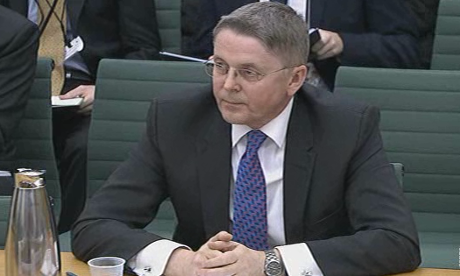
Sir Jeremy Heywood questioned by MPs about Iraq inquiry
Sir Jeremy Heywood, the cabinet secretary, is giving evidence to the Commons public administration committee at 3.30pm.
He is meant to be talking about Whitehall’s capacity to address future challenges, but Bernard Jenkin, the committee chairman, has indicated that MPs will also ask him why it is taking so long to publish the Iraq inquiry report.
Many observers believe Heywood has been one of the principal culprits. My colleague Richard Norton Taylor wrote about the hold-ups last week, and here’s an excerpt.
The initial cause of the delay was Chilcot’s determination, strongly supported by another inquiry panel member, Sir Roderic Lyne, to publish much more of the contents of classified documents – including 130 records of conversations between Blair and Bush – than the government machine wanted.
Officials in the Cabinet Office, who saw their task as guarding hallowed British traditions of secrecy, were horrified when they first heard of Chilcot’s intentions. Chilcot made clear that in his view the notes went to the heart of the inquiry – how Blair led Britain to join the invasion of Iraq.
The notes, “illuminate prime minister Blair’s positions at critical points”, he said. “The question when and how the prime minister made commitments to the US about the UK’s involvement in military action in Iraq, and subsequent decisions on the UK’s continuing involvement, is central to its considerations”, Chilcot stressed.
He made the point that it was a bit rich for cabinet secretaries to stop the release of the documents given that Blair and his closest advisers, including Jonathan Powell and Alastair Campbell, had been allowed to publish freely on the same events and on the same private conversations.
Some Whitehall officials blame Washington for refusing permission to reveal the content of the Bush-Blair notes. The truth is the dispute over disclosure was mainly the result of obstruction in Whitehall in discussions with successive cabinet secretaries, Sir Gus (now Lord) O’Donnell, and Sir Jeremy Heywood.
I’ll be covering the Iraq section of the hearing in full detail.
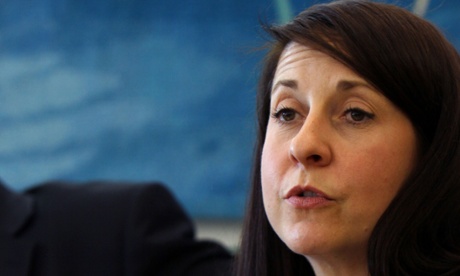
Responding to Alan Milburn’s claims about Labour’s health policy (see 2.27pm), Liz Kendall, the shadow care minister, said he was “just plain wrong”
I have a great deal of respect for Alan Milburn, I really do, but I think that he’s just plain wrong on this issue. Andy [Burnham] today was very, very clear. Doing more of the same, won’t work. We need major reforms to reset our health and care services so they are fit for the 21st century, and fit for dealing with very old, very frail people, and the majority of the people that are using health services who have, two, three or more long-term health conditions ...
Actually, I think this whole debate needs to move on. The big issue is not [public versus private.] It is how and where services are provided in future. And the really big challenge, for the NHS and our care services is, can we shift the focus of attention out of the hospitals, into people’s homes and into the community to help people keep living well at home?
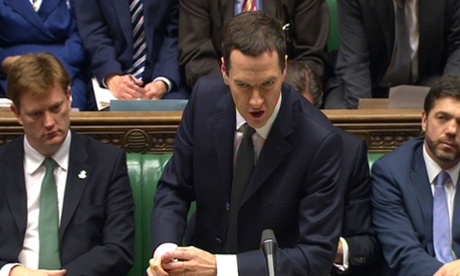
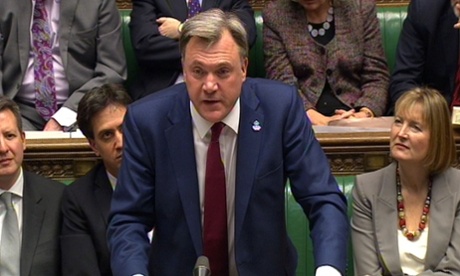
It was Treasury questions today, and that meant George Osborne and Ed Balls had the chance to go head to head.
Balls said people were worse off under Osborne’s policies and that the Tories would introduce charges for healthcare.
If things were really going fine and the economy was fixed, people would be better off, and they are worse; you would have balanced the books as you promised, which you have completely failed to do. It’s because of that failure on the deficit you are now planning spending cuts which the IFS (Institute of Fiscal Studies) in the next parliament say are colossal, and the OBR (Office of Budget Responsibility) say will take us back to levels in our economy not seen since the 1930s, before the NHS existed. Every developed country with spending as low as you are now aiming for has widespread charges for health care. Isn’t that the real Tory economic plan?
Osborne claimed that Labour health policy was in disarray, and he joked about a report claiming Balls was going to be sidelined during his party’s election campaign.
We have a free at the point of use National Health Service which we are proud of and we will continue to fund. What is clear is the total confusion in Labour’s health policy today. This morning the Labour leader said he was going to use his so-called mansion tax to pay down the deficit. Six days ago, you said that would be used to pay for your NHS plan. It is total confusion today. The only way to have a strong National Health Service is to have a strong economy.
We read in the last couple of days you have been sidelined from the general election. We read in a major humiliation party bosses have quietly shunted you out of the media spotlight. So let me reach across the despatch box, offer the hand of friendship, let us resolve we are both going to put you at the centre of this general election campaign.
And here’s the audio of Alan Milburn’s interview on the World at One.
Nick Robinson on his BBC blog says David Cameron does not really want TV debates and speculates as to what will happen next.
My hunch - and it really is a hunch and not something I’ve been told - is that he’ll keep the debates about debates going as long as possible until, at the last possible minute, offering to take part in one debate with multiple leaders just before the campaign begins.
He’ll claim that the media’s obsession with the story has proved that he is right to warn that debates during the campaign would crowd out the real issues.
Finally, he’ll calculate that whilst many voters will conclude that he’s, well, a little bit chicken, it won’t bother them enough to change how they vote.
Sound very plausible.
Milburn says Labour is running 'pale imitation' of losing 1992 campaign
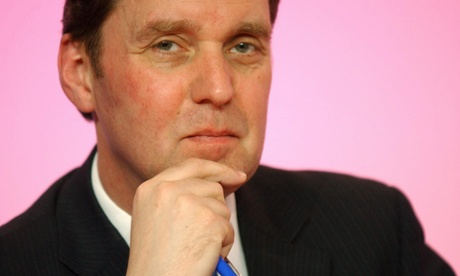
My colleague Nicholas Watt has filed a story on the Alan Milburn comments. (See 1.25pm.) Here’s how it starts.
Labour is running a “pale imitation” of its losing 1992 general election campaign as it retreats to its “comfort zone” on the NHS, the former health secretary Alan Milburn has warned.
In a pointed intervention on the day that Ed Miliband and Andy Burnham intensified Labour’s general election campaigning on the NHS, Milburn said that Labour will make a “fatal mistake” if it positions itself as the party that would provide greater funds for the NHS without explaining how it will introduce further reforms.
In an interview on The World at One on BBC Radio 4, shortly after the Labour leader and the shadow health secretary had delivered their speeches, Milburn warned of the dangers of repeating the mistakes of the 1992 election when Neil Kinnock was defeated by John Major on the economy after running an emotional campaign on Tory threats to the NHS.
A close ally of Tony Blair, Milburn said: “You’ve got a pale imitation actually of the 1992 general election campaign – maybe it will have the same outcome, I don’t know. But it would be a fatal mistake for Labour to go into this election looking as though it is the party that would better resource the NHS but not necessarily put its foot to the floor when it comes to reforming it.”
Updated
And here is some more from what Andy Burnham in the Q&A after his speech.
.@andyburnhammp says integration of health & social care budgets in Salford closest thing yet to integrated landscape he wants to see
— Will Hazell (@whazell) January 27, 2015
. @andyburnhammp: if my plans end up feeling like a reorganisation "I will have lost" #labnhsplan
— Will Hazell (@whazell) January 27, 2015
During Q & A @andyburnhammp says Labour will not impose one model of care emphasising flexibility in models #labnhsplan
— NHSConfed Press & PA (@NHSConfed_Press) January 27, 2015
@andyburnhammp confirms Labour is not planning a new national IT programme, to much applause from audience #labnhsplan
— NHSConfed Press & PA (@NHSConfed_Press) January 27, 2015
@andyburnhammp clarifies Clinical Commissioning Groups are "here to stay" #labnhsplan
— NHSConfed Press & PA (@NHSConfed_Press) January 27, 2015
Andy Burnham and Chris Ham debating Labour's 10 year plan - who will lead accountable care organisations??? pic.twitter.com/xh75TIdU0x
— Sir Robert Naylor (@naylor_robert) January 27, 2015
Andy Burnham's health speech - Summary
This morning the Labour health team tweeted this.
.@andyburnhammp went on @BBCr4today to talk about Labour's 10-year plan for health and care. They didn't ask a single question about it.
— Labour's Health Team (@LabourHealth) January 27, 2015
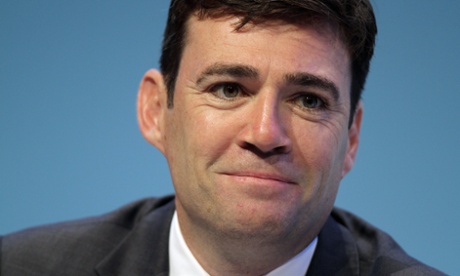
You can tell why they are frustrated. Andy Burnham’s speech is immense; it runs to more than 6,000 words, and it contains a considerable amount of detail. Burnham set himself the task of explaining what Labour’s 10-year plan for health and care would involve.
Burnham was speaking at the King’s Fund, the health thinktank, and he said it was two years since he set out his plan to integrate health and social care. Since he floated the idea, he said, the professionals and experts had told him that wanted any reforms to involve clarity, stability, flexibility and consensus. He said he would try for the first three, but that consensus could be tricky in the light of the coaliton’s approach.
The Labour plan was based upon the notion of whole person care, he said.
It is based on the simple notion that, if we start in the home and make care personal to each family, it is more likely to work for them and cost less for everyone.
He also said that, if he became health secretary (still an if, even if Labour wins - see 12.50pm) he would write to everyone telling them what they could expect from the NHS. Nye Bevan did the same, he said.
Here are the main policy points he announced.
-
Burnham said he wanted the ambulance service to start playing a much wider role, becoming an integrated provider for emergency care. Under Labour, the ambulance service would not necessarily take you to hospital; it might just treat you at home. He said:
To take a major step towards integrated, seven-day working in the NHS, it is right that we look at a new future for the ambulance service.
I see that as an integrated provider of emergency and out-of-hours care, able to treat people where they find them rather than carry to hospital ...
As NHS 111 contracts expire, we will look at ambulance services taking them on so that, in time, they could handle all 111 and 999 calls from the same call centres.
This will mean more experienced staff on the phones, and better classification of calls.
But just as with other parts of the NHS, we need to ask the ambulance service to work from a default presumption of treatment at home, not hospital – if clinically safe and appropriate.
- He said he would rewrite the NHS constitution so that people with on-going needs have the right to a single point of contact for the coordination of all care, as well as a personal care plan.
- He said the revised NHS constitution would give people the right to counselling and therapy, as well as medication. It would also include the right to support, such as respite care, for family carers.
- He confirmed that Labour would give people the right to a GP appointment within 48 hours.
- He said he would increase penalties for individuals who abuse people in care and institutions where this happens.
- He said Labour would create a means for care assistants and healthcare assistants to get nursing or clinical jobs through apprenticeships and technical degrees.
-
He said he would exempt the NHS from TTIP (the Transatlantic Trade and Investment Partnership) and make the NHS the “preferred provider” for health services.
We will cement the public NHS as our preferred provider at the heart of every community. Our new bill will legislate for that, claiming a full exemption for the NHS from EU procurement and competition law - as we are entitled to do under the Lisbon Treaty - and from international trade treaties such as TTIP.
-
He said the NHS would have more long-term contracts with providers, and that not-for-profit providers would get longer contracts than for-profit providers.
Given that voluntary organisations build volunteering capacity – which in turn builds the health of people and communities – we should give them the benefit of much longer and more stable arrangements, for instance for five or even ten years.
- He said private providers offering health services would be subject to the Freedom of Information Act.
- He said he would consult on imposing a training levy on private health providers, so that they contribute to the cost of training clinical staff.
- He said he would ask NICE (the National Institute for Clinical Excellence) to set out what people can expect under whole person care. This could include “a universal re-ablement scheme to help the most vulnerable people return home from hospital”.
-
He said NICE would be expected to take a wider definition of public cost when deciding whether to approve treatments.
It makes no sense to restrict treatments to save money for the NHS if that only adds costs to other government departments. For instance, restrictions mental health care for young people may add huge costs to the criminal justice system.
-
He said health and well-being boards would be encourage to invest more in health prevention. This could involve gym membership on prescription.
Local areas will have more ability to invest in prevention – for instance, expanding exercise on prescription to make maximum use of local leisure facilities – while having more ability to protect children from the proliferation of outlets selling fast-food and cheap alcohol.
-
He confirmed that he was opposed to a structural reorganisation.
The plan reaffirms our intention to work through the bodies we inherit, with no new structural re-organisation, but adding ambition and impetus to existing plans for integration.
-
He said Monitor would be expected to assess the overall quality of hospital provision in an area, not just the quality of individual hospitals.
Rather that assessing the viability of individual organisations, we will ask [Monitor] to rate all local health economies annually on the overall financial viability of their provider arrangements.
-
He said that it was not just the fact that people are living longer this is putting pressure on the NHS.
For instance, children with severe disabilities are now living into their 20s and 30s - beyond the point of transition from children’s to adult services – while more adults with learning disabilities are living long enough to develop dementia too.
-
He said that, without repeal of the Health Act, the next parliament could see the NHS “sunk by a toxic mix of cuts, crisis and privatisation.
Updated
And this is what Alan Milburn told the World at One
- Milburn said that Labour’s stance on health suggested it was unwilling to embrace public sector reform.
There is a risk that Labour’s position on the National Health Service becomes almost an emblem for Labour showing an unwillingness to lean into a difficult reform agenda. Look, reforms are not easy, but the Labour party is not a conservative party. It should be about moving things forward, not preserving them in aspic ...
I think the biggest risk for Labour on health, and indeed more generally, is that we could look like we’re sticking to our comfort zone but aren’t prepared to strike out into territory that, in the end, the public know any party of government will have to strike out into. Which is to make some difficult changes and difficult choices.
I’ve taken the quote from PoliticsHome.
Miliburn may have been speaking to the World at One (it was a pre-record) at the time that Andy Burnham was delivering his speech, which would be ironic because the Burnham speech is chock-full of reform ideas. It’s more than 6,000 words long, and I’ve just finished reading it. I’ll post a summary soon.
Alan Milburn, the former Labour health secretary, has told the World at One that it would be mistake for his party to go into the election looking at though it will give the NHS more money, but not impose reform. That is bound to go down well with his old colleagues.
I’ll post the quotes when I get them.
Ed Miliband has given an interview about this health plans to the Health Service Journal. Here are the key points, which HSJ has posted on its excellent live blog.
Mr Miliband outlined key details of his plans including:
stating that implementation of his “national vision of integrated health and social care” will be “evolutionary”;
endorsing the “NHS preferred provider” policy but also stating there “will be circumstances in which the private sector has a supporting role”;
insisting the decision whether to meet NHS England’s £8bn funding requirement for the next parliament is a “matter for us [when] in government”; and
endorsing Andy Burnham as doing a “brilliant job [with] a really important vision” but declining to confirm he would be health secretary in a Labour led government.
Updated
There were five polls available yesterday. Anthony Wells at UK Polling Report has written them up here.
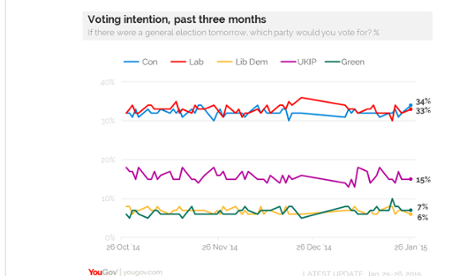
Here’s the most recent, the Sun’s YouGov poll.
Conservatives: 34%
Labour: 33%
Ukip: 15%
Greens: 7%
Lib Dems: 6%
Conservative lead: 1 point
Government approval: -21
And here are election predictions from a variety of organisations.
Elections Etc: Conservatives 283, Labour 278, SNP 41, Lib Dems 23, Ukip 3
Election Forecast: Labour 287, Conservatives 280, SNP 32, Lib Dems 27, Ukip 3
(These are academic forecasts, based on models that using current polling data and make allowance for how polls shift in the run up to an election.)
May 2015: Labour 282, Labour 277, SNP 38, Lib Dems 24, Ukip 6
(This is based on current polling, taking into account Lord Ashcroft’s seat by seat polling.)
Cameron says it was not his ideas to involve the SNP and Plaid Cymru in the TV debates.
He would be delighted to do the debates. But he said it was unfair to include Ukip, but not other minor parties. And he wants them outside the election campaign. They were excellent, but they took the life out of the campaign, and prevented party leaders travelling around the country.
Cameron says the Labour government in Wales chose to cut spending by 8%. That is in stark contrast to what Ed Miliband said today.
Cameron says he does not regret making the promise to get migration below 100,000.
It would have been better for Britain if he had achieved this target.
When immigration was low, it was not a political issue.
Q: You have to address this at an EU level. But your plans were vetoed by Angela Merkel.
Cameron says that is not true.
He says he is pushing for four changes: immigrants would not be able to come to get unemployment benefit; if they do not have a job after six months, they will have to leave; they will not qualify for benefits until they have contributed for four years; and they will not be able to send benefits to children back home.
Q: You backed Labour’s spending plans. So the economy would have crashed under you too?
Cameron says in 2001 and 2005 the Tories proposed different levels of spending.
Q: But you dumped that policy.
Cameron says the Tories went into the 2010 election proposing cuts. The police are an example of how spending can be cut, without services getting worse.
Q: You’ve also promised tax cuts worth £7.2bn. Where will the money for that come from?
Cameron says the next government will do what this one has done, cut spending, introduce efficiencies, and cut taxes too.
Q: Raising the tax threshold helps someone on £11,000 more than someone on £7,000. That’s not fair.
Cameron says he wants people who earn money to be able to keep it.
Q: You’ve missed your deficit reduction target?
Cameron says the deficit has been cut by a half as a proportion of spending.
Cutting the deficit is difficult, he says.
He praises the British public for their hard work.
Q: You promised you would cut the deficit last time.And you didn’t.
Cameron says we are half way there.
Do you stick with the team that has halved it, or back Labour, which would not address the problem.
Q: What about food banks? The archbishop of Canterbury says he has seen sights the reminded him of poverty in Africa.
Cameron says that comparison does not make any sense. Because this government is less PR conscious than the Labour one, it has promoted food banks in job centres.
Q: So cutting benefits is your number one priority?
Cameron says it is one of the first things he would do. The benefits cap has encouraged people to go back to work. And the money would fund 3m apprenticeships.
Q: This creates the impression that you go after the poor, not the rich.
Cameron says he does not accept that. Part of his plans involving getting another £5bn from tackling tax avoidance and evasion.
But you cannot tax your way out of economic trouble.
Q: Only today the LSE brought out a report saying the poorest have been hit the most.
Cameron says the figures don’t stack up. Inequality has gone down.
Q: Only for the first two years.
Cameron ignores this, and carries on with his answer. He says the government will help people who cannot work. But people who can work, should work.
David Cameron's interview on Radio 2's Jeremy Vine Show
Jeremy Vine is about to interview David Cameron on his Radio 2 show.
I’ll be covering it in detail.
In an interview in the Daily Telegraph today David Cameron says cutting the benefit cap from £26,000 to £23,000 would be the first act of a Conservative government.
Two organisations have strongly criticised the idea.
This is from Alison Garnham, chief executive of the Child Poverty Action Group.
The benefit cap is at least nine times more likely to affect children than adults , and the majority of adults it hits are lone parents, many of whom have children so young even the government recognises they should not be required to work.
On the day that a major programme of research by academics from leading universities shows families with young children have been more impoverished than anyone else in recent years, we have another policy push that would undercut the most vulnerable.
Britain is facing a looming child poverty crisis; lowering the benefit cap would bring it several steps closer. It would pile on the misery for working and non-working families already struggling to pay for absolute basics. Surely it would also fail the prime minister’s own family test. Rather than taking away money from the poorest, politicians of all parties need to tackle the root causes of higher social security spending which include soaring childcare and housing costs and low pay.
And this is from Grainia Long, chief executive of the Chartered Institute of Housing.
Our research on the impact of the benefit cap in Haringey showed that people affected by the cap face significant barriers to finding work, including a lack of job seeking skills and affordable childcare. So we think that lowering the benefit cap would be very dangerous unless ministers commit to increasing support for people looking to get back into work and funding for childcare.
The Labour blogger Eoin Clarke has some details from Andy Burnham’s speech.
Andy Burnham's speech was his most detailed yet. Here are 4 *new* NHS policy announcements that delighted me the most pic.twitter.com/jyy7x74Qx0
— Dr Éoin Clarke (@LabourEoin) January 27, 2015
I will be covering it in more detail when I’ve seen the text.
Ed Balls rules out deal with SNP - (and why that probably doesn't mean much)
Sky News is broadcasting an election projection today, showing Labour on course to be 21 seats ahead of the Conservatives, but well short of a majority. (This seems to be just based on current polling, not one of those projections that academics like Steve Fisher are producing looking at polls but taking into account how they shift in the run-up to an election.)
Asked on Sky if Labour could form some form of coalition with the SNP after the election, Ed Balls, the shadow chancellor, replied:
No. And I don’t think anybody is suggesting any suggestion of a deal with the SNP at all. We’re fighting hard for a majority.
This is noticeably firmer than the line that Ed Miliband adopted when he was asked this question on the Andrew Marr show recently. He played down the prospect of a deal with the SNP, but pointedly refused to rule it out.
But does Balls’ line mean very much. Probably not. You expect politicians to say they are not contemplating coalition, and Balls’ comment sounded more like a rhetorical no than a cast-iron pledge never, ever to work with the SNP. If Labour do countenance a pact with the SNP at this stage, then they are effectively giving Labour-leaning voters in Scotland a free pass to vote SNP and so, even if Labour figures are planning a deal with the SNP, they are not likely to say so.
Also, a formal Labour/SNP coalition is highly unlikely anyway. Nicola Sturgeon, Scotland’s first minister, has repeatedly said her preference would be for a looser confidence and supply arrangement, where the SNP would vote for a Labour budget, and support Labour in confidence motions, in return for some kind of concessions. And do we really think that Balls, faced with the prospect of getting his budget through or not getting his budget through, would refuse to talk to the SNP? Of course not.
Updated
In his Q&A in Manchester Ed Miliband said the privatised utilities did not provide a good model for the NHS.
Now, believe it or not, Section 75 [of the Health and Social Care Act] and the accompanying legislation actually said that the model for the NHS should be the great success of the privatised utilities in the 1980s. Now, we know where that got us, don’t we. And we certainly know it’s not the right principle for the National Health Service.
Harry Cole, the Spectator and Guido Fawkes journalist, suggests this amounts to questioning the whole principle of privatisation, although that strikes me as stretching it somewhat.
Miliband has responded to allegations from the PM that he's a dangerous, untrustworthy lefty by questioning the privatisation of utilities.
— Harry Cole (@MrHarryCole) January 27, 2015
Here is some more reaction to the GDP figures.
From the Office for National Statistics chief economic, Joe Grice
This is the second consecutive quarter in which the growth rate has fallen but it is too early to say if there is a general slowing-down of the economy.
The dominant services sector remains buoyant while the contraction has taken place in industries like construction, mining and energy supply, which can be erratic.
From Samuel Tombs of consultancy Capital Economics
With the recent halving of oil prices providing a timely boost to households’ discretionary spending power, credit still becoming cheaper and pay growth on an improving trend, we think that GDP growth could pick up to 3% this year. In short, the best days of the UK’s recovery may still lie ahead.
From James Knightley of ING Bank
This is the eighth consecutive quarterly expansion, but is disappointing, hinting at a loss of momentum. The details show that the long heralded rebalancing story in the UK has completely stalled.
From Jake Trask, a corporate dealer at UKForex
British savers hoping for a rise in interest rates were dealt a blow this morning as Q4 GDP missed its growth forecast. The chances of the MPC raising rates this year now appear dead in the water, following the recent commodity-driven fall in inflation and the decision of MPC members McCafferty and Weale to vote for no change in rates, after previous votes in favour of a hike.
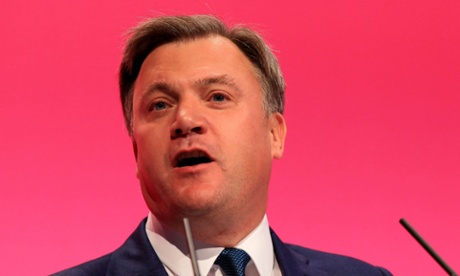
Ed Balls, the shadow chancellor, has put out a statement about the growth figures.
Tory claims that the economy is fixed will ring hollow with working people who are still not feeling the recovery. Wages are down by £1600 a year since 2010 and now these figures show a concerning slowdown in economic growth too.
Construction is down again, business investment under this government is lagging behind our competitors and exports are way off target. And the stagnating wages we have seen over the last five years are the reason why the chancellor has broken his promise to balance the books.
Labour’s economic plan will ensure we have stronger and more balanced growth, create more good jobs and earn our way to higher living standards for all. We will raise the minimum wage, increase apprenticeships, cut business rates, get more homes built and expand free childcare for working parents.
We will cut the deficit every year and balance the books while securing the future of our National Health Service. Unlike the Tories we will get the deficit down in a tough but balanced way – not risk taking public spending back to a share of national income last seen in the 1930s.
Miliband's Q&A
Miliband is taking questions now.
He is calling members of the audience, rather than journalists.
Q: What plans to you have for pharmacists? And why can’t pharmacists be part of the NHS?
Miliband says having a good local pharmacy can make a big difference. Anything that can give people good advice is to be welcomed, he says.
Q: Should NHS trusts be in competition with each other?
Miliband says Section 75 in the Health and Social Care Act says the model for the NHS should be the privatised utilities from the 1980s. We know where that got us, he says. That is certainly not the right model for the NHS.
Hospitals are not allowed to engage in anti-competitive behaviour.
Miliband says he is in favour of laywers; he is married to one. But the idea that the NHS should be spending millions on competition lawyers is a nonsense.
The Q&A is still going on, but Sky News and BBC News have given up their live coverage.
Miliband is winding up.
Here in Trafford we are just down the road from the first hospital to open as an NHS hospital when the service was founded in July 1948.
The first hospital to offer every citizen the best healthcare, based on need, not ability to pay.
We all have our own memories of the NHS.
The place our children were born; where we got better when we were sick; where our parents and grandparents were cared for when they got old
But our NHS cannot just simply become a memory.
I believe this truth more than any other: the NHS wasn’t just the right principle for our grandparents’ generation, it is the right principle for our grandchildren’s generation too.
Miliband sets out Labour's health pledges
Miliaband confirms Labour would repeal the Health and Social Care Act.
And he sets out Labour’s health pledges.
If we win the general election in May, the next Labour government will:
Build an NHS with the time to care: 20,000 more nurses and 8,000 more GPs.
Join up services from home to hospital, guaranteeing GP appointments within 48 hours and cancer tests within one week.
Updated
Miliband says Labour will reject the idea of competition in the NHS.
This government believes that by setting hospital against hospital, service against service, a creeping fragmentation and privatisation, that the NHS will get better.
But it’s failed.
If joining up services is the key challenge of 21st century healthcare, then the Tory solution cannot be the answer.
These are the wrong solutions and the wrong values.
Miliband says that, to ensure hospitals can provide the right care, care outside hospitals needs to get better.
We will end the scandal of neglecting mental health by prioritising investment in young people and ensuring teachers are trained to spot problems early.
We will hire more doctors and by saving resources on privatisation and competition, we will end the scandal of patients having to wait days, even weeks, for a GP appointment.
We will use the resources we raise to hire 5,000 care-workers - a new arm of the NHS - to help elderly people stay healthy at home.
And because we will be putting in place one system of health and social care we will end the scandal of care visits restricted to 15 minutes.
The plan involves investing more, which is why Labour would use the mansion tax, a crackdown on tax avoidance and a levy on tobacco firms to raise more money for the NHS.
And we will use that money for a plan to train and hire more doctors, nurses, care-workers and midwives – so that they all have the one thing that patients need most: an NHS with time to care.
Miliband says Andy Burnham will be setting out details of Labour’s plan for the NHS later this morning.
The central idea is this: that we must both invest in the NHS so it has time to care and join up services at every stage from home to hospital, so you can get the care you need, where you need it.
Miliband imagines what the NHS would be like under five more years of Cameron.
You don’t need to imagine it: you just need to look at the one clear manifesto commitment they have: public spending cut back to levels as a share of national income not seen since the 1930s.
Back to before the National Health Service even existed.
David Cameron says he cares about our NHS but that isn’t enough: there is no country that runs a world-class national healthcare service with spending like that.
And we know too they will press on with plans to fragment and privatise the NHS.
More focus on private patients.
More private contracts awarded.
More fragmentation of the service.
And all it means is you will wait longer and longer for care.
Forced to go private if you want timely treatment.
David Cameron just won’t put the right resources into our NHS and he puts the wrong values at the heart of our NHS.
Miliband rattles of a list of examples of why he thinks the NHS is gettting worse.
People in their 70s and even 80s, who have waited hour after hour for an ambulance to arrive, even when they’re in desperate need.
Patients stuck outside the hospital in ambulances because A&E is full.
Seriously ill people waiting for treatment lying on trolleys in corridors for hours.
People unable to get to see a GP, sometimes with queues round the block.
We never thought we would go back to those days.
This is a “total betrayal” of what David Cameron promised, he says. Cameron promised no top-down reorganisation, but delivered one. He even campaigned against hospital closure, and then closed the same A&E department in government.
Promises matter.
And because of his broken promises, what tuition fees are for Nick Clegg, the NHS has become for David Cameron.
Ed Miliband's health speech
Ed Miliband is delivering his health speech in Manchester now.
The election will decide if we are a country where everyday working people can get ahead, he says.
Today he wants to address the issue of the NHS, he says.
Our country’s most precious institution faces its most perilous moment in a generation.
A choice of two futures:
Continuing with a Conservative plan, which has already led to an NHS in crisis and which threatens the service as we know it.
Or a Labour plan to rescue our NHS, invest in its future and join up services from home to hospital.
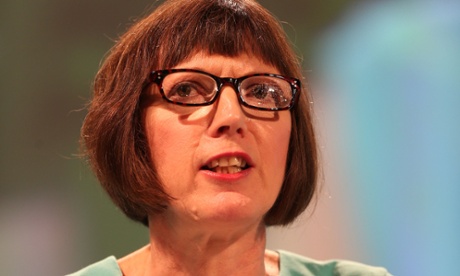
Here’s Frances O’Grady, the TUC general secretary, on the growth figures.
This is the slowest recovery in modern history. George Osborne has already failed to meet the OBR’s modest forecast for the economy last year, and today’s figures show growth slowing down even more.
With most people locked out of the recovery it’s no wonder that the economy is failing to do better. Families are set to be worse off in 2015 than they were five years ago. A recovery based on low wages and job insecurity is bad for working people, bad for the public finances and bad for growth.
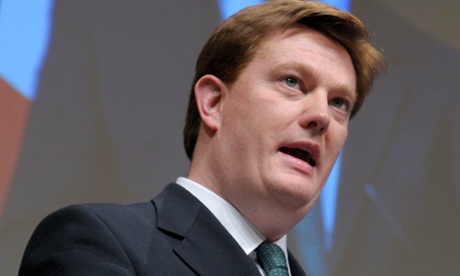
And here is Danny Alexander, the Lib Dem chief secretary to the Treasury, on the growth figures.
Quarterly growth of 0.5% puts the UK in poll position to be the fastest growing G7 economy in 2014. Our economy is growing because we Liberal Democrats have anchored economic policy in the centre ground.
We’ve driven through a host of Lib Dem inspired measures including income tax cuts for millions of working people, cutting the deficit fairly, boosting apprenticeships and investing in regional and local projects to rebalance the economy.
George Osborne, the chancellor, has responded to the news that the growth rate is slowing by saying this underlines the need not to abandon the government’s economic plan.
Today’s figures confirm that the recovery is on track and our plan is protecting Britain from the economic storm, with the fastest growth of any major economy in 2014.
But the international climate is getting worse, and with 100 days to go until the election now is not the time to abandon that plan and return Britain to economic chaos.
(I don’t normally approve of using photographs of politicians looking silly because it’s cheap and mean-spirited - and, with Ed, it’s also far too easy - but I’m afraid, having found this in the picture file, I’m afraid I just couldn’t resist.)
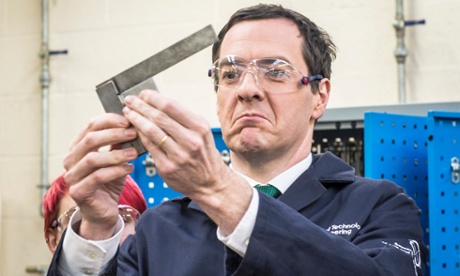
Here is the start of the Press Association’s story about the growth figures.
Britain’s economy grew by 2.6% in 2014 but the pace of expansion slowed more sharply than expected in the last three months of the year, official figures showed today.
The annual figure is the best since 2007, before the recession, and indicates that the UK is likely to have been the world’s fastest growing major economy last year.
But gross domestic product (GDP) rose by just 0.5% in the fourth quarter, the weakest level in a year, weighed down by a construction sector which shrunk at its worst pace for more than two years.
The growth figure for 2014 was widely expected, though falls short of the 3% forecast last month by the independent Office for Budget Responsibility (OBR).
It beats 2013’s figure of 1.7% and matches the 2.6% recorded in 2007.
Ed Miliband's morning interviews - Summary
And here are the key points from Ed Miliband’s morning interviews. Again, I’ve taken the quotes from the Press Association and PoliticsHome.
- Miliband accused David Cameron of trying to dodge the leaders’ debates.
The prime minister is wriggling and wriggling to try to get out of these debates. If the broadcasters want to invite the Democratic Unionists or other Northern Irish parties, that is a matter for them.
Let’s make these debates happen, let’s have David Cameron actually sign up and say he is going to do these debates, not keep trying to avoid them.
Frankly, it’s becoming a sort of charade from him. He clearly doesn’t want to do the debates and wants to find lots of different ways of trying to claim that he really does want to do them.
-
He said people were afraid about the future of the NHS. He said he had asked two maintenance workers in a Nuneaton hospital yesterday what people’s dominant emotion about the NHS was, and was shocked when they replied: “Fear.” Miliband went on:
I think that is what people are feeling about the NHS at the moment. We are back to the days when people are asking ‘Is it really going to survive?’
-
He said that standards in the NHS in Wales should be compared to what they were like when the Tories were in charge of the Welsh NHS.
Let’s compare what’s happening in Wales when the Tories were last in charge, which is a fair comparison - people waiting two years for an operation. Things are better. The Welsh health service faces challenges, like all others.
-
He reaffirmed Labour’s commitment to spending an extra £2.5bn a year on the NHS.
It will always be a priority for us and we’ll always try and give the health service more money, but the key thing about what we’re saying is actually we’re showing how we’re raising the money: a mansion tax on expensive homes – you’ll have heard some people don’t like that, I think that’s the right thing to do for the NHS – clamping down on tax avoidance, including by the hedge funds, raising money from the tobacco companies, and it’s a clear funded promise to say we are going to get the doctors in, the nurses, the midwives, the carers. And also, let’s restore some of the things that really matter to a successful health service like seeing your GP within 48 hours.
- He said he could not remember whether he said he wanted to “weaponise” the NHS as an election issue.
-
He said Holocaust memorial day was very emotional for people like him with relatives who died in the Holocaust.
This is really an emotional day for people who have memories of family involved in this. It’s 70 years since my grandfather died in one of the camps and I marked that about ten days ago. And you know, it’s really hard this, because I talked to my mum about this: it’s not the kind of thing you talked about very much when you’re growing up in a household affected by these things, but it sort of marks you and it’s so important that we remember.
-
He said the Holocaust was a story of hope as well as horror.
There’s horror and there’s hope, because it’s also the case that many members of my family were saved because they were Jews who were hidden by decent people. There’s another story, which is that there were 17 members of my family who were sheltered in a Belgian village – that’s on my father’s side – and it was only because of the decent people in that village who helped them.
-
He rejected the call from 15 Labour MPs to rethink his approach to cutting the deficit.
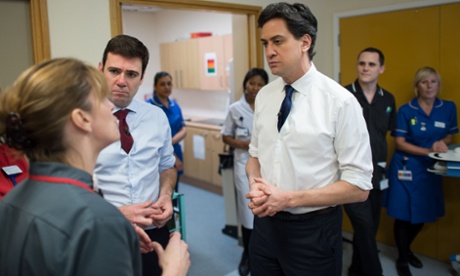
Economy grew by 2.6% in 2014, ONS says
The growth figures are out.
- GDP growth was 0.5% for the final quarter of 2014, the Office for National Statistics says. In the previous quarter it was 0.7%
- Growth for 2014 as a whole was 2.6%, the ONS says.
Here is the ONS news release. And here is the statistical bulletin with the full details (pdf).
David Cameron's interviews - Summary
Here are the key points from David Cameron’s interviews so far. He’s given at least four.
I’ve taken the quotes from the Press Association and PoliticsHome.
-
Cameron rasied a fresh objection to the debate format proposed by the broadcasters. Although he insisted that he wanted the debates to go ahead, he repeated his call for Northern Ireland parties to be included. But he also revived his objection to the idea of the debates taking place during the election campaign proper.
I thought at the last election they were excellent, the debates, but they took the life out of the election campaign. We know when the election is, so let’s get on with the debates before that campaign begins.
Cameron also repeatedly accused the media of being obsessed with the debates. And, on LBC just now, he said that Nick Clegg wanted to keep the Greens out of the debates because he feared they would take votes from the Lib Dems.
-
He said the Conservatives wanted to cut the benefits cap (the total in benefits that an out-of-work family can receive) from £26,000 to £23,000 because people thought the current level was too high.
The criticism of our benefit cap, which was set at £26,000 in many parts of the country was that it was too high, so we think reducing it to £23,000 will help to get more families into work and we’ll use the saving s from that money to make sure that we train three million apprenticeships in the next parliament.
-
He confirmed that the Conservatives wanted to end housing benefit for 18 to 21-year-olds.
What we want to change is the situation where at 18, you can effectively decide to sign on, live away from home, claim unemployment benefit, claim housing benefit. I want to build a country where there’s an option for every young person as they leave school to either become an apprentice and learn a trade and earn while they learn or go onto university or find work. But what we shouldn’t have in our country is people at the age of 18 being written off onto unemployment benefit and housing benefit, so we’re going to change that.
-
He said it was perfectly possible to cut state spending to 35% of GDP.
David Cameron on plan to cut Govt to 35% of GDP: "The idea this is somehow an unachievable goal is nonsense." @SkyNews
— PoliticsHome (@politicshome) January 27, 2015
-
He strongly hinted that the Conservatives would keep pensioner benefits like winter fuel payments and free bus passes for all pensioners, instead of means-testing them. An announcement would be made nearer the election, he said. But he said means-testing them (ie, taking them away from wealthy pensioners) would not raise much. He also said it was fair to protect pensioners from cuts.
If you’re a pensioner, it is much more difficult to adapt to changing circumstances in terms of someone changing your financial arrangements. And so we very self-consciously, and I think quite rightly, said to Britain’s pensioners, under this government, we will protect the basic state pension, so we put in place the triple lock, which says that the pension will always go up by earnings or prices, or 2.5%, whatever is higher.
- He said that when he called the new Greek prime minister Alexis Tsipras last night, he offered British help to enable the Greeks to improve rates of tax collection. The offer was “well received”, he said.
- He rejected claims that the Tories wanted to raise all the money to cut the deficit from spending cuts, rather than tax. Under the Tory plans to save £30bn, the party would raise £5bn from more measures to tackle tax evasion and tax avoidance, he said. Another £13bn would come from Whitehall cuts and efficiencies, and £12bn would come from welfare cuts.
- He claimed that inequality had fallen and child poverty had fallen since he was prime minister.
-
He said Labour should be judged on their record in Wales on the NHS.
Now, I’ve heard what Ed Miliband has to say, but in Wales, where Labour are running the NHS, they cut the NHS and as a result waiting lists are longer, the problems at A&E are worse, they don’t have a cancer drugs fund that we have in England. So I think you need to look at Labour’s record, rather than its rhetoric.
-
He said that Michael Gove’s ringtone, when he phone went off in a cabinet meeting, sounded like something from “the chillax playlist on Spotify”.
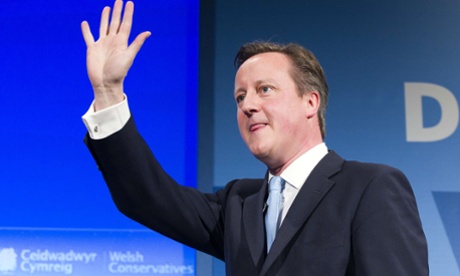
Updated
Here’s the audio of Cameron’s Today interview.
David Cameron: hear the full interview on Greece, welfare, the deficit, and leaders' debates http://t.co/BsEbCUUufG pic.twitter.com/e7p2lsfj0P
— BBC Radio 4 Today (@BBCr4today) January 27, 2015
Cameron is on LBC now.
Listen to LBC now to hear more squirming from Cameron on TV debates. As slippery as an eel in a jar of Swarfega
— Jason Beattie (@JBeattieMirror) January 27, 2015
You should be able to listen here, but I’m finding the feed a bit iffy.
Here’s some Twitter comment from journalists on David Cameron’s Today interview.
Interesting Cameron now saying for clarity we have cut the deficit by GDP share measure now - victory for @FraserNelson
— Jamie Angus (@grvlx001) January 27, 2015
Cameron says "yes I would like that to happen" to debates. And then demands DUP and SF too. And says dates too late. So let's make that "no"
— Tim Shipman (@ShippersUnbound) January 27, 2015
Not a glove anywhere near Cameron on the economy on BBC Today. @afneil or @EvanHD or someone with economics background badly needed.
— Patrick Wintour (@patrickwintour) January 27, 2015
To repeat: David Cameron really wants TV debates to happen. He just thinks they only really work if all four Beatles can take part.
— Robert Hutton (@RobDotHutton) January 27, 2015
Cameron - 'As Tony Benn would say - we need to talk about <does Benn impression> the issues' #r4today
— Jamie Angus (@grvlx001) January 27, 2015
A relaxed David Cameron even does a Tony Benn impression ("the ishoos") at the end of his Today programme appearance today #GE2015
— Christopher Hope (@christopherhope) January 27, 2015
Difficult to say anything other than that Cameron is being disingenuous over the TV debates.
— Isabel Hardman (@IsabelHardman) January 27, 2015
If David Cameron finds himself 5 points behind on March 30 you can be pretty sure there will be at least one debate with Miliband
— Tim Shipman (@ShippersUnbound) January 27, 2015
It’s 100 days to go before the election, and David Cameron and Ed Miliband have been touring the broadcast studios this morning.
Are Ed Miliband and David Cameron doing some sort of Red Nose Day broadcast marathon trying to speak on every BBC outlet this morning?
— John Stevens (@johnestevens) January 27, 2015
Cameron is announcing that the Conservatives would cut the benefits cap from £26,000 to £23,000.
And Miliband is lauching Labour’s health pledge.
I’ll post more from the interviews soon.
Here are the key events of the day.
9.30am: GDP figures are published for the last quarter of 2014.
10am: Miliband gives his health speech in Manchester. Andy Burnham, the shadow health secretary, will follow it with a separate speech in London at 10.30am.
2pm: Cameron hosts a reception for Holocaust survivors.
3.30pm: Sir Jeremy Heywood, the cabinet secretary, gives evidence to the Commons public adminstration committee. He is expected to take questions about the Iraq inquiry.
As usual, I will be also covering all the breaking political news from Westminster, as well as bringing you the most interesting political comment and analysis from the web and from Twitter. I will post a summary at lunchtime and another in the afternoon.
If you want to follow me on Twitter, I’m on @AndrewSparrow.