Afternoon summary
- MPs have approved the regulations to force cigarettes to be sold in unbranded packs (so-called plain packaging) by 367 votes to 113 - a majority of 254. There was no debate, and MPs voted in what is called a deferred division (which involves voting on paper outside the Commons chamber). The result was announced in the Commons chamber just now.
- Sir Michael Lyons, a former chairman of the BBC Trust, has criticised Lord Grade’s comment about the proposed TV debates. Lyons, a Labour supporter, told the World at One that Grade was being “audacious” because he was putting forward a Conservative party argument. Lyons said that although the debate negotiations had been “a dog’s dinner”, a debate between David Cameron and Ed Miliband was something “the public would want to see”.
-
MPs have been told the DUP should be included in the multi-party debates proposed by the broadcasters because they could decide who becomes prime minister. In a debate in DUP time on the subject, the DUP MP Ian Paisley said:
This party, its members, could actually have a say after the 8 May on who walks into Downing Street as prime minister. That being the case, isn’t it only right and proper that the national audience know where smaller parties like my party stand on the issues of national defence, on the issue of the union, on the issue of grammar school education, on issues of healthcare, taxation, the cost of living and defence spending?
-
James Harding, the BBC’s director of news, has told MPs that BBC figures like him are reluctant to give evidence to Commons select committee. Speaking before the European scrutiny committee, he said:
If you detect a reluctance of people like me to come to Parliamentary committees to discuss editorial judgements, you are right.
That was because he was wary of giving the impression that the BBC answered to politicians. The BBC’s editorial independence was all-important, he said. At the same hearing Lord Hall, the BBC’s director general, said he has never used the fact that he was a peer as a reason for not giving evidence to the committee.
That’s all from me for today.
Thanks for the comments.
Here are some other blogs about PMQs.
There is no doubt, then, that going on TV debates as been an effective attack. The problem is that Cameron may now have found his “He might be good at the jokes, but” retort. That answer he trailed yesterday, “If I was blocking a debate, I wouldn’t be proposing a debate”, is so ludicrous that it would fall apart if taken on by an effective interviewer.
No, today’s was much better. On perhaps the fifth time of asking why he was avoiding the debates, Cameron replied:
“He wants to talk about the future of a television programme. I want to talk about the future of the country.”
It makes Miliband look trivial, and makes Cameron look like he’s more interested in big matters of national importance. Miliband would be brave to revive the topic at either of the last two PMQs of this parliament.
But Cameron had his own line to push, that Miliband wanted to crawl into Downing Street on the SNP’s coattails. Every jibe from Miliband was met with this response.
It was not an edifying spectacle and the glee with which the SNP watched proceedings did make one wonder where this tactic could lead. But Tory MPs, and not just loyalists either, are reporting that warning of an SNP/Labour deal is working on the doorsteps so expect to hear the Tories continuing to beat this drum.
Two different men appear to inhabit the prime minister’s body. One is generous, affectionate, always ready to see the best in his fellow man or woman. The other is mean, hateful, always ready to see the worst in the leader of the opposition ...
But one hopes that during the general election campaign, we shall see the generous and affectionate Cameron, always ready to see the best in other people. For the other Cameron is not a person anyone not already deeply loyal to him would be likely to choose to vote for.
Defence spending is a subject that the leader of a serious opposition party that aspires to govern in two months’ time could have asked about at PMQs, but the impression given is that Miliband doesn’t really care about it.
Miliband won. Power is clearly seeping away from Cameron. Labour’s long-serving outgoing MP David Blunkett, Brightside and Hillsborough, who is more astute than anyone could smell it. ‘I was thinking,’ he said. ‘Of raising with the prime minister the Conservatives’ so-called long-term economic plan which like Pinocchio’s nose grows larger and less attractive by the day.’ But he said instead he was going to ask the prime minister if it was a ‘relief that neither he nor I will have to pencil in 12pm on a Wednesday’ for PMQs?
Anders Fogh Rasmussen, the former Nato secretary general, told the World at One that David Cameron had given him personal assurances that the UK would not fall beneath the alliance’s 2% of GDP defence spending target. This is what he said:
I have discussed this numerous times with the prime minister and he assured me that the UK would stay above the 2%. And I highly appreciate that because if the UK were to go below 2%, it would send a very bad signal to the rest of the alliance.
Labour has dug out a quote from Lord Grade earlier this year saying no party leader has a right to veto a TV debate.
Lord Grade in Jan: "no leader of any party has the right to veto a debate" Lord Grade in March: "no divine right to have election debates"
— Stewart Wood (@StewartWood) March 11, 2015
Lunchtime summary
- Ed Miliband has accused David Cameron of resorting to “pathetic, feeble excuses” after Downing Street announced that the prime minister would refuse to take part in a head-to-head televised debate with him during the general election campaign. As Nicholas Watt reports, a rattled Cameron responded by changing the subject, launching his strongest attack yet on the Labour leader in which he accused Miliband of resorting to “weak and despicable” tactics by planning a post-electoral pact with the Scottish National party (SNP).
- Cameron has said he favours the creation of a women and equalities select committee to scrutinise future governments’ work on boosting equality for women.
- The former head of the British army has warned David Cameron that he will be in breach of an “undertaking” he gave to service chiefs in 2010 if he fails to increase defence spending in real terms in the next parliament. As Nicholas Watt reports, in a sign of the military’s deep concerns over the government’s refusal to say whether it will continue to meet the Nato target of spending 2% of GDP on defence, Gen Sir Peter Wall warned that Britain’s armed forces would be “hollowed out” if cuts continued. Britain meets the 2% Nato target but this is now in question because the main parties have declined to commit to protecting defence spending in the next parliament. The government is expected to face fresh pressure on defence spending in a Commons debate on Thursday.
-
Cameron has defended the government’s record on defence spending at PMQs. Two Labour MPs challenged him on this subject. Cameron refused to commit the Tories to keeping defence spending at 2% of GDP for the next parliament. But he told Labour’s Gisela Stuart:
This country has met its Nato commitments not only for 2% but also to spend the money on deployable equipment and forces which is just as important a commitment. But what I would say to her is how does she feel about her leader contemplating a deal with the SNP who want to strip this country of their defences?
- Downing Street has insisted that it will stick to Nato guidelines when deciding what expenditure counts towards meeting the alliance’s target of spending 2% of GDP on defence. The prime minister’s spokesman clarified this when asked about reports that Cameron has asked ministers to investigate whether expenditure on intelligence services could be counted as defence spending.
- The Scottish economy suffered a financial deficit that was 40% higher than the rest of the UK last year, after falling tax revenues helped push Scotland’s overall deficit to £12.4bn. As Severin Carrell reports, the latest Scottish government data also showed that that deficit as a share of Scotland’s GDP was nearly 50% higher than the UK’s, even including a geographical share of North Sea oil revenues, because of far higher per-capita public spending. Excluding North Sea oil revenues, the financial gap in Scotland’s net fiscal balance was even larger, at £16.4bn or 12.2% of the country’s GDP, even before the sharp plunge in oil prices down to $50 a barrel took effect.
-
Cameron has paid tribute to David Blunkett, the Labour former home secretary, who is leaving the Commons at the election. When Blunkett asked a question at PMQs, Cameron told him:
Can I take this opportunity as you will be shortly leaving this House to pay tribute to you? I will never forget as a new backbencher coming to this place in 2001 and seeing you in the light of the appalling terrorist attacks that had taken place across the world, the strong leadership that you gave on the importance of keeping our country safe. You are a remarkable politician, a remarkable man.
I remember once in the home affairs select committee, even though you couldn’t see who we all were, you could see exactly who was concentrating and who wasn’t. I don’t know how he has this extraordinary gift but he is an extraordinary politician and I pay tribute to you and I know the rest of the House will join me.
PMQs - Verdict from the Twitter commentariat
Here are the most interesting tweets on PMQs I’ve seen from political journalists and commentators.
Many people think that, by banging on again about TV debates, Ed Miliband is experiencing diminishing returns.
Miliband goes on debates again. Suspect one reason is guaranteed broadcast coverage. #PMQs
— George Eaton (@georgeeaton) March 11, 2015
Labour side unenthusiastic about TV debates processology from EdM #PMQs
— John Rentoul (@JohnRentoul) March 11, 2015
Is @Ed_Miliband really leading with the debates? Talk about flogging a dead horse! #PMQs
— Toby Young (@toadmeister) March 11, 2015
SNP MPs looking insufferably delighted as Cameron suggests Miliband's only chance of crawling into No 10 is on their coat tails #pmqs
— Jim Pickard (@PickardJE) March 11, 2015
"They're just trying to crawl into the Downing Street on the coattails of the SNP," says notable majority-winner David Cameron. #pmqs
— Stephen Bush (@stephenkb) March 11, 2015
Cameron brands Miliband 'weak and despicable'. Suspect that's revenge for Mili branding him 'dodgy'. All fairly unedifying #pmqs #GE2015
— James Chapman (Mail) (@jameschappers) March 11, 2015
Cameron's got his line on debates sorted. This attack is dead now. #PMQs
— Conor Pope (@Conorpope) March 11, 2015
Just wondering if Jeremy Clarkson should become an MP. He might add a certain level-headedness to PMQs
— ann treneman (@anntreneman) March 11, 2015
I feel like Tory MPs increasingly think PM wins at #pmqs while labour folk think Ed does. Both playing to their troops as election nears?
— Anushka Asthana (@SkyAnushka) March 11, 2015
Debates issue may be great for Labour morale but is it the issue voters really care about? #pmqs
— Jonathan Walker (@jonwalker121) March 11, 2015
And still Cameron goes on and on abt the SNP, like a broken Dalek. Good for their poll ratings; the union looking ever-more fragile #PMQs
— John Harris (@johnharris1969) March 11, 2015
I'm not sure Labour will ever convince people Cameron is scared, whatever you think of him he doesn't lack confidence #pmqs
— Jonathan Walker (@jonwalker121) March 11, 2015
Odd, too, that Cam's def'n of 'British' now excludes Scots, as in 'the British people won't stand for it', i.e SNP anywhere near gov #PMQs
— John Harris (@johnharris1969) March 11, 2015
The SNP are in ecstasy listening to Cameron, punching the air and slapping their thighs
— James Forsyth (@JGForsyth) March 11, 2015
David Cameron is on a weak wicket today, but he has obviously prepared well and appears to be getting away with it.
— tom bradby (@tombradby) March 11, 2015
1 reason @David_Cameron saying no to TV debate – tackles @Ed_Miliband: by trashing him in personal terms. Can't do that in TV debate
— Nicholas Watt (@nicholaswatt) March 11, 2015
Cameron and Miliband both looking quite sharp these days ahead of the big race.
— Harry Lambert (@harrylambert1) March 11, 2015
Cameron straight-faced calls it "despicable" to enter No. 10 relying on the support of a smaller party. After five years as coalition PM.
— James Ball (@jamesrbuk) March 11, 2015
Here’s George Eaton’s verdict on PMQs at the Staggers. And here’s an excerpt.
Miliband had the edge in the Chamber and Cameron’s evasiveness will have been clear to anyone watching. Labour take heart from polls showing that the majority of the public want the debates to happen and regard the PM as the main obstacle. But the problem is how little salience this issue has. Few if any votes will be changed by Cameron’s rejectionism. It is, fundamentally, a process story largely of interest to the Westminster media.
The Economist’s Jeremy Cliffe agrees.
@georgeeaton Good post. Couldn't agree more. Going on the debates again was only ever going to be a sterile repeat of last week. #pmqs
— Jeremy Cliffe (@JeremyCliffe) March 11, 2015
Lord Mandelson was speaking at Retail Week Live conference this morning. My colleague Sarah Butler was there and she’s sent me some copy on what Mandelson said.
-
Mandleson said the broadcasters should not “empty chair” David Cameron if he did not want to take part in televised debates.
Mandelson said broadcasters shouldn’t “empty-chair” Cameron if he doesn’t do leaders debates. “They’re only broadcasters, not the House of Commons,” he said. He said Cameron was entitled not to do debate and Labour entitled to say he is “frit” and a chicken.
-
Mandelson predicted a hung parliament after the election.
Mandelson told the room there was “almost certainly” going to be a hung parliament or stalemate after the election. When he was asked about Ed Miliband and whether his lack of popularity was a hindrance to the party, he said: “Would people buy more of a product if you changed the wrapper?”
It was a slightly odd thing to say as most of the retailers in the room would have been thinking yes you would!
He said voters were not voting for “personification of the party” but for a “party’s values, policies and what you can do for them.”
-
He said political parties were suffering from “the single biggest attrition in brand equity seen in generations.”
Mandelson likened the political parties’ problems to those of retailers, He said: “The cost of failure of responsiveness to customers and failure of transparency and accountability is as high in politics as in retail. The political parties are brands in this respect, no different from any other brands that promise what they can’t deliver or fail to adapt to what customers expect or aspire to.”
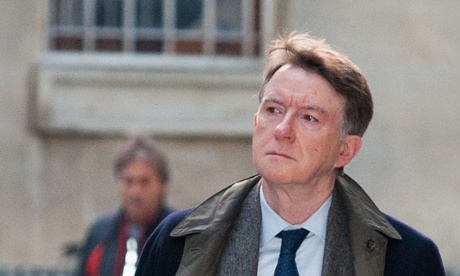
Here’s the Labour leaflet that David Cameron was talking about at PMQs.
Here's that Scots Labour leaflet the PM says proves EdM has given up on winning and just wants SNP help pic.twitter.com/7XSwIRrNod
— Paul Waugh (@paulwaugh) March 11, 2015
PMQs Verdict
PMQs Verdict: Just look at the numbers. (See 11.45am) The public don’t believe that David Cameron wants a debate with Ed Miliband, and there’s a straightforward reason for this; because he doesn’t. Miliband used all six questions to hammer away at this, exposing Cameron’s disingenuousness, and he did so rather effectively.
Cameron only compounded the problem with a display of peevishness that ought to be counter-productive (assuming the electorate has some taste). “Weak and despicable”? You don’t have to be Justine Miliband to find this absurd.
More interesting was Cameron’s decision to attack Labour so heavily for not ruling out a coalition with the SNP. To anyone familiar with the way Westminster works, this also seems a far-fetched line of attack - a Labour/SNP coalition is not on the cards, and any prime minister running a minority government with a Queen’s Speech to pass will take votes from anyone - but the Tories believe this plays very well for them. In England, it suggests that Labour are in hock to the SNP and in Scotland it suggests that voters are safe to vote SNP. Labour are also anxious about the impact this could be having, but it is hard to know quite how much it resonates with the voters. Does anyone know of any polling on this?
And that is the really interesting question about the TV debates story too. Ed Miliband may have “won”, but does it matter? The public clearly agree with Miliband (even though the wording of that ComRes poll was flawed, there is lots of other polling showing the same thing), but I’m not aware of any polling yet proving that this has shifted opinion of Cameron as a leader, or altered party support. The conventional view in Westminster is that voters don’t really care. That’s what Lynton Crosby seems to be advising Cameron, and his speciality is in-depth public opinion research, and so presumably he knows what he is on about.
But there is a counter argument, put as well as anyone by Matthew d’Ancona in the Guardian on Monday, which is that, even if debates have not mattered to voters in the past, this time they could.
[Cameron’s] pollsters have told him that a few days of scorn is better than three events that might cost him the election. Take the hit, Dave – and move on.
I am puzzled by the assumption that the “hit” will be short-lived. To take but one analogy, Gordon Brown never truly recovered from the 2007 “election-that-never-was”, and the consequent sense that he was a lesser man than the electorate had at first hoped ...
As the two-party structure creaks and groans, it’s more important than ever for the Conservatives to shed their image as the trade union of the powerful and advantaged, and to assert themselves as a truly national movement. These debates, for all their imperfections, are an essential part of that self-assertion.
The voters may not feel too strongly about such events, still less their precise format. But that could change with dangerous speed if they sense they are being taken for a ride, or taken for granted. Never has there been a better moment for Cameron to execute an elegant U-turn. As Woody Allen says, 80% of life is showing up.
Miliband today was betting on d’Ancona being right.
Updated
Labour’s Jack Dromey says spending cuts could harm the police.
Cameron says, although police budgets have been cut, crime is down. And, as for Ed Balls’ dossier on cuts, Balls was briefing against it before the Tories could even start doing so. Balls is used to briefing against his leader. But he has beaten his own record this time, he says.
And that’s it. I’ll post a verdict in a moment.
Julian Lewis, a Conservative, says the SNP has plans to blackmail the main parties in to blocking Trident. Will Cameron confirm he won’t give in to this?
Cameron says for him Trident is non-negotiable.
He reads from the Labour leaflet in Scotland again, saying Labour are just hoping to be the biggest party.
Labour’s Gerry Sutcliffe says this could be his last PMQs. He is making his requirement plans. What are Cameron’s?
Cameron congratulates Sutcliffe on his career. We all have plans for after May 7, he says.
Labour’s Geraint Davies says, under tax credits, couples can be penalised if they stay together.
Cameron says the government has helped all couples by lifting the tax allowance, and by introducing a married couples tax allowance.
Caroline Dinenage, a Conservative, asks Cameron to assure MPs of his commitment to defence spending.
Cameron says the £160bn budget defence equipment will be protected.
Nigel Adams, a Conservative, says if people vote Nigel Farage, they could end up in bed not just with Ed Miliband, but with Alex Salmond too.
Cameron says that is the point. Who knows who you could end up in bed with?
Labour’s David Blunkett says he was thinking of asking about the long-term economic plan, which grows longer and more unattractive by the day. But he asks instead if he will not miss 12pm on Wednesdays again.
Cameron says he wants to pay tribute to Blunkett, who is standing down. He recalls hearing Blunkett, after 9/11, setting out how he could keep Britain safe. He is an extraordinary politician.
Annette Brooke, a Lib Dem, asks Cameron if the government will publish its report on asbestos in schools before the election.
Cameron says the report will be published in due course.
Labour’s Rosie Cooper asks about pensioners not having access to buses and says a Conservative council in West Lancashire pocketed money that should have been spent on trains.
Bercow stops the heckling. There was “considerable rudeness” towards Cooper, he says.
Cameron says he has kept his promises to pensioners.
David Amess, a Conservative, asks if Cameron supports a campaign for Southend to be made a city.
Cameron commends Amess for his campaign. He lists policies helping Southend, including, of course, the long-term economic plan.
Gisela Stuart, the Labour MP, says Britain should keep its commitment to keep defence spending at 2% of GDP.
Cameron asks Stuart how she feels about her leader doing a deal with the SNP, who want to get rid of Trident.
Greg Mulholland, a Lib Dem, asks about drugs needed by children with rare conditions.
Cameron says he has looked at this. His understanding is that NHS England is holding a review, and that the companies are funding these drugs until the end of May. There should be continuity of care, he says.
Labour’s Paul Farrelly says 10 reports into health economies have been commissioned, but not published. Why is the government engaged in a cover up?
Cameron says Labour MPs in Staffordshire are trying to frighten people about the future of the NHS. They are the last people who should do so, given their record in Stafford.
Cameron says the hospice movement is a good example of something that provides care that is not owned by the NHS. He uses hospice services in Oxfordshire himself.
Naomi Long, the Alliance MP, praises the Titanic visitor attraction in Belfast and asks about Sinn Fein reneging on promises made in the Stormont House agreement.
Cameron says the Titanic attraction is very good. Theresa Villiers, the Northern Ireland secretary, is trying to ensure all parties honour their commitments, she says.
Maria Miller, a Conservative, asks about work opportunities for people with a learning disability. She praises a Basingstoke initiative on this.
Cameron says we need to build on the work down already. There needs to be a change in culture. The Disability Confident campaign should be extended.
Snap PMQs Verdict
Snap PMQs Verdict: The Tory jeering, which seemed louder than ever, said it all; Cameron’s MPs were trying to protect it, but it didn’t really work, because most observers will conclude that Miliband was right about Cameron running scared. Cameron’s decision to lash out with a “despicable” jibe, and irrelevant stuff about the SNP, just served to confirm Labour claims that he’s rattled.
Miliband says this goes to Cameron’s character. Cameron should show some backbone and show up for the debate.
Cameron says what shows character is someone who is prepared to crawl into Downing Street on the back of a party that wants to break up the UK.
Miliband says the only person who is a threat to the UK is this “useless” prime minister.
The shouting is as loud as ever. Bercow says it is a disgrace to the Commons.
Miliband says, like all bullies, when the heat is on, he runs for cover.
Cameron says Miliband has nothing to say on policy. Miliband can only get to Downing Street on Salmond’s coat tails. It is an alliance between those who want to bankrupt Britain and those who want to break it up.
John Bercow calls for quiet. He says no one should be shouted down.
Miliband asks Cameron to confirm that he will not debate Miliband in any circumstances.
Cameron says Labour has confirmed it does not expect to win. He quotes a Labour leaflet in Scotland saying it wants to be the largest party. Miliband is a chicken, he says.
Miliband says Cameron cannot wriggle out of this. PMQs is not the same as a debate during the election campaign. Why won’t Cameron just admit he’s afraid of losing.
Cameron says Miliband wants to talk about the future of a TV programme. He wants to talk about the future of the country. Miliband is “weak and despicable” and wants to crawl to power in Alex Salmond’s pocket.
Updated
Ed Miliband says Cameron said less than two months ago he wanted a head to head debate with Miliband. When didd he lose his nerve?
Cameron says he has offered a date.
Miliband says he is talking about the two-way debate. The original proposal came from him. He quotes Cameron saying there should be a debate between the two people who could be prime minister.
Cameron says Miliband said any time, any place, anywhere. He has offered a date on 23 March. Labour can only rule with the SNP. Let’s have a debate between the two people who will call the tune - me and Alex Salmond.
James Arbuthnot, a Conservative, asks about the Post Office’s Second Sight report.
Cameron says he knows there have been concerns about the Post Office’s IT scheme. A mediation process is underway.
Labour’s Stella Creasy asks Cameron what is most important in the next parliament: protecting the armed forces or tax cuts?
David Cameron says the government inherited a black hole in the defence budget. Security and economic success go together.
And this is what the prime minsiter’s spokesman said about the latest Guardian/Telegraph/YouTube debate proposal at the Number 10 lobby briefing.
I know that the media organisations you just referred to have made a revised version of their proposal this morning. I know that my political colleagues along with the prime minister are looking at that.
If John Bercow wants to improve behaviour at PMQs, perhaps he should emulate the Green party and try this - an attunement.
From the Green Party conference guide: the most Green Party thing ever pic.twitter.com/1IS4DARscN
— Michael Deacon (@MichaelPDeacon) March 6, 2015
Cameron at PMQs
David Cameron is taking PMQs in 10 minutes.
This should be the third last before the general election, although it could be the second last if parliament dissolves earlier than expected (which is possible).
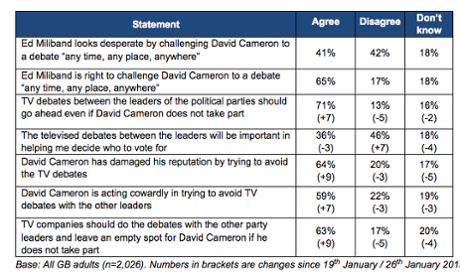
63% of voters think broadcaster should 'empty chair' Cameron in debates - poll
Lord Mandelson may not approve of the idea of the broadcasters “empty chairing” David Cameron in the proposed debates, but two thirds of voters think that they should, according to a ComRes poll that has just been released.
Stefan Stern’s take on this is good.
MT @Andrew_ComRes: ComRes/ITV News: 71% think broadcasters should proceed with #debates without Dave. > Rare ratings fail for Michael Grade.
— stefanstern (@stefanstern) March 11, 2015
ComRes also found that 64% of people do not think Cameron wants the debates to take place. Only 15% think he does.
(But the question referred to “debates”, not debate. It is a matter of record now that Cameron does not want debates plural to take place.)
According to ITV’s Joanna Partridge, Lord Mandelson has said the broadcasters should not “empty chair” David Cameron in the televised debates.
Mandelson:TV channels shouldn't "empty chair" David Cameron if doesn't take part in TV leaders' debates. "They're only broadcasters" #RWL15
— Joanna Partridge (@JoannaPartridge) March 11, 2015
I will post more on this when I get it, because it is not clear from this tweet what he meant by “empty chair”.
The phrase is used in two, quite different way. Some people use it to mean going ahead with the debates without Cameron (which the broadcasters have said they would do). And others use it to mean, not just doing this, but physically having an empty chair on set - a much more aggressive move highlighting Cameron’s absence (which the broadcasters do not seem to be proposing).
Ashdown says Cameron is more cowardly than Jeremy Clarkson
Lord Ashdown, the former Lib Dem leader and head of the party’s election campaign, has been on BBC News talking about the TV debates. Here are the main points.
-
Ashdown said it was “demeaning” for Lord Grade to allow himself to be used to make partisan arguments about the TV debates.
Lord Grade is a highly distinguished broadcaster, but he’s also a Conservative peer. And this is a Conservative peer arguing for the Conservative interest. Frankly, I think it’s pretty desperate of Downing Street, and rather unwise of them, to wheel out poor old Lord Grade and show his broadcasting career behind what is obviously a partisan position. Unwise of them and frankly a bit demeaning for Lord Grade.
-
He said that the Lib Dems would consider the Guardian/Telegraph/YouTube plan for a debate, but that they did not want this to become an excuse for fewer debates, not more. The party had only just heard about the latest plan and would need time to look at it, he said.
If this means more debate, we are in favour of it. If it results in less debate, because it gives the prime minister an escape route from the ridiculous position he finds himself in, well, we’d be less enthusiastic. But give us time to consider it.
-
He joked about Cameron being more cowardly than Jeremy Clarkson. It was not much of a joke (not least because it was in dubious case), but Ashdown seemed more interested in tainting Cameron by association.
Mr Cameron’s friend Jeremy Clarkson, who lives close to him in Chipping Norton, part of the Chipping Norton set, at least he shows there’s one of the Chipping Norton set prepared to stand up and fight.
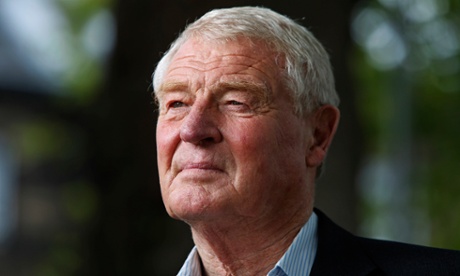
There are 57 days to go until the election. Here’s today’s “election fact” from the Press Association.
Charles Bradlaugh, a fervent atheist, was elected MP for Northampton but he refused to swear the oath of allegiance. He was not allowed to take his Commons seat so a by-election was called. Bradlaugh was promptly returned again by the constituency. This scenario took place several times, with Bradlaugh at one stage being involved in a scuffle with sergeant-of-arms William Gossett who was seeking to prevent him entering the House . Eventually in 1880 the Speaker conceded that he should be allowed to take his seat after making a non-religious affirmation. Bradlaugh later piloted through the House the Oaths Bill, allowing affirmations as an alternative to religious oaths.
And here are some more recent seat projections.
All four (if you include the Guardian’s - see 9.52am) have the Tories ahead, by margins of 8, 13, 22 and 23.
From Steve Fisher’s Elections Etc (on Friday)
Conservatives: 286
Labour: 278
SNP: 40
Lib Dems: 22
Plaid Cymru
Ukip: 3
Greens: 3
Conservatives: 293
Labour: 271
SNP: 40
Lib Dems: 24
DUP: 8
SDLP: 3
Plaid Cymru: 1
Greens: 1
Ukip: 1
(These are both academic forecasts taking into account current polling and historic trends showing how polls shift as an election approaches.)
Conservaties: 284
Labour: 261
SNP: 55
Lib Dems: 24
Ukip: 3
Greens: 1
(This is a projection just based on current polling, but taking into account Lord Ashcroft’s constituency polls.)
Today's Guardian seat projection - Tories 279, Labour 266
Here’s today’s Guardian seat projection. It hasn’t changed since yesterday (although the calculations are reworked every night, with older data dropping out of the mix).
Conservatives: 279
Labour: 266
SNP: 52
Lib Dems: 27
Ukip: 4
Greens: 1
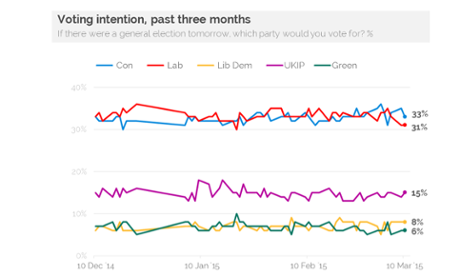
Here are today’s YouGov polling figures.
Update: Cons lead at 2 - Latest YouGov/The Sun results 10th Mar - Con 33%, Lab 31%, LD 8%, UKIP 15%, GRN 6%; APP -17 http://t.co/J1IEuZ7ohA
— YouGov (@YouGov) March 11, 2015
There’s another development in the leaders’ debates affair today. My colleague Patrick Wintour has the details.
The consortium of the Guardian, the Telegraph and YouTube offering to act as a platform for an online election debate between the party leaders has suggested moving forward the date of its event to accommodate the wishes of David Cameron.
In a letter to party leaders, the media organisations say they are now offering to move forward the date of its proposed debate by a few days to 26 March 26 or 27 March – before the start of the so-called short campaign – again inviting the five main UK-wide parties. This would mean including the leaders of the Conservative party, Labour, Liberal Democrats, Ukip and the Green party. The nationalist parties from Scotland and Wales would be excluded, as well as the Democratic Unionists.
Lord Grade - Verdict from the Twitter commentariat
Here are some posts about Lord Grade on Twitter from journalists and commentators.
From Charlie Beckett, the journalism professor
Tory Lord Grade doesn't understand impartiality regs: they do not allow one politician to dictate broadcast formats #BBCradio4Today
— Charlie Beckett (@CharlieBeckett) March 11, 2015
From David Aaronovitch, the Times columnist and a former BBC politics producer
That, by Lord Grade on @BBCr4today talking about TV debates, was weapons grade disingenuousness.
— David Aaronovitch (@DAaronovitch) March 11, 2015
From Sky’s Adam Boulton
#tvdebates Con Peer Lord Grade, Torygraph on @BBC Sue Inglish #excusesexcuses it's still @David_Cameron ducking debates
— Adam Boulton (@adamboultonSKY) March 10, 2015
From the commentator Toby Young
Lord Grade was superb on the Today programme just now. Broadcasters don't have a divine right to hold debates and shouldn't threaten the PM
— Toby Young (@toadmeister) March 11, 2015
From the Guardian’s Rafael Behr
Somehow I knew that Michael Grade hated Dr Who when I was about 9. This is still first thing I think of whenever he's in the news.
— Rafael Behr (@rafaelbehr) March 11, 2015
And here are some posts from Labour MPs and peers. I can’t see any from Conservative MPs or peers.
From Paul Flynn
Confused Tory Lord Grade mixes up nation's interests with Tory Party's interests, Cameron's blundering arrogance exposed again.
— Paul Flynn (@PaulFlynnMP) March 11, 2015
From Lady Royall, the Labour leader in the Lords
How strange that PM's view chimes with Lord Grade on TV debates, especially as he is a Tory Peer
— Janet Royall (@LabourRoyall) March 11, 2015
From Barry Sheerman
Truth us that it is David Cameron who is terrified of appearing on TV debates & will beg Lord Grade & other toadies to defend him @BBCNews
— Barry Sheerman MP (@BarrySheerman) March 11, 2015
Here are some of the quotes from Lord Grade’s Today interview.
-
Grade said politicians should be free not to take part in the debates.
As far as I know it’s still a free country and politicians of all parties have a free choice in whether they take part of not. If they decide, or any one of them decides, not to take part it’s not for the broadcasters then to go ahead without them. That is a political statement.
The idea that broadcasters can threaten politicians with empty chairs, real or imaginary, is completely unacceptable and against the statutory requirement for impartiality.
-
He said the BBC should withdraw its threat to empty chair David Cameron.
The BBC should stand up today and say they are not going to threaten anybody, or empty chair anybody. These debates are fun to have… but there is no requirement that they should be done and there is a requirement on the broadcasters for impartiality. And I don’t think the broadcasters have covered themselves in glory in the way that they have campaigned for these debates, the way that they’ve gone public early on, the way they’ve messed it up by missing out various parties. The thing is a shambles, it’s embarrassing frankly.
I’ve taken the quotes from PoliticsHome.
Labour says Grade's comment show Cameron is 'rattled'
And this is what Labour is saying. It is from a party source.
This shows how rattled David Cameron is over TV debates. It is a desperate move to send out a Tory peer to try to bully the broadcasters.
Updated
No 10 welcomes Grade's comments
Lord Grade’s comments have gone done very well in Downing Street. This is from a Number 10 source.
We welcome this powerful intervention by one of Britain’s most experienced and respected public service broadcasters and hope we can now move forward and arrange a debate at the end of this month.
Q: But if the broadcasters just follow Cameron’s model, they are allowing him to set the terms of the debate. How is that impartial?
Grade says he disagrees.
Mishal Husain, who is interviewing Grade, switches subjects. What should the BBC do about Jeremy Clarkson. Grade says he does not know.
Q: But could the BBC manage without him?
Of course, says Grade.
Lord Grade's interview on Today
Lord Grade is being interviewed on Today now. He is introduced as a Conservative peer.
He says there is no divine right to TV broadcasters. People win or lose elections by decisions taken by broadcasters, he says. They are interfering with the political outcome.
Q: But the prime minister said it was up to the broadcasters to choose the format.
Grade says they should be able to choose a format. But it is the prime minister’s decision as to whether he takes part.
He says there is no requirement for these debates. They are fun to have. But the broadcasters are bound by a duty of impartiality.
The whole thing has been a shambles, he says. The broadcasters have not carried themselves with glory.
Updated
Former BBC and ITV boss Lord Grade accuses broadcasters of 'bullying' over TV debates
In his battle of wills with the broadcasters over the proposed election debates, David Cameron has just won a very important ally, Lord Grade, a former chairman of both the BBC and ITV. In a letter to the Times, Grade has launched a withering attack on his former colleagues for the way they are handling the issue.
Here are the key points he makes.
-
Grade accuses the broadcasters of arrogance and overstating their own importance.
Who do the broadcasters think they are? After thirty years or more in charge of most of our public service channels (at one time or another), I thought I knew. But their behaviour over the election debates leads me to believe they suddenly have grossly inflated and misguided ideas of their own importance.
The duty of impartiality is enshrined in broadcasting legislation and the BBC’s Royal Charter. But now, in the run up to the general election, broadcasters are, for the first time, unequivocally playing politics. How else is one to interpret their actions over the election debates?
-
He says that threatening to “empty chair” Cameron amounts to “bullying”. He says he is shocked and appalled that they are considering it.
But it is not acceptable for unelected journalists and editors to threaten him, or any party leader, with an “empty chair”. If I were still in charge of a major broadcaster, my position would be very clear: if we cannot persuade one of the relevant leaders to participate for whatever reason in what is proposed, we cannot go ahead with the broadcast. End of debate. That is what the impartiality laws are designed for.
Ah, I hear the broadcasters retort, that would give a single party leader a veto on any broadcast. Yes it would, and so what? The broadcasters, however much they may like to pretend so to themselves, are not the guardians of democracy in these islands. That remains the domain of the elected House of Commons. Broadcasters “sending for political leaders” and bestowing airtime on them, and then threatening them with an empty chair if they do not come running, is not democracy. It is bullying, a case of the broadcast media getting way ahead of itself.
Be in no doubt, that an empty chair represents a threat and worse – it is a political act, in direct contravention of their duty of impartiality. I can understand an empty chair if someone accused of serious malfeasance (swindling or worse) refuses to turn up to respond to the evidence against them. Turning up for an election yah-boo is not in that category by any means. I am shocked and appalled that broadcasters believe it is. They could not be more wrong.
- He says the way they have had to keep changing their plans has been “shambolic”.
-
He says that the comparison with America is not appropriate, because American presidential elections are quite different.
The case for debates in America is much stronger than the UK. The election is simply to decide on the next president, not to choose the legislature. It is a bigger choice than the UK since once you are president that is it for the full term (barring impeachment or ill health). In the UK we elect the entire legislature at the same time as the prime minister – who has no such American-style guarantee of tenure. Very different.
You can read the full letter here, although it is behind a paywall.
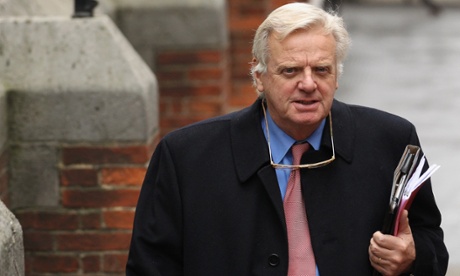
Good morning. Here’s the agenda for the day.
10.30am: Pat McFadden, the shadow Europe minister, speaks at the Fabian Britain and Europe 2020 conference. Lord Mandelson, the Labour former business secretary, speaks to the same conference at 1.30pm.
12pm: David Cameron faces Ed Miliband at PMQs.
Around 12.40pm: MPs begin a debate on a motion tabled by the DUP saying an independent body should arranged election leaders’ debates.
2.30pm: Lord Hall, the BBC director general, gives evidence to the Commons European scrutiny committee about the BBC’s coverage of Europe.
As usual, I will be also covering all the breaking political news from Westminster, as well as bringing you the most interesting political comment and analysis from the web and from Twitter. I will post a summary at lunchtime and another in the afternoon.
If you want to follow me on Twitter, I’m on @AndrewSparrow.