Afternoon summary
-
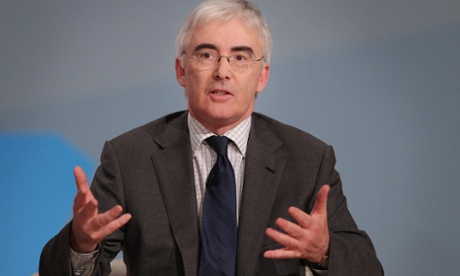
Number 10 has made it clear that Lord Freud will not be sacked for his comments about some disabled people not being worth the full minimum wage. Following Freud’s apology, the prime minister’s spokesman said David Cameron had full confidence in Freud. (See 4.13pm.) But Labour has said Freud should be sacked (see 4.02pm) and Jo Swinson, a Lib Dem business minister, has condemned him in the Commons. Swinson said:
Members on all sides of the House have been understandably shocked by the remarks by Lord Freud which I would stress absolutely do not reflect the government’s position and are clearly offensive and unacceptable. And I am glad he has issued a full apology.
- A former Lord Mayor of Belfast has announed his defection to UKIP. As my colleague Henry McDonald reports, Ulster Unionist veteran city councillor Bobby Stoker has joined Nigel Farage’s party. He links up with another UUP defector to Ukip, the Strangford Assembly member David McNarry. Ukip’s deputy leader and MEP Paul Nuttal described Stoker as “a first rate recruit” at Stormont today. Stoker represents a constituency in South Belfast close to the city centre which includes loyalist working class districts such as the Donegall Road/Village and Sandy Row. He was Lord Mayor of Belfast in 1999 after his third year serving on the city council. One of his sons was badly injured while serving in the Royal Irish Regiment in Afghanistan.
-
A Ukip parliamentary candidate has been deselected by the party after admitting animal welfare charges. As the Press Association reports, farmer David Evans, 71, of Week St Mary, was chosen to contest Camborne and Redruth in Cornwall. The seat is held by Conservative George Eustice, who achieved a majority of just 66 votes over the Liberal Democrats in May 2010. Ukip announced Evans would be standing for the party earlier this month, but has now removed him following court proceedings. Evans appeared at Bodmin Magistrates Court on Monday and entered guilty pleas to six animal welfare charges.
That’s all from me for today.
Thanks for the comments. I’ve replied to quite a few.
Updated
Robert Halfon, a Conservative MP, has urged Tristram Hunt, the shadow education secretary, to apologise for saying that Halfon favoured exempting the disabled from the minimum wage.
Hunt was on the Daily Politics talking about Lord Freud and he said Freud’s comments were significant because other Tories were talking about not paying the minimum wage to the disabled. Hunt said he though Halfon was one of them.
Later in the Commons, Halfon, who has been disabled since birth with spastic diaplegia, which affects only his legs and means he is unable to walk unaided, said Hunt was wrong. Raising a point of order, he said:
I campaigned strongly for increases in the minimum wage and I find this quite incredible. While sitting here I have seen a text from [Hunt] recognising that it wasn’t me who said this. But the problem is that millions of people, on television, will have seen it.
I’m a passionate supporter of the minimum wage, especially for disabled people. Could I ask the frontbench to ask [Hunt] to come to the chamber to correct what he has said and apologise, otherwise the people who have watched that programme and my constituents will believe I hold such abhorrent views.
Lord Freud is not going to be sacked, Number 10 has confirmed.
No 10: PM retains full confidence in Lord #Freud after full + unreserved apology. PM's views communicated v clearly + v strongly to LF 1/2
— Nicholas Watt (@nicholaswatt) October 15, 2014
No 10 on #Freud apology: PM gave very clear instructions to his office about how it should be taken forward
— Nicholas Watt (@nicholaswatt) October 15, 2014
The Labour party is refusing to accept the Lord Freud apology. This is from a spokesman.
This attempt at an apology is not the end of the matter. Lord Freud claims he merely accepted ‘the premise of the question’ but it was he who said some disabled people are ‘not worth the full wage’ and it was he who suggested paying people just £2 an hour. In fact he said he would go away to look at this issue, suggesting that this government would consider it.
Someone holding these views shouldn’t be in government. Disability charities have already condemned Lord Freud’s comments in the strongest possible terms, senior Tories have called for Lord Freud to resign, a ministerial colleague has said these words will ‘haunt him’, yet David Cameron has so far failed to act.
If David Cameron continues to keep Lord Freud in his government we will have yet more proof of how he stands for just a privileged few at the top.
Here’s the Guardian video of Ed Miliband raising Lord Freud’s comments at PMQs.
Lunchtime summary
- Lord Freud, the welfare minister, has apologised unreservedly for suggesting that some disabled people are not worth the minimum wage. Earlier, at PMQs David Cameron disowned the remarks after they were raised by Ed Miliband.
-
Cameron has hinted that the government may strengthen its proposals for the recall of MPs. In his first question at PMQs as a Ukip MP, Douglas Carswell asked Cameron to back amendments to the recall bill being tabled by Zac Goldsmith. Cameron said he would consider this.
I will look very carefully at all amendments to come forward because frankly getting this bill together, I think we have come up with the minimum acceptable. But I think there are a lot of very good arguments to be had about how we can go further and I look forward to having them in the House of Commons.
- Cameron has said he will consider recognising murdered British hostage Alan Henning with a national honour.
- Theresa May, the home secretary, has confirmed that police bail could be capped following several high-profile cases where suspects have waited for years to discover if they will be charged.
-
Jeremy Browne, the Lib Dem MP and former minister, has announced that he is standing down as an MP at the election.
I have decided not to stand as a candidate at the 2015 General Election. Resignation letter to local party attached. pic.twitter.com/rYfpa3XVIO
— Jeremy Browne (@JeremyBrowneMP) October 15, 2014
A spokesman for Nick Clegg said Clegg “regrets that he has taken the decision to leave politics as Jeremy has always had strongly held views which he expressed with great skill and conviction”.
-
An Ipsos MORI poll has found that people now no longer thinking supporting Ukip is a wasted vote. Here’s an extract from its news release.
October’s Ipsos MORI Political Monitor shows that, in the aftermath of Douglas Carswell’s by-election win for the party, more of the British public now disagree that voting Ukip in a general election is a wasted vote than agree. Just under half (48%) disagree that a general election vote for Ukip is a wasted vote, compared with 41% who agree. This is a turnaround from earlier this year – last month, prior to the Clacton by-election, 50% thought a UKIP vote was a vote wasted and 41% disagreed; in May, some 57% thought voting UKIP was a wasted vote and just 33% disagreed.
-
A government review into the use of extreme tactics by trade unions has concluded without being about to establish whether the problem exists. Bruce Carr QC terminated his inquiry without making recommendations, saying the “increasingly political environment” and the lack of evidence made a full report impossible. In a statement he said:
Considering [the use of extreme tactics by unions] – the information gathered by the Review and reflected in the Report shows that there are some employers who believe that they have been subjected to tactics during industrial disputes which they consider to be ‘extreme’. There were also certain themes emerging in the tactics used. However, the one-sided nature of this evidence, the relative lack of primary evidence received, and the inability to thoroughly test it through a question and answer process has made it fundamentally difficult for me to make any evidence-based judgement on either the extent or the ‘extremity’ of such a problem, should it exist.
But the free market thinktank, the Adam Smith Institute, has defended Lord Freud (even though Freud is not defending himself.) This is from its research director, Sam Bowman.
Lord Freud has been shamefully mistreated by Ed Miliband. His point was that the market value of some people’s wages is below the minimum wage. This is often true of the severely disabled and can have appalling consequences for their self-esteem and quality of life. Fixing this problem was the justification for Remploy, a government-funded firm that gave jobs to disabled people who could not find work elsewhere.
To point out that someone’s market value is less than minimum wage has nothing to do with their moral value as human beings. Freud’s point was that we should help people in this situation by allowing them to find jobs paying below the minimum wage and topping up their pay directly to make up the difference.
Even if you don’t agree with this method, it is motivated by compassion for the disabled and an understanding of the unpleasant side-effects of our minimum wage laws. Freud’s only crime was to speak bluntly: it is disgraceful to use his words against him in the way Miliband has.
The Liberal Democrats have condemned Lord Freud’s remarks. This is from a spokesman.
The views expressed by Lord Freud are completely unacceptable. The Liberal Democrats are proud to have raised the minimum wage repeatedly in government and will resist any attempt to cut it for anybody, not least the disabled.
Lord Freud apologises - Full text
Here’s Lord Freud’s apology in full.
I would like to offer a full and unreserved apology. I was foolish to accept the premise of the question. To be clear, all disabled people should be paid at least the minimum wage, without exception, and I accept that it is offensive to suggest anything else.
I care passionately about disabled people. I am proud to have played a full part in a government that is fully committed to helping disabled people overcome the many barriers they face in finding employment. That is why through Universal Credit – which I referred to in my response – we have increased overall spending on disabled households by £250m, offered the most generous work allowance ever, and increased the disability addition to £360 per month.
I am profoundly sorry for any offence I have caused to any disabled people.
Lord Freud has issued a full and unreserved apology. This is from the Press Association.
Welfare reform minister Lord Freud has issued a “full and unreserved apology” after suggesting that some disabled people are “not worth” the minimum wage.
Here is some union reaction to the Lord Freud comments.
From Frances O’Grady, the TUC general secretary
UC General Secretary Frances O’Grady said:
Wherever they work and whoever they work for, disabled people are entitled to equal pay. Instead of opening the door to pay discrimination and extreme poverty, the government should recognise that disabled people need a pay rise just like the rest of Britain.
From a spokesman for the PCS public service union
These repellant comments are the latest in a long and unpleasant history of Freud’s involvement in successive governments’ attempts to demonise people who rely on social security. It would be incredible if Cameron refuses to sack him, but the bigger issue is what this government is trying to do to our welfare state.
And here is the disability charity Scope of Lord Freud’s remarks. The comment is from a spokesperson.
The suggestion that disabled people should be prepared to be paid less than minimum wage is unacceptable.
It was reassuring to hear David Cameron make it clear today that this is not the position of the government.
Disabled people are pushing hard to find jobs and get on in the workplace. Nine in 10 disabled people work or have worked. Yet only half of disabled people have a job right now.
Disabled people face huge barriers in finding and staying in work which need to be addressed.
We need to look into how we can make work places more flexible, welcoming environments where disabled people flourish rather than struggle.
We need to make sure more disabled people get access to expert, tailored support to find work.
The government’s Disability Confident campaign is also a recognition of how important the attitudes of employers are.
Mencap, the disability charity, has released this comment on Lord Freud’s remarks. It’s fromCiara Lawrence, who has a learning disability and is in full time employment.
I find it disgusting that in 2014 a senior politician and member of the House of Lords is alleged to still believe inequality is acceptable. I did not choose to have a learning disability, however I do choose to work a full time job and with the right support around me have become a respected and valued member of my team. The same is true for many other people with a disability.
People with a disability are often made to feel like second class citizens and face many barriers when trying to receive the same rights as everyone else, especially in employment. Having a politician place further barriers to us being included is incredibly upsetting and frankly quite frightening.
I hope politicians realise that people with a disability should be encouraged to become active citizens, and not to be discriminated against for their disability, and I want to call for a full explanation of how these comments are deemed acceptable in this day and age.
Here’s the full quote from Esther McVey, the employment minister, on Lord Freud on the Daily Politics.
Those words will haunt him. I cannot justify those words, they were wrong. We have the minimum wage, everybody has the minimum wage, we have done a lot to support people with disability.
He was thinking out aloud, he will have to explain himself, but as a member of that team, and a government minister, minimum wage for all and we must support disabled people.
The Conservative MP Mark Garnier says he thinks Lord Freud should be sacked.
Conservative MP Mark Garnier tells @JuliaHB1 that Lord Freud's comments are "unacceptable" and he would sack him if he were David Cameron.
— LBC (@LBC) October 15, 2014
PMQs - Verdict from the Twitter commentariat
I thought David Cameron saw off Ed Miliband today over Lord Freud, but most of my colleagues who have been commenting on Twitter disagreed.
(Nothing wrong with that. It would get dull if we all agreed.)
Here’s what people are saying.
Victory for Miliband
From the Independent’s Nigel Morris
The Freud gaffe helps @Ed_Miliband to a surprise away win at #pmqs despite his croaky voice IMO
— Nigel Morris (@NigelpMorris) October 15, 2014
From the Spectator’s Isabel Hardman
Thought Cameron failed to land the big blows on Miliband today. Miliband had good ambush too #pmqs
— Isabel Hardman (@IsabelHardman) October 15, 2014
From the Independent on Sunday’s Jane Merrick
Phoebe, sorry, Ed Miliband won #pmqs with a proper story on Lord Freud/minimum wage shambles. Shows what proper preparation can do
— Jane Merrick (@janemerrick23) October 15, 2014
From the Northern Echo’s Rob Merrick
Win for Miliband after ambush on Lord Freud's remarks on lower pay for disabled...but only 2-1 after Labour hired him in first place! #PMQs
— Rob Merrick (@Rob_Merrick) October 15, 2014
From the Sun
First #PMQs post-conference season hands @Ed_Miliband much needed 4-2 win over @David_Cameron http://t.co/LUWRnxHeUf pic.twitter.com/DFlKmFrV2K
— Sun Politics (@Sun_Politics) October 15, 2014
From the New Statesman’s George Eaton
#PMQs review: Miliband rattles Cameron with attack on Lord Freud over comments on the disabled. http://t.co/S2JvxMKdpt
— The Staggers (@TheStaggers) October 15, 2014
Draw
From the Guardian’s Michael White
#PMQs This week's score? Well below the level of events, but let's be polite and say 2-2
— MichaelWhite (@MichaelWhite) October 15, 2014
Victory for Cameron
From Adel Darwish
This #PMQs @David_Cameron wins against @Ed_Miliband 2:1
— Adel Darwish (@AdelDarwish) October 15, 2014
No 10 says no minimum wage exemptions for the disabled
Number 10 says that there will be no exemptions from the minimum wage for the disabled, and that Lord Freud will be making a statement later today.
No10 source: "The PM will want to hear full context of what happens and what Lord Freud is going to say about it. We will react accordingly"
— Christopher Hope (@christopherhope) October 15, 2014
The source said that he was sure Lord Freud will make a statement later today, although Number 10 said it did not know if he was in the UK.
— Christopher Hope (@christopherhope) October 15, 2014
Number 10 source on Lord Freud row: “There should be no exception to the minimum wage.” #PMQs
— Christopher Hope (@christopherhope) October 15, 2014
My PMQs verdict
PMQs - Verdict: Ed Miliband arrived with a cracking story up his sleeve. I see that Paul Waugh had it on his blog half an hour before PMQs started, but most of us had not read it and it was not even clear whether or not David Cameron was aware of it. The suggestion that a Tory minister thinks disabled people are not worth the minimum wage is clearly damaging - although, as is often the case in politics, Freud’s actual intent and the impression given by his words are rather different. He wasn’t talking about disabled people in the workforce, but about people who aren’t in the workforce currently, and perhaps have no prospect of being in the workforce, because of the severity of their disabilities.
But Cameron had a reply. He quite categorically said that this was not his view, or the government’s view, and then, for good measure, he referred to his experience looking after his late son Ivan, who was severely disabled. If Cameron had equivocated in any way, Miliband would have been home and dry. But Cameron didn’t, and he saw off the Labour leader quite easily. Miliband resorted to making a general point about the “nasty party”, but, in the light of Cameron’s statement, that did not really resonate.
(Tristram Hunt, the shadow education secretary, has been making the same mistake on the Daily Politics just now. Trying to keep the Freud controversy alive, he said we need to know if it’s government policy. He should now that our politics is, for better or worse, reasonably presidential, and that if the prime minister says it’s not policy, it’s not.)
Until then, it was reasonably even-handed, although Cameron was getting the better of Miliband, partly by confidence and bravado, but partly because his (apparently spontanous) joke about Miliband’s memory was better than Miliband’s (prepared) joke about lost MPs.
Updated
Here is another version of the Lord Freud recording, featuring his comments about some disabled people not being worth the full minimum wage.
Listen to an audio recording of Lord Freud's comments about disabled workers http://t.co/Yojb7Wia2l pic.twitter.com/Va3zhUFgsT
— ITV News (@itvnews) October 15, 2014
On the Daily Politics Esther McVey, the employment minister, has just said that she cannot justify his words. “They were wrong,” she says.
Updated
Cameron says unemployment is coming down, but the government has to stick to its long-term economic plan.
Labour’s Meg Hillier asks what the UK is doing to stop a massacre at Kobani.
Cameron says the UK operating in the air over Iraq. It is supporting the US. But he thinks it could go further, he says.
Duncan Hames, a Lib Dem, asks Cameron if he will continue prioritising spending on schools.
Cameron says the government can only do this if it controls the deficit. The biggest threat to the UK economy is sitting a few feet away from him. Labour would borrow more and spend more.
Labour’s Nic Dakin says Tata has announced plans to sell its steel plant in Scunthorpe. Will Cameron meet MPs to discuss this?
Cameron says he knows how important this is. He wants to see steel production continue at Scunthorpe.
Updated
Cameron says school standards are rising. The government will carry on with its education reforms.
Douglas Carswell, the Ukip MP, asks if Cameron will support Zac Goldsmith’s amendments to the recall bill to deliver real recall, which is what Cameron promised in 2010.
Cameron says MPs will debate recall soon. He will look carefully at the amendments to see if the government can go further than what is proposed currently.
Cameron says he expects to spend some time in the Medway towns in the weeks ahead.
Barbara Keeley, the Labour MP, asks if Cameron agrees there should be national recognition for Alan Henning, the aid volunteer killed by Islamic State.
Cameron says Henning was a hero. He will consider this idea.
Lorely Burt, the Lib Dem, asks if Cameron will support a campaign for dementia patients to get better treatment.
Cameron says this is a big priority. He lists government initiatives, and says he agrees that many of these patients should not be in hospital.
Labour’s Steve Reed asks if the £11.5m wasted on an NHS reorganisation in south London could have been better spent.
Cameron says the reorganisation was about getting rid of bureaucracy. There are 20,000 fewer administrators.
Labour’s Jenny Chapman asks Cameron if he agrees with the member of his cabinet who said spending £3bn on NHS reorganisation was a mistake.
Cameron says the government has cut bureaucracy in the NHS. But you can only have a strong NHS with a strong economy. Greece and Portugal had to cut their health spending. They had something in common with Miliband; they forgot the deficit.
Angie Bray, a Conservative, asks Cameron if he agrees the inheritance threshold should go up.
Cameron says he does agree. But this is up to the chancellor. And we may have to wait some time, he says.
Labour’s Emma Lewell-Buck asks about the closure of an NHS walk-in centre in her constituency.
Cameron says the NHS is getting more money. It is up to commissioners to decide who to spend it. But Labour said spending more money on the NHS was irresponsible.
David Ward, the Lib Dem MP, says the Palestinian ambassador has described Monday’s Commons vote calling for the recognition of Palestinian statehood as a momentous vote. Does Cameron agree?
Cameron says he looks forward to the day Britain does recognise Palestine. But it should be part of a two-state solution.
Back to PMQs.
Cameron says he is not cutting spending on NHS. He is spending more on the NHS. Labour’s policy is different, he says.
Lord Freud on the disabled and the minimum wage
Paul Waugh has got a full version of that Lord Freud quote on his Waugh Room blog.
You make a really good point about the disabled. Now I had not thought through, and we have not got a system for, you know, kind of going below the Minimum Wage.
But we do have … You know, Universal Credit is really useful for people with the fluctuating conditions who can do some work - go up and down - because they can earn and get ... and get, you know, bolstered through Universal Credit, and they can move that amount up and down.
Now, there is a small … there is a group, and I know exactly who you mean, where actually as you say they’re not worth the full wage and actually I’m going to go and think about that particular issue, whether there is something we can do nationally, and without distorting the whole thing, which actually if someone wants to work for £2 an hour, and it’s working can we actually.
Updated
PoliticsHome has the Lord Freud quote that Ed Miliband cited.
There is a group... where actually as you say they’re not worth the full wage and actually I’m going to go and think about that particular issue.
And you can hear the audio here.
The Lord Freud quote just raised by Miliband at #PMQs can be heard here in full: http://t.co/WhsI44Q6to
— PoliticsHome (@politicshome) October 15, 2014
Updated
PMQs - My snap verdict
Snap Verdict: Miliband had unearthed a good anti-Tory story, but Cameron rebutted it effectively by disowning Freud without equivocation and, generally, he smothered Miliband with a shower of statistics and slogans. An easy Cameron win.
Miliband says Freud did not just say disabled people were not worth the minimum wage. He talked about creating jobs for £2 an hour. Someone like that should not stay in the government.
Cameron says that is not his view, or the government’s view. He does not need lectures from anyone about looking after disabled people.
Miliband says Cameron should read Freud’s words. They are not the words of anyone who should be in charge of disabled people. The nasty party is back, he says.
Cameron says inflation is down and unemployment is down. Miliband’s forgotten paragraphs came under the title of hard truths. He has got a hard truth for Miliband. He’s not up to the job.
Updated
Miliband says the Tories’ record includes putting up VAT and introducing the bedroom tax. Can Cameron confirm that families are paying an extra £500 a year.
Cameron says he wants to take people out of tax altogether. Let’s look at Labour’s record. Female unemployment went up, and youth unemployment went up. A Labour government could wreck the recovery.
Miliband says the £500 figure came from the chancellor. At the Tory conference Lord Freud, the welfare minister, says disabled people were not worth the full wage. (See here for more details.) Is that Cameron’s view?
No, says Cameron. He says the government will be calling for an increase in the minimum wage. Pensioners are getting more. Labour would just offer mayhem.
Updated
Ed Miliband says he has a sore throat. It sounds very bad. Does Cameron agree that, although unemployment is falling, wages are not keeping up with inflation.
Cameron says if Miliband gets a doctor’s appointment, he hopes he won’t forget it. Unemployment is down. But there is no complacency. There has been slow wage growth. But that is because we are recovering from the longest recession in history. He quotes the IFS saying it would be astonishing if incomes had not fallen. We know who’s responsible, says Cameron.
Miliband says Cameron notices Miliband lost a couple of paragraphs from his speech. Cameron has lost two MPs. Cameron said at his last conference that you can’t talk about tax cuts unless you can say how they can be funded. So how will he fund his £7bn tax cuts?
Cameron says people do not have to look in the crystal ball with the Tories, they can read the book. The Tories have cut taxes. But they could only do so because they remembered to cut the deficit.
Stewart Jackson, a Conservative, asks Cameron if he agrees with someone on the opposition benches (Douglas Carswell) who once said only the Conservatives would give Britain an in/out referendum.
Cameron does agree.
Cameron at PMQs
Joan Walley, the Labour MP, says there is relief that there is extra money for hospitals in Staffordshire. But will the government reverse cuts to cancer care in the county?
David Cameron says he has been following this closely. On cancer, the number of people being referred for cancer treatment under this government is up 50%.
Since the unemployment figures are bound to come up, here’s the start of the Guardian’s story about them.
UK unemployment has tumbled to its lowest level since 2008, when the fall of the US investment bank Lehman Brothers brought the global economy to the brink of collapse.
The jobless rate in Britain fell by more than City economists had been expecting, to 6% in the three months to August, from 6.2% in the three months to July. The forecasts had been 6.1%. The last time the unemployment rate was lower than 6% was in August 2008, when it was 5.9%.
Danny Alexander, chief secretary to the Treasury, said: “Our jobs’ rich economic recovery means that Britain is fast becoming the job creation capital of the western economies. Because our recovery plan is working, so is the country and in record numbers.”
Douglas Carswell, the new Ukip MP, is in the chamber for PMQs.
For #pmqs @DouglasCarswell is in his usual seat among Labour just introduced himself to @MichaelMcCannMP assume he will try to get a Q in
— Tony Grew (@ayestotheright) October 15, 2014
Will the Speaker repeat for @DouglasCarswell what he did for Galloway when he was re-elected and call him last at #PMQs
— Tony Grew (@ayestotheright) October 15, 2014
Updated
But at least one good story for Ed Miliband did emerge from the Attitude awards; he made a good impression on Boy George.
Ed Milliband, totally cool, no attitude, not creepy in any way. Very genuine and the nicest politician I have met. Period!
— Boy George (@BoyGeorge) October 13, 2014
The Sun’s Steve Hawkes thinks EastEnders may come up at PMQs.
Wide range of potential topics for EdM at PMQs, English votes, unemployment, Eastenders #pmqs
— steve hawkes (@steve_hawkes) October 15, 2014
Eh? I had to look that up, but it’s a reference to this story.
Ed Miliband is researching popular television shows despite not watching them amid criticism of his perceived image problem, according to reports.
The Labour leader is said to be brushing up his knowledge of British favourites like EastEnders via online research as the 2015 general election approaches.
The suggestions emerged after Mr Miliband reportedly reeled off stats about the BBC soap at an awards ceremony but admitted he never watches the show.
Mr Miliband met EastEnders star Danny Dyer at a London awards ceremony for gay magazine Attitude on Monday night, according to The Sun.
PMQs
Here’s today’s Commons order paper (pdf). It shows, among other things, who will be asking questions at PMQs.
The first Conservative MP on the list is David Davis. Here’s a reminder of what he said about David Cameron’s Conservative modernisation project in an article published in the Mail on Sunday on the first day of the party’s autumn conference.
To put it at its kindest, the project to ‘modernise’ the party failed to deliver electoral success. At the same time, party membership collapsed from around 500,000 in 1992, to about 100,000 in 2010. In short, we’re not in as strong a position as we would hope. We’ve flatlined in the polls since the ‘omnishambles’ Budget of 2012 at around 32 per cent, despite the economy recovering strongly ....
The reason is simple: the strategy has been wrong because the analysis of the problem was wrong. This is not to say the Conservatives did not need to change. But to heal a sickness, you need the correct diagnosis and the correct remedy.
Trying to modernise the party without knowing why it needed to be modernised was like trying to fix a broken leg with radiotherapy. You may end up doing more harm than good.
Essentially, the modernisers absorbed the view of London’s metropolitan elite, which confuses social conservatism with bigotry, patriotism with xenophobia, or even racism, and equates an admiration for wealth creation with disdain for the poor and even carelessness about the future of the planet. Nonsensical views, but remarkably common in the upper reaches of parts of London society.
At the education committee this morning Nicky Morgan, the education secretary, said schools should not be “shy” about promoting British values. This is from the Press Association.
Britain must not be shy about promoting British values to stop others getting their own ideologies across, Nicky Morgan has warned.
The education secretary said that ideals such as democracy and tolerance must be “woven” into the curriculum.
In her first appearance before the education select committee, Morgan said a “cultural change” is needed and individuals who try to promote a particular view in schools need to be removed from the system.
“There will be further attempts by those and others,” she acknowledged.
Morgan told the cross-party group of MPs: “We must not be shy about talking about fundamental British values.
“If not, other people will attempt to get their ideologies across.”
Salmond describes Sturgeon as 'the outstanding politician of her generation in Scotland'
Alex Salmond, Scotland’s first minister, has described his successor, Nicola Sturgeon, as “the outstanding politician of her generation in Scotland”. He has been speaking to my colleague Libby Brooks, who has sent me this.
Speaking after a keynote address to the Scottish TUC’s conference in Glasgow, Salmond said: “She is absolutely ready for this role. She has outstanding ability, and she’ll be Scotland’s first female first minister, which is important.”
Noting that the latest employment figures show a record number of women in the Scottish workplace, he added: “We’re moving towards Scandinavian levels of women’s participation in the workforce, so it’s entirely appropriate that we have three female leaders in the Scottish parliament. And it makes an effective contrast to Westminster.”
He said that the Sturgeon’s promotion marked a generational shift, not only within the SNP. “There is a huge generational shift going on in Scottish politics, not just among the politicians but in people’s perceptions of Scotland. I think that was very evident during the referendum campaign.”
“I think that Nicola will be a voice of a different generation. It’s something we all have to understand, accept and be enthusiastic about.”
You can read all today’s Guardian politics stories here. And all the politics stories filed yesterday, including some in today’s paper, are here.
As for the rest of the papers, here’s the PoliticsHome list of top 10 political must reads, and here’s the ConservativeHome round up of today’s politics stories in the papers.
And here are three articles I found particularly interesting.
Forced on Monday to defend his leadership to the parliamentary party, Mr Miliband responded to adversity with a performance that one MP called “exceptionally good”. Even so, he was compelled to listen to colleagues pointing out that, on immigration in particular, Labour’s story of Britain rings false. “Ed’s problem is that he thinks every issue requires a policy or a keynote speech,” says one MP. “But we have to talk the language of the people” ...
A logical man in an era of illogic, he retains the adviser’s habit of never approving an idea unless it has been examined as thoroughly as Which? might test a toaster. The upshot is that Labour offers retail solutions when voters want the visceral language of understanding and inspiration. Although the election manifesto is unwritten, many fear that what started out as the New Testament of politics will end up as the Argos catalogue.
Resentment is focusing on the perception that England gets an unfair deal compared with the rest of the United Kingdom, the latest report of the Future of England Survey found.
It also underlines the surging popularity of the UK Independence Party.
Asked which party is best placed to stand up for English interests, Ukip was named by 23 per cent of voters, ahead of “none of the above” (19 per cent) and Labour (17 per cent). Despite David Cameron’s backing for “English votes for English laws” (EVEL), the Conservatives were named by just 16 per cent.
Mr Cameron also trailed the Ukip leader Nigel Farage – by 15 per cent to 22 per cent – over which political leader best stood up for English interests.
EVEL is supported by 40 per cent of English electors, a steady rise on surveys in 2011 and 2012. An English parliament is favoured by 42 per cent of people.
Updated
For the record, here are today’s YouGov GB polling figures.
Labour: 34% (no change from YouGov yesterday)
Conservatives: 30% (1 down from YouGov yesterday)
Ukip: 18% (up 1)
Lib Dems: 8% (up 1)
Government approval: -25 (down 3)
Labour lead: 4 points (up 1)
According to Electoral Calculus, this would give Labour a majority of 44.
It’s worth noting that 18% is the highest score Ukip has ever reached in a YouGov national poll.
Leanne Wood, the leader of Plaid Cymru, the Welsh nationalist party, has welcomed the election of another female party leader.
Congrats to @NicolaSturgeon, next leader of @theSNP from us all in @Plaid_Cymru. Another woman leader on these isles - politics is changing.
— LeanneWood (@LeanneWood) October 15, 2014
Nicola Sturgeon has been tweeting about the unopposed election.
Thank you to @theSNP for choosing me as your new leader. I now look forward to becoming FM for ALL of Scotland. http://t.co/sjKWWGWFHL
— Nicola Sturgeon (@NicolaSturgeon) October 15, 2014
My very best wishes to the three excellent candidates to become @theSNP Depute Leader. @KeithBrownMSP @AConstanceMSP @StewartHosieMP
— Nicola Sturgeon (@NicolaSturgeon) October 15, 2014
Sturgeon tells Westminster she will fight 'backsliding' on further devolution
Nicola Sturgeon has put out a statement following the confirmation that she will be Scotland’s next first minster. (She will definitely be the next SNP leader because we learnt today there are no other candidates. Technically the Scottish parliament will then have to endorse her as first minister, but that will just be a formality.)
She has announced her priorities as leader: jobs, fairness, quality public services, and ensuring that Westminster delivers on its promise to give Scotland more powers.
She has also announced that she will hold a series of rallies across Scotland over the next two months. These events will be mainly, but not exclusively, for SNP members. Since the referendum the party’s membership has trebled, and it is now over 80,000, making the SNP the third largest party in the UK.
The largest rally will be at the SSE Hydro in Glasgow, which holds 12,000 people. The SNP say this will be “the largest indoor political gathering held in Scotland - or indeed anywhere in the UK - in recent times”.
Here’s Sturgeon’s statement in full.
It is a privilege to have been chosen by the SNP to succeed Alex Salmond as Party Leader. Alex is a hard act to follow but I am determined to lead the SNP - and the country - from strength to strength.
The SNP was re-elected in 2011 on the basis of our record as a good government. My job will to be to build on that record and deliver strong, competent government with job creation, fairness and the protection of high quality public services at its heart. If elected by parliament to be the next first minister, that will be my priority each and every day that I hold office.
I will also work to ensure that the Scottish parliament gets the extensive new powers that Scotland was promised before the referendum. I will always make the case for Scotland to be an independent country, but with the Westminster parties already backsliding on the delivery of new powers, my immediate job will be to hold them firmly to account - and I am today putting them on notice that I intend to do just that.
Of course, the SNP that I will lead has grown dramatically in recent weeks and we are now the third largest political party in the UK. We are in great heart as we look forward to the opportunities that lie ahead.
Our new members bring a new energy and dynamism - and not just to the SNP. They are also a potent force who can help Scotland progress as a country.
I am looking forward to meeting as many of our new recruits as possible and sharing with them my vision for the future. The tour of Scotland that I will undertake in the next few weeks also sets the template for the kind of First Minister I want to be - open, accessible and determined to work with others across the political divide to find common cause and build a better country.
The hope, excitement and sense of opportunity of the referendum campaign did not end on polling day. It is alive, well and growing. This is a great time for Scotland and I look forward to leading my party and our country to even better times ahead.
Keith Brown is seen as the favourite in the contest to succeed Nicola Sturgeon as the SNP’s deputy leader, but here’s the Press Association on the prospects of all three candidates. (See 9.21am.)
Keith Brown claims the support of more than half of Holyrood’s SNP MSPs, including a clutch of Government ministers, as well as a number of councillors and senior grassroots organisers.
But Angela Constance has made a direct appeal to the tens of thousands of new members who joined the SNP in the wake of the referendum, swelling its ranks from around 25,000 to more than 80,000.
Many of these independence die-hards will have attained voting rights before the cut-off point of September 23, and will have equal representation under the SNP’s one-member-one-vote system.
Stewart Hosie aims to secure the maximum number of SNP MPs at the next general election, which he says should not be seen as a re-run of the referendum but an opportunity to hold the Westminster’s “feet to the fire” over unionist devolution pledges.
Here’s a short Nicola Sturgeon reading list.
It’s not just in Scotland where female party leaders are on the rise. Kevin Meagher at the Staggers has a good blog looking at whether most party leaders in the UK could soon be women.
Here’s an extract.
In terms of the main parties, home secretary, Theresa May, is positioned as a strong contender for the Conservative leadership if David Cameron resigns after losing next year’s election. Likewise, her shadow, Yvette Cooper, is generally expected to go for the Labour leadership if Ed Miliband loses.
It is now confirmed that Nicola Sturgeon will succeed Alex Salmond as leader of the Scottish National Party next month, becoming Scotland’s First Minister in the process. The Welsh nationalists, Plaid Cmyru, are already led by a woman, Leanne Wood.
The Green party, meanwhile, is on its second successive female leader, with Natalie Bennett following Caroline Lucas back in 2012. Even the George Galloway-founded Respect party has previously been led by a woman, Salma Yaqoob.
Across the Irish Sea, the trend is, if anything, more pronounced. Westminster’s first-ever woman MP back in 1918 was Sinn Fein’s Constance Markievicz and the Irish republican movement has always produced prominent women figures. In fact, If Gerry Adams decides to spend more time baking cakes and Martin McGuinness retires to his fly-fishing, a likely replacement leader comes in the form of Mary-Lou McDonald, currently Sinn Fein’s vice-president.
Since it’s a Wednesday, it’s worth asking whether PMQs would be different if the prime minister and the leader of the opposition were both women. A bit, I guess, but probably not that much, if Theresa May versus Yvette Cooper is anything to do by.
Back to Nicola Sturgeon, and I see my colleague Michael White is doing his duty a professional contrarian.
Only one nomination for new SNP leader? Is it Ok to ask our fellow-countrymen/women what happened to that vibrant, new democratic dialogue?
— MichaelWhite (@MichaelWhite) October 15, 2014
The unemployment rate has fallen to 6%. That’s the lowest rate since September 2008.
John Swinney, Scotland’s finance minister, and a former SNP leader himself, has welcomed Nicola Sturgeon’s unopposed election as party leader.
Delighted @NicolaSturgeon will be our next @theSNP Leader. Great times ahead.
— John Swinney (@JohnSwinney) October 15, 2014
Here’s Derek Mackay, the SNP’s business convenor in the Scottish parliament, commenting on Nicola Sturgeon’s unopposed election as leader, and on the deputy leadership contest.
I am delighted that Nicola Sturgeon will succeed Alex Salmond as leader of the SNP. She will be a fantastic new leader of both the party and our country. She will build on the substantial legacy and extraordinary achievements of Alex Salmond as the longest serving first minister, and make her own mark as she leads Scotland forward.
I am also delighted that there is a choice of three top quality candidates for the post of depute leader.
The party is in great heart and relishing the opportunities ahead. We enjoy a lead in voting intentions for both the next Westminster and Holyrood elections, with a record number of members bringing new energy, commitment and enthusiasm to our ranks.
Where there was deep disappointment at not winning the referendum, there is now a real focus on ensuring that Westminster delivers on its Vow to deliver extensive new powers for Scotland, so that we can build a fairer and more prosperous country.
We can look forward with great optimism to our new leadership team taking forward this work in the best interests of Scotland.
When Nicola Sturgeon becomes SNP leader next month, the three largest parties in Scotland will all be led by women. The Scottish Labour leader in Johann Lamont, and the Scottish Conservative leader in Ruth Davidson.
Nicola Sturgeon confirmed as Scotland's next first minister
The SNP has announced that nominations have closed in the elections for leader and deputy leader of the party.
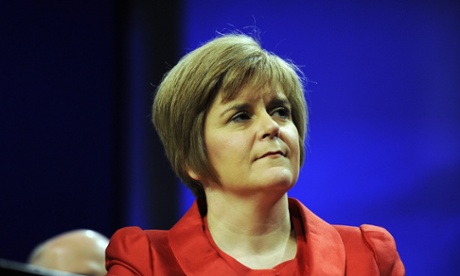
As expected, Nicola Sturgeon, Scotland’s deputy first minister, is the only candidate for leader. That means she will replace Alex Salmond as leader on Friday 14 November, when the elections conclude at the SNP’s party conference.
There are three candidates for deputy leader. They are:
- Keith Brown, MSP for Clackmannanshire & Dunblane, and the Scottish government minister for transport & veterans.
- Angela Constance, MSP for Almond Valley, and the Scottish government cabinet secretary for training, youth & women’s employment.
-
Stewart Hosie, MP for Dundee East, and deputy leader of the SNP’s Westminster group and the party’s Treasury spokesperson.
The deputy leader will be chosen in a one member, one vote ballot of party members, using a preferential voting system (ie, with candidates marked 1, 2, or 3).
It feels like ages since we last had a PMQs. In fact, it’s six weeks since David Cameron and Ed Miliband last faced each other across the despatch box at 12pm on a Wednesday. But that was a largely consensual session, when Miliband asked about measures being taken to deal with the threat posed by Islamic State. If you are looking for the last PMQs punch up, you have to go back 13 weeks, to the last session before the summer recess.
Since then, as is often the way with politics, much has changed, but also very little. Labour retains a modest lead in the opinion polls, which in theory would give Miliband a majority but which in practice is too slender for anyone in the party to be very confident about it lasting until polling day. But Cameron has also won a historic victory in Scotland (despite it being more of a Labour victory, it’s the Conservatives who are doing the celebrating - there’s more on this here) and, even though Ukip is on the rampage, and probably threatening the Conservatives election prospects more than Labour’s, Cameron’s standing in his party is significantly higher than Miliband’s.
At 12pm they can both channel all of this into 15 minutes of verbal aggro.
But there is quite a lot of other news around too. Here’s the agenda.
9.30am: Nicky Morgan, the education secretary, gives evidence to the Commons education committee on extremism in schools.
9.30am: Unemployment figures are released.
10.15am: Theresa May, the home secretary, speaks at the College of Policing conference. She will announce a limit on the amount of time people can spend on police bail.
10.30am: Chris Grayling, the justice secretary, gives evidence to the Lords constitution committee about the office of Lord Chancellor.
12pm: David Cameron and Ed Miliband face each other at PMQs.
12.30pm: Mary Creagh, the shadow transport secretary, speaks at a sustainable airports summit.
I will be focusing on PMQs but, as usual, I will be also covering all the breaking political news from Westminster, as well as bringing you the most interesting political comment and analysis from the web and from Twitter. I will post a summary at lunchtime, and another at the end of the day.
If you want to follow me on Twitter, I’m on @AndrewSparrow.