Camera Club depth of field assignment – in pictures
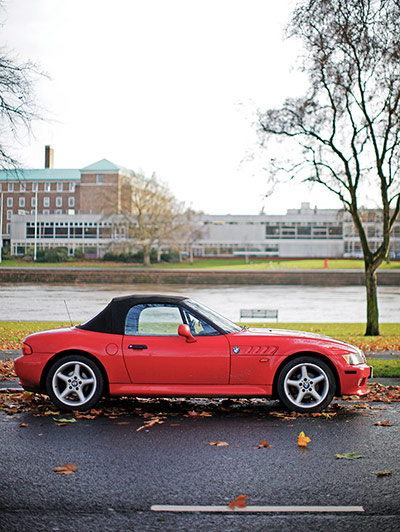
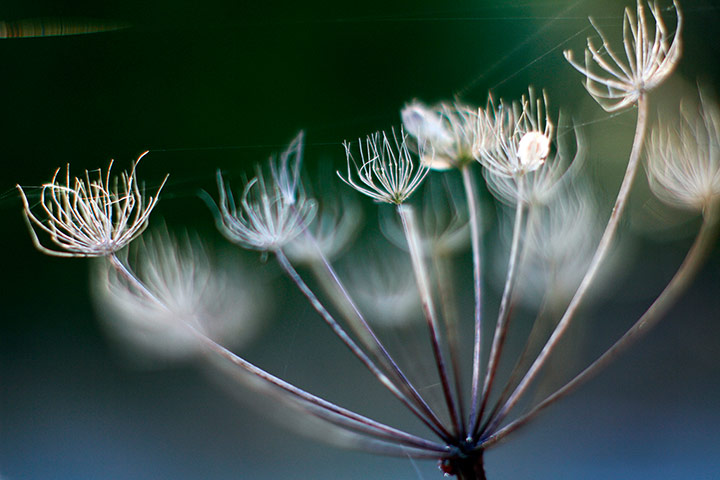
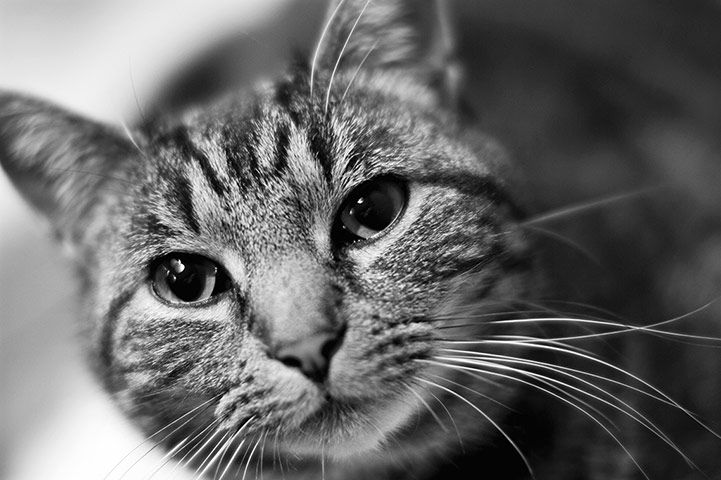
This has a potentially distracting background. By shooting the 50mm lens at f1.4 it has become blurred enough to provide context without intruding on the carPhotograph: David Sillitoe for the GuardianThis photo was shot against the light on a crisp bright day. The depth of field on this 50mm f1.2 lens is too small here (I used f1.4 when I should have stepped down to f4). The camera is a Canon EOS 7D, which means that due to its sensor size the lens is an 80mm (in full frame terms). This reduces the depth of field still further. It's in light like this that any colour fringing appears, as you can see herePhotograph: David Sillitoe for the GuardianThe focus in this portrait (shot using my camera's 80mm lens) is very exact. While the nose and ears are slightly blurred, the eye is drawn to the cats eyes, a good example of how a very narrow depth of field can be used as a compositional toolPhotograph: David Sillitoe for the Guardian
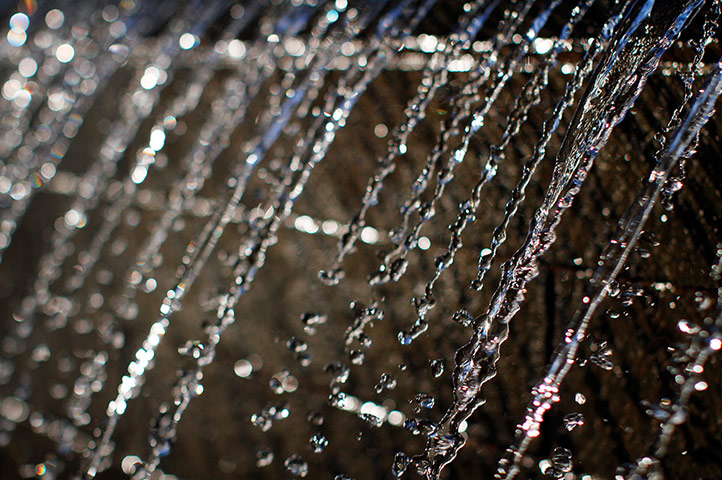
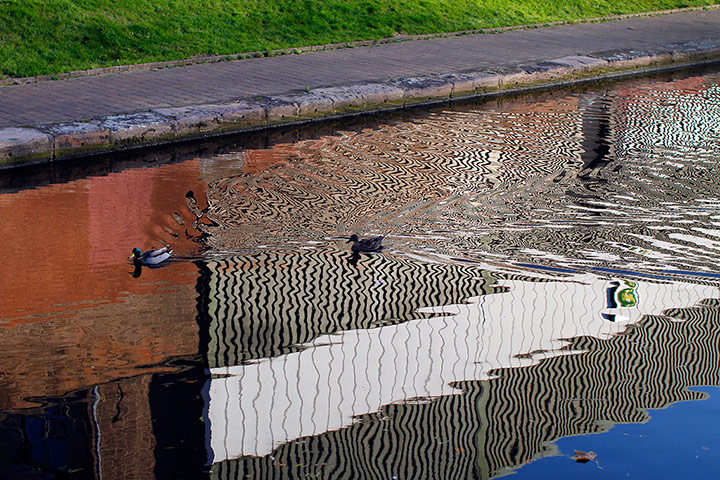
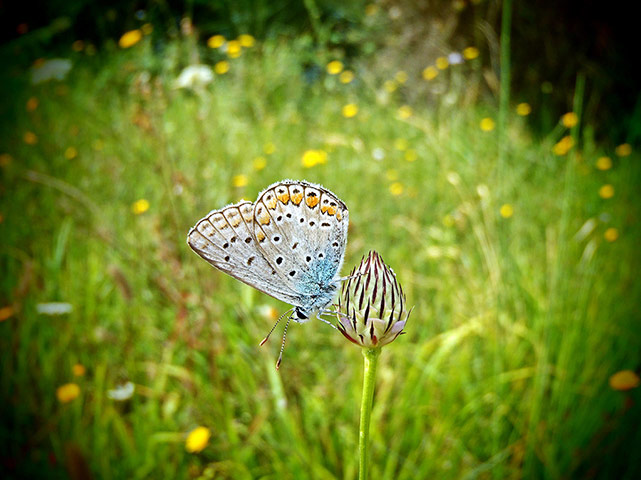
The upshot of using a wide aperture (here the lens is set to f2.5) is that in good light you can use a high shutter speed. Here, at 200 ISO, the shutter was set at 1/8000th of a second, hence the perfectly frozen stream of water. This combination is often used in sports photographyPhotograph: David Sillitoe for the GuardianHere i'm interested in the distorting patterns reflected in the water, so the 50mm lens (80mm equivalent) was set at f2.8. This gives enough depth of field to keep the ducks and the rippled reflections sharp, but throws the background grass slightly out of focusPhotograph: David Sillitoe for the GuardianProof that macro photography is possible on a compact camera (Olympus uTough-8010). The narrow depth of field has picked out the butterfly beautifullyPhotograph: David Sillitoe for the Guardian
Sign up to read this article
Read news from 100’s of titles, curated specifically for you.