Cambodia has extradited a powerful business figure to China after arresting him over accusations that he ran a sprawling scam operation which siphoned billions of dollars from victims worldwide.
The interior ministry said Chen Zhi was detained along with two Chinese nationals, Xu Ji Liang and Shao Ji Hui, before being sent to China on Tuesday. The arrests were made at Beijing’s request.
Mr Chen’s Cambodian citizenship was revoked by royal decree in December, CNN reported. He was born in China.
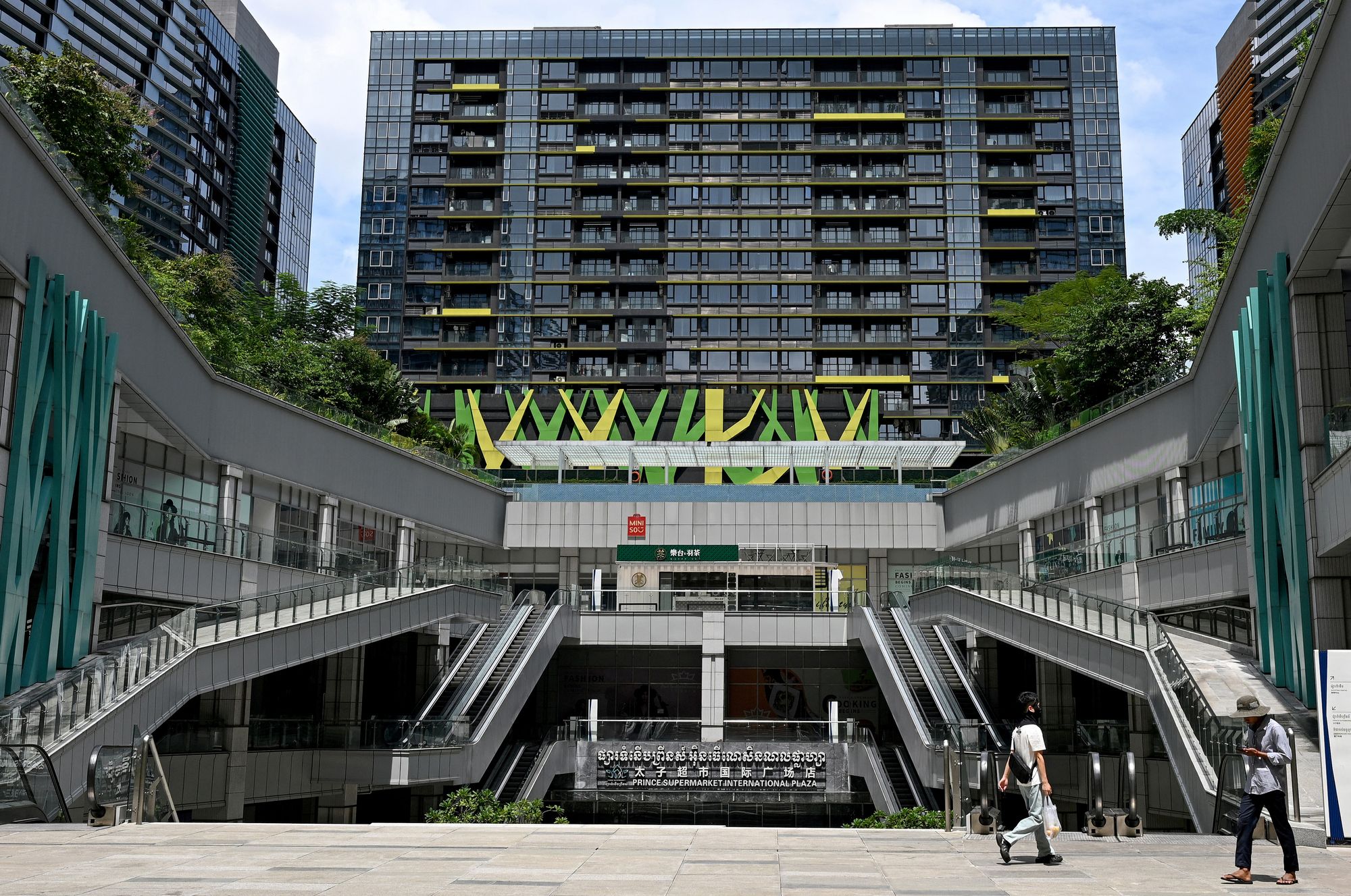
Mr Chen, 38, chaired the Prince Holding Group, a Cambodia-based conglomerate publicly known for luxury property developments, finance and consumer services.
Western officials alleged the group masked a transnational criminal network built on online fraud and exploitation of trafficked workers.
In October, the US Treasury Department and the UK Foreign Office imposed sanctions on Mr Chen and his companies, accusing him of overseeing scam centres that targeted victims across the world.
The schemes typically involved persuading people to invest in fake cryptocurrency or financial products, often after building trust through online relationships.
According to US prosecutors, Mr Chen was charged in New York with wire fraud and money laundering conspiracies. Investigators claimed they had seized nearly $14bn (£10.4bn) worth of bitcoin linked to his alleged activities, describing it as the largest cryptocurrency forfeiture ever.
Prosecutors said that his syndicate defrauded at least 250 Americans, one of whom lost $400,000 (£297,000) in digital assets.
They also accused Mr Chen of authorising violence against workers, bribing officials and laundering profits through side businesses like cryptocurrency mining and online gambling. They said his network earned tens of millions of dollars per day at its peak.
There was no immediate response from prosecutors in New York, where Mr Chen was indicted, and Chinese authorities did not comment on his extradition.
Prince Holding Group has repeatedly denied wrongdoing, describing the allegations as baseless.
Attempts by The Independent to contact Prince Holding for comment were unsuccessful.
Human rights organisations and international agencies say the case highlights the scale of cybercrime in Southeast Asia.
Scam compounds are flourishing in countries where law enforcement is weak, particularly Cambodia and Myanmar, often operating out of casino complexes. Workers are typically recruited with promises of legitimate jobs, then confined and forced to run so-called “romance” or investment scams under the threat of physical violence.
A UN human rights report suggested that at least 100,000 such workers in Cambodia and 120,000 in Myanmar were trapped in conditions amounting to forced labour.
The UN Office on Drugs and Crime estimated global scam losses in 2023 ranged from $18bn to $37bn.
In spite of regional crackdowns in recent years, experts believe many such operations continue.
Jacob Daniel Sims, who studies transnational crime at Harvard University’s Asia Center, said Cambodia was under sustained international pressure to act against criminal networks.
“Handing Chen Zhi to China was the path of least resistance,” he told the Associated Press. “It defuses Western scrutiny, while aligning with Beijing’s likely preference to keep a politically sensitive case out of US and UK courts.”
Amnesty International said last year its investigation into cybercrime in Cambodia pointed “towards state complicity in abuses carried out by Chinese criminal gangs”.
“What we are seeing here is a mafia state actor backed into a corner and choosing the best among bad options, not signs of legitimate reform,” Mr Sims said.
Beyond the cryptocurrency seized by the US, British authorities froze Mr Chen’s assets in the UK, including a mansion and an office building in London. Further assets linked to him were seized or frozen in Singapore, Taiwan and Hong Kong.
China has faced embarrassment over scam networks that have increasingly targeted its own citizens.
In mid-2023, Beijing pressed Myanmar to dismantle similar operations, leading to the extradition of several alleged ringleaders to China, some of whom later received death sentences.
Mr Chen’s transfer to China complicates the prospect of a US trial. Washington and Beijing have no extradition treaty, and relations between the two countries remain tense.
China touts new microwave weapon that ‘can destroy drone swarm from 3km away’
Could China be using the US strike on Venezuela as a playbook for Taiwan?
South Korean president grins in selfies with China’s Xi as part of charm offensive
One of world’s biggest music festivals announced it is coming to Asia for first time
India, Malaysia and France threaten action against X over offensive AI images
Myanmar announces mass prisoner amnesty but no sign of Aung San Suu Kyi