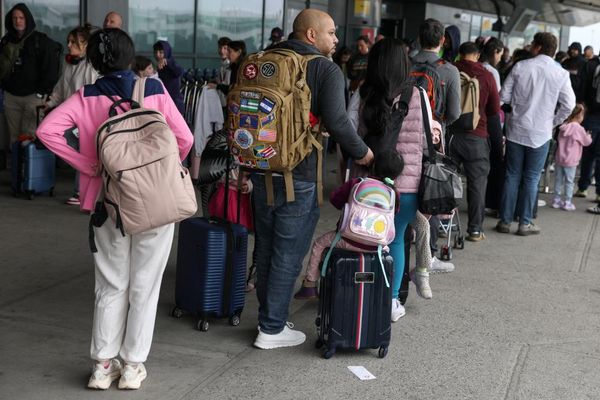
Washington, DC – A plane carrying 21 Haitian migrants expelled from the United States landed in Port-au-Prince on July 6.
It was the 35th such deportation flight since US President Joe Biden took office, sending an estimated 2,000 Haitian asylum seekers, including families, pregnant women and children, back to the rampant gang violence and systemic poverty from which they fled.
Less than 24 hours later, armed gunmen stormed President Jovenel Moise’s home in the Haitian capital, killing him and injuring his wife, and sending shockwaves across the Caribbean nation and around the world.
Back in the US, the deadly attack raised fresh concerns from Haitian community advocates who long before Moise’s killing had demanded an end to US deportations of migrants and asylum seekers to Haiti.
“We are calling on the Biden administration to put a moratorium on all deportations and to release Haitian asylum seekers and refugees held in detention in light of this crisis,” said Marleine Bastien, executive director of the Family Action Network, an advocacy and social service agency that assists Haitians in South Florida.
“We have been asking for months now,” Bastien told Al Jazeera.

‘Simply unacceptable’
Immigration advocates say no US deportation flights have landed in Haiti since the country was thrust into further turmoil by Moise’s assassination last week, as the Haitian constitution is unclear over who should take over and at least three leaders hold competing leadership claims.
But they are increasingly concerned by the deportation of Haitian asylum seekers arriving at the US-Mexico border as well as their continued detention in the US under the public health rule known as Title 42.
“It is simply unacceptable for them to be held in cages instead of being released to be united with their families and community members,” said Guerline Jozef from Haitian Bridge Alliance, a US-based coalition of Haitian non-profit organisations.
“We are asking the Biden administration to stop all deportations and expulsions under Title 42 and to release all asylum seekers – all [detained] Haitian nationals who are seeking asylum in the United States,” Jozef told Al Jazeera.
Most migrants arriving at the US-Mexico border are being deported under Title 42, which was invoked last year by former President Donald Trump on the basis that it was needed to prevent the spread of COVID-19.

So far, Biden has kept the measure in place, citing the pandemic, though he exempted children travelling alone from immediate removals. But rights groups and progressives have blasted the policy as a guise to block asylum into the country.
While Central American migrants – who make up the bulk of the arrivals – are sent back to Mexico, US authorities send Haitians directly back to Haiti, a nation that has been crippled by political instability, poverty, disease, gang violence and the lasting effects of a major earthquake that struck the small island nation more than a decade ago. They are held in immigration detention pending deportation.
A day after Moise’s assassination, a group of 134 pro-immigrant organisations penned a joint letter to the Biden administration urging an immediate halt to the detention and expulsion of Haitian migrants.
“Armed gangs control many streets and have been kidnapping civilians, including school children and church pastors in the middle of their services. Now, experts warn that the political vacuum left by President Moise’s assassination could exacerbate the current cycle of violence in Haiti,” the letter reads.
“No Haitian should be subjected to expedited removal or reinstatement of removal given the lives at stake and the Biden administration’s own assessment of the dangerous conditions in Haiti.”

Migration detention
The US Department of Homeland Security (DHS), which administers the US immigration system, does not have a breakdown of the nationalities of people in immigration detention – and Haitian community advocates did not have an estimate for the number of Haitian nationals currently detained.
According to TRAC Immigration, a research group affiliated with Syracuse University, more than 27,000 migrants of all nationalities were being held in Immigration and Customs Enforcement facilities as of July 8, awaiting deportation.
Earlier this year, the Biden administration acknowledged the dangers Haitians face should they be returned to their home country. On May 22, the US cited instability and violence in Haiti as it announced a new, 18-month Temporary Protected Status (TPS) for Haitians already in the US, which shields them from deportations and allows them to work legally in the country.