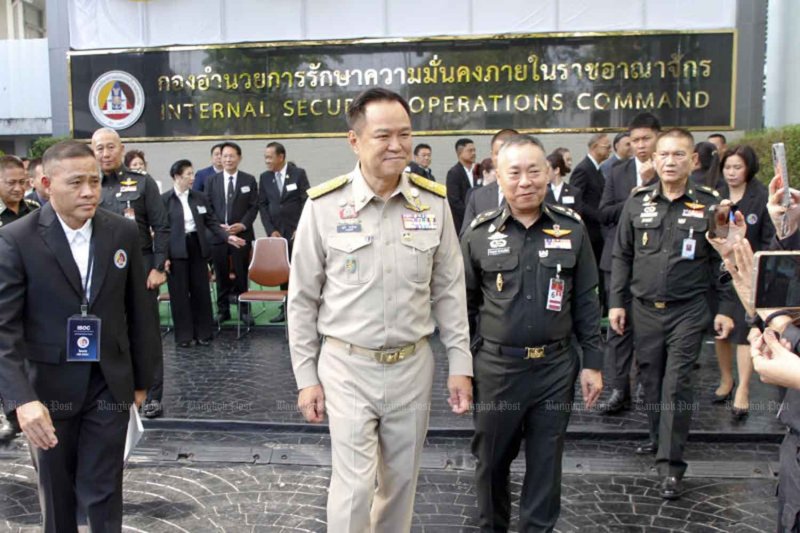
The Internal Security Operations Command (Isoc) remains necessary to tackle complex threats, but the agency must modernise, improve transparency and reduce spending, security experts say.
The debate over Isoc's future has intensified as academics and politicians question whether its structure remains suited to Thailand's changing security environment. While supporters say the agency plays a vital role in coordinating security responses, critics argue that overlapping responsibilities, budget management and accountability require major reform.
Role must evolve
Independent security and foreign affairs analyst Panitan Wattanayagorn said Isoc had undergone several transformations since its creation during the Cold War to counter communist insurgency.

He said the organisation was originally established to defeat communist movements through political and economic measures. After that threat receded, it gradually expanded into broader internal security work.
Mr Panitan, a former adviser to prime minister Gen Surayud Chulanont, said he had proposed restructuring Isoc into a US-style Homeland Security organisation to address emerging threats such as drug trafficking, human trafficking and illegal migration.
However, the government at the time was unable to pass legislation covering these new security challenges, leaving Isoc to evolve incrementally instead of undergoing a fundamental overhaul.
Thailand now faces more complex challenges, including cyber threats, transnational crime, international criminal networks and changing expectations from local communities, he said.
"Today, it is no longer the mission of Isoc 2.0 because new security threats are more complex," Mr Panitan said.
He proposed creating an "Isoc 3.0" model combining security, development and military functions under a single mechanism.
Mr Panitan also suggested upgrading Isoc from a coordinating body into a department, bureau or national security management office with authority comparable to the National Economic and Social Development Council.
Under his proposal, projects in special security areas would require approval from the new body before being submitted to the cabinet, while personnel should be permanently assigned rather than seconded from other agencies.
He also said funding should prioritise local budgets, with central government support provided only when necessary to give communities a greater role in managing special areas.
Graft concerns
Srisompob Jitpiromsri, director of Deep South Watch and a director at the Center for Conflict Studies and Cultural Diversity (CSCD) at Prince of Songkla University, said Isoc's role expanded after violence returned to the southern border provinces in 2004.

He said Isoc Region 4 Forward Command became the main agency overseeing security operations in the Deep South, receiving substantial government funding.
However, Mr Srisompob said questions persisted over whether the spending had been effective and transparent.
He also cited parliamentary allegations that public funds and resources had been used to support websites and social media pages targeting critics of government policies, including civil society groups working on human rights.
Mr Srisompob also questioned the payment of additional allowances to personnel already receiving salaries from their parent agencies.
He said critics had also raised concerns about alleged "ghost names" on lists of personnel receiving special payments despite not serving in the area.
However, Mr Srisompob said Isoc could continue to play a useful role if it operated effectively, transparently and under stronger oversight by parliament, civilian agencies and auditing bodies.
"If Isoc works within an effective framework, without corruption and with transparency, it can keep supporting national security," Mr Srisompob said.
Budget under scrutiny
Concerns over Isoc's structure have also intensified following scrutiny of its proposed 2027 budget.
Pol Col Tawee Sodsong, leader of the Prachachat Party, said the proposed budget of 5.73 billion baht reflected broader governance concerns.
He noted that only 44.3 million baht was allocated for permanent staff salaries, suggesting Isoc has a permanent workforce of about 200 people.
The remaining 5.31 billion baht, or 92.6% of the budget, was classified as "other expenditure", which he described as a system where funding drives operations while personnel are drawn from other agencies.
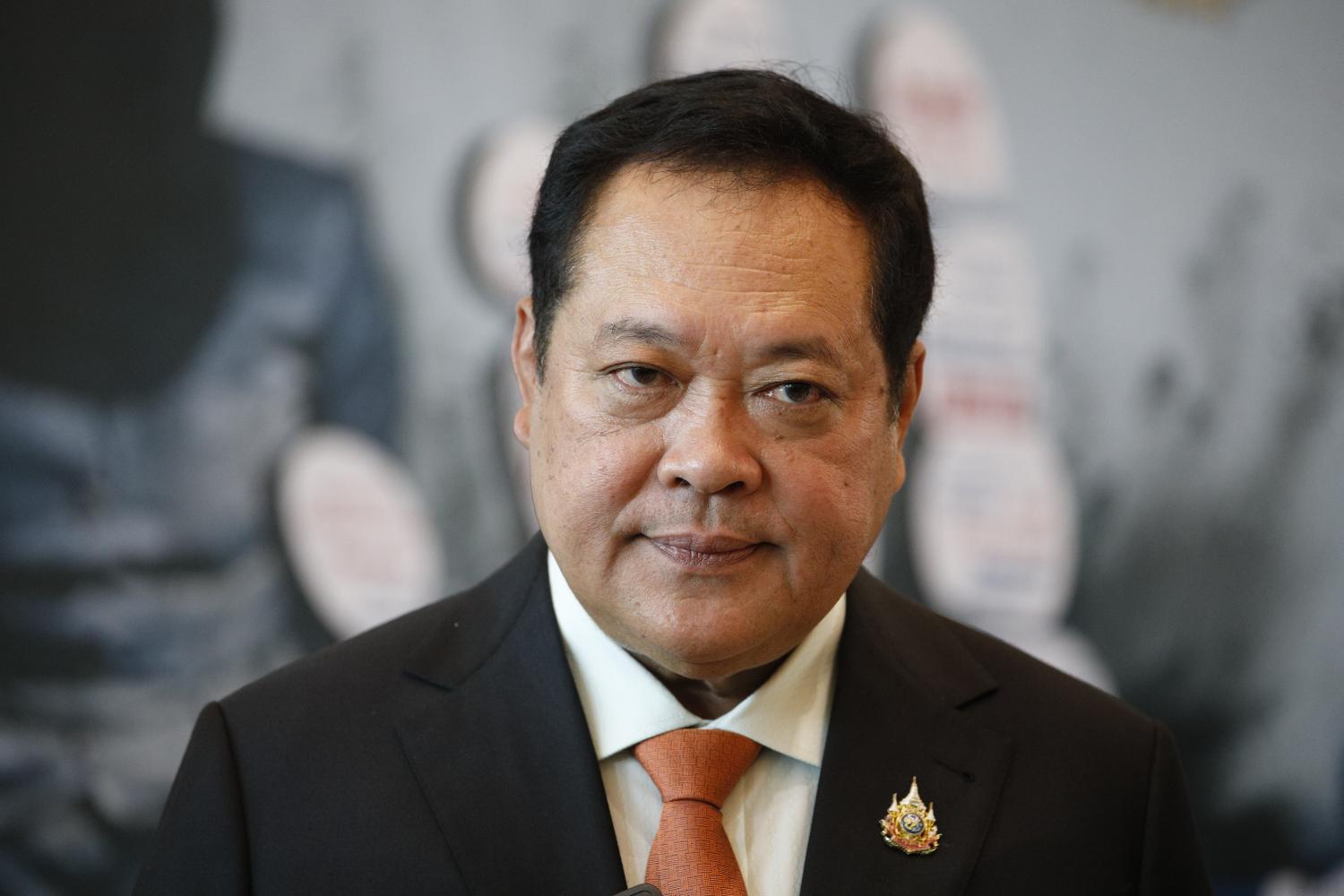
Pol Col Tawee also highlighted spending in the southern border provinces, where about 4.3 billion baht was allocated under other expenditure, including 2.34 billion baht for personnel-related costs.
He questioned whether this duplicated the work of agencies such as the Southern Border Provinces Administrative Centre and local administrations.
Pol Col Tawee said the structure created a "state within a state" and called for legal and administrative reform.
The Prachachat leader also referred to a recent case in which an Isoc vehicle and a military officer assigned to the agency were linked to the attempted assassination of Prachachat MP Kamonsak Leewamoh in Narathiwat in March, saying the incident reinforced the urgent need for greater accountability. The case remains before the courts.
Analysts agreed that abolishing Isoc would not resolve Thailand's security challenges, particularly in border areas facing complex security threats.
Instead, they said the priority should be creating a smaller, more efficient organisation with clearer responsibilities, stronger oversight and better use of public funds.
The debate, they said, is no longer whether Isoc should exist, but how it should operate in a changing security environment while maintaining public trust.