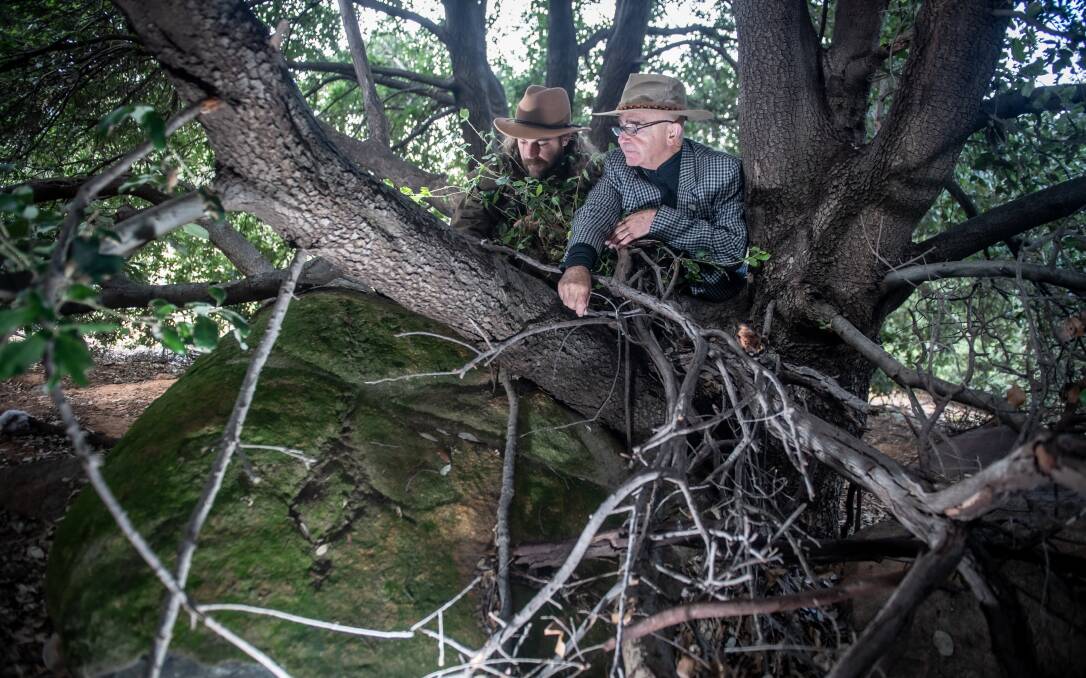
Protesters have gathered at the site of a luxury apartments development calling for further investigation into its cultural significance.
Doma's development at the foothills of Mt Ainslie has been the subject of scrutiny after Ngambri man Shane Mortimer said the site was a spiritual place used for sacred men's business.
This brought on calls for the development to be halted while a study of the site's Indigenous values was carried out.
A heritage assessment of the site commissioned by Doma Group found the site did have Aboriginal artefacts, but gave approval for the development to go ahead as it was assessed as having significance below the threshold for a listing.
Federal Environment Minister Sussan Ley confirmed to Mr Mortimer and Doma Group last month the site was not considered a "significant Aboriginal site under serious and immediate threat of injury or desecration" and it would not be protected under the Aboriginal and Torres Strait Islander Heritage Protection Act.
Mr Mortimer made an application for an emergency declaration in July 2020.
He returned to the site on Thursday calling for an independent assessment of the site.
A number of rock carvings called 'petroglyphs' were located there last year and Mr Mortimer said further significant items had been located, warranting a thorough investigation into its cultural significance.
"It is really, really important that we get some funding both from the federal and ACT governments in order to facilitate an independent investigation of the site," he said.
The development at the site of the former CSIRO building has been dubbed the Foothills and will include almost 300 units.
Read more:
- Doma defends Mt Ainslie development
- Call to halt development on Mount Ainslie foothills until Indigenous values of site assessed
Australian National University geologist Brad Opdyke said the rock carvings were likely many thousands of years old.
He said a weathering rind on top of the carving, known as a patina, was evidence the markings were made thousands rather than hundreds of years ago.
He echoed calls for further, expert assessment of the "spectacular" and rare findings.
"It needs somebody that's really an expert on on petroglyphs," Dr Opdyke said.
Our journalists work hard to provide local, up-to-date news to the community. This is how you can continue to access our trusted content:
- Bookmark canberratimes.com.au
- Download our app
- Make sure you are signed up for our breaking and regular headlines newsletters
- Follow us on Twitter
- Follow us on Instagram