
California’s ultrarich clearly hate the idea of a one-time, 5% tax on their wealth as part of the state’s attempt to backfill the sudden loss of billions of dollars in federal funding for safety net programs like Medi-Cal.
How might they feel about a 2% tax that lasts forever?
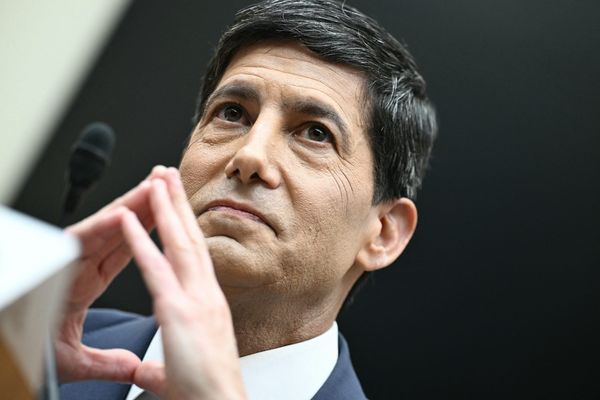
Gabriel Zucman, a UC Berkeley economist known as a global expert in wealth inequality and tax avoidance, believes it can be done — and as goes California, so may go much of the world, he said.
“California could absolutely implement an annual wealth tax,” said Zucman, who’s also a professor at the Paris School of Economics in his native France. “This one-time tax is just the starting point of what could be.”
A permanent wealth tax, like the one he is proposing, isn’t on the ballot in November, of course. Voters are presented only with Proposition 40, the California Billionaire Tax Act, which if passed would raise an estimated $100 billion over five years by placing the 5% tax strictly on the state’s 200-plus billionaires.
The money would be heavily directed toward health care and food assistance programs, two targets of the Trump administration when it comes to federal funding cuts. Supporters argue that the California Billionaire Tax Act is both critically needed and aimed at those who can easily afford it, while the billionaires themselves, led by Google co-founder Sergey Brin, are spending massively to defeat the measure.
But a permanent tax is a fix that could have tremendous effect, Zucman said. And even in the early going, it could be worth $25 billion a year — every year — in additional revenue for the state.
Zucman’s perspective is clear. He’s the author of a new book, We Need to Tax Billionaires, in which he argues for a 2% tax on the wealth of the richest people on Earth and lays out ways to accomplish that. His previous book, The Hidden Wealth of Nations, is widely credited with exposing countries for setting up international tax havens for the rich, and it has been translated into 18 languages.
But his perspective, he said, is rooted in history. While the concept of an income tax is roughly a century old, it has never really touched the world’s wealthiest, no matter where they live.
“By and large, the income tax system works well — except for the super rich,” Zucman said. “They find ways [through legal tax avoidance measures] to report either very little or no income. But a tax on wealth is much harder to manipulate than a tax on income.”
California’s billionaire class is an example. Silicon Valley titans and other entrepreneurs take almost none of their money in income, diverting it instead into stock holdings that aren’t taxed until they’re cashed out. They can then borrow against the value of those holdings, also tax free.
Partly as a result, their wealth grows and grows, spiraling far out of proportion to the economic health of the state as a whole. In a commentary written earlier this year for The New York Times, Zucman and fellow UC Berkeley economist Emmanuel Saez noted that over the past three years alone, the fortunes of the Golden State’s billionaires, fueled by explosive growth in AI and cryptocurrency technology, increased by 144% to more than $2 trillion — most of it shielded from California income tax.
Prop. 40 gets at that money by taxing assets, not just income. A permanent 2% wealth tax would do the same, Zucman said — and California could make it happen, in part precisely because the state is home to so many ultrarich people.
Anytime a proposition like this is suggested, the rich begin making threats. In the case of the California Billionaire Tax Act, Brin established residency in Nevada at the end of 2025, so as to avoid the tax that (if approved) will apply retroactively to anyone in the state as of Jan. 1, 2026. Plenty has been written about how many other megawealthy will follow.
“They threaten. They agitate,” said Zucman. But history suggests that the actual outmigration of wealthy people from an area in response to a tax is low — most recently in Massachusetts, which has seen a huge net benefit from an enhanced tax on millionaires, and New York City, where threats by the rich to leave in the wake of proposed taxes by Mayor Zohran Mamdani have not materialized.
A 2% tax on the current valuation of billionaires’ $2 trillion holdings in California would come to $40 billion per year. In their formula, Zucman and Saez set the actual projected figure far lower than that to account for the fact that some ultrarich would leave the state, while others would see their total wealth pools decrease slightly over time.
“That leaves California with an additional $25 billion per year,” Zucman said. “Even if you factor in the fact that some billionaires will move, the state would still be vastly better off with a 2% annual wealth tax.”
Could a permanent wealth tax really occur in California? The fate of Prop. 40 may shine some light on the question.
Google’s Brin has already poured $82 million into one political action committee, Building a Better California, that is pushing two ballot measures, either of which would effectively gut the Billionaire Tax Act. The state would face heavy pushback from the billionaire class, and especially the tech sector, if California legislators went for a 2% permanent measure.
The heavy tech spending against the measure is an example of why taxing the ultrawealthy feels necessary, Zucman said.
“For most people, accumulating wealth is a good thing — it’s safety for your older [years], or in case you lose a job,” the professor said. “But the super rich don’t accumulate billions for retirement. For them, wealth is power, the power to influence policymaking, buy elections, buy media companies — as we’ve seen in the U.S. in recent years — and influence the prevailing technology. The concentration of wealth erodes democracy.”
Outgoing Gov. Gavin Newsom has opposed Prop. 40 since its inception, and tried to defuse it by offering other concessions to SEIU-United Healthcare Workers West, which is pushing the billionaire tax. (Disclosure: SEIU is a financial supporter of Capital & Main.) Those negotiations failed.
At the same time, Newsom, a likely presidential candidate in 2028, supports a national wealth tax on anyone worth more than $100 million. That’s actually in line with Zucman’s global proposal for a 2% tax on the wealth of anyone worth more than 100 million euros, or about $114 million.
The whole idea of what constitutes a fair tax on the ultrawealthy would’ve looked different just a few decades ago. In 1982, the first year of the Forbes 400 ranking of America’s 400 richest people, their combined wealth was equivalent to about 2% of the country’s gross domestic product, according to Zucman.
This year, economists say, that figure is closer to 20% of GDP. It is a dramatic runup in the concentration of wealth into a few hands — and in California, it could be a ticket to new and ongoing sources of revenue.
“The whole world is watching what is happening in California,” Zucman said. “If the billionaire tax passes in November, it’s going to have a ripple effect not only in the U.S., but globally.”