SACRAMENTO, Calif. _ Unable to cope with wildfire claims, PG&E made good on its vow to file for bankruptcy Tuesday, launching a perilous journey with major implications for ratepayers, investors, state officials and the thousands of California wildfire victims who are suing the utility.
Citing "extraordinary financial challenges" and a rapidly deteriorating cash position, Pacific Gas and Electric Co. and its parent PG&E Corp. sought Chapter 11 bankruptcy protection in an electronic filing shortly after midnight. The company's most pressing concern is "over $30 billion in potential exposure" from the 2017 and 2018 wildfires, according to court papers, including the November Camp Fire in Butte County.
The filing wasn't a surprise; PG&E warned 15 days ago it was planning a bankruptcy case, as required by a state law enacted last fall. In court papers, utility lawyers said the warning actually accelerated the depletion of its finances as it was forced by suppliers to pre-pay for power and other needs.
The company's cash position fell by $811 million during the two-week run-up to the actual bankruptcy filing, the lawyers wrote. That reduced the utility's cash holdings to $240 million; the parent corporation has an additional $370 million.
However, PG&E said it has lined up $5.5 billion in bankruptcy financing which it says will enable the utility to keep going during a process that will likely take several years. The state Public Utilities Commission, at a contentious meeting interrupted by protestors Monday, agreed to let PG&E borrow the money; the bankruptcy court must approve as well.
The case will be heard in U.S. Bankruptcy Court in San Francisco, about two miles from PG&E's headquarters. Judge Dennis Montali, who oversaw PG&E's first bankruptcy in 2001, will preside.
"We are continuing to provide safe and reliable electric and natural gas service," the company said on its website. "We are not 'going out of business,' and we expect that there will be no disruption to the services you expect from us as a result of the Chapter 11 process.
"Our extensive restoration and rebuilding efforts to help communities recover from the devastating wildfires are continuing. We are committed to these efforts and safety remains our most important responsibility."
Gov. Gavin Newsom had no immediate comment, but Attorney General Xavier Becerra vowed to "protect the interests of the people." The bankruptcy will force state officials to deal with the concerns of ratepayers and wildfire survivors while at the same time ensuring the company is healthy enough to keep operating. In the long term, PG&E could be forced to spin off assets to raise cash.
The utility did win a partial reprieve last week when Cal Fire said PG&E's power lines weren't to blame for the Tubbs Fire, the costliest and deadliest of the 2017 fires. But the company made clear that it still faced a "deteriorating financial situation."
Legislators last year enacted a partial bailout for the company, saying it could pass on at least some wildfire liability costs to ratepayers if the utility's finances couldn't absorb the total hit.
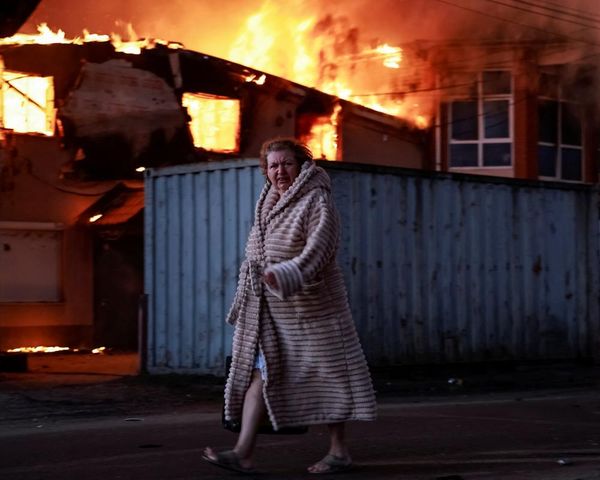
But the legislation, SB 901, didn't cover any 2018 fires, including the Camp Fire, which destroyed 13,000 homes in Paradise in November and killed 86 people, the most in California history. Legislators have indicated they're in no mood to extend SB 901's protections to help PG&E with the Camp Fire.
The official investigation isn't complete, but PG&E has disclosed that it experienced problems on a high-voltage transmission tower near the apparent ignition point, minutes before the Camp Fire began.
Experts say PG&E's bankruptcy will bring pain for practically everyone involved. Wildfire survivors who are suing PG&E will become unsecured creditors with no higher priority on PG&E's assets than the company's bondholders _ who are owed $18 billion.
Rates will likely go up _ to help PG&E with the 2017 liabilities, if not the Camp Fire claims. PG&E customers paid billions in higher rates following the company's first bankruptcy in 2001, which was caused by runaway power prices during the energy crisis.
Meanwhile, PG&E's stockholders are likely to lose billions if, as some have speculated, the company sells some of its assets to pay debts.
The federal judge overseeing PG&E's probation, stemming from its criminal conviction in the 2010 San Bruno pipeline disaster, has a hearing set for Wednesday on his proposal to impose stringent wildfire-safety rules on the utility this year. That would include mandatory re-inspections of all 100,000 miles of PG&E power lines and extensive tree-cutting operations before the fire season begins in June.
PG&E has pushed back on the plan as unrealistic and said it would cost at least $75 billion to implement. The Public Utilities Commission has also objected, saying the judge has gone too far and should leave wildfire safety to state officials.