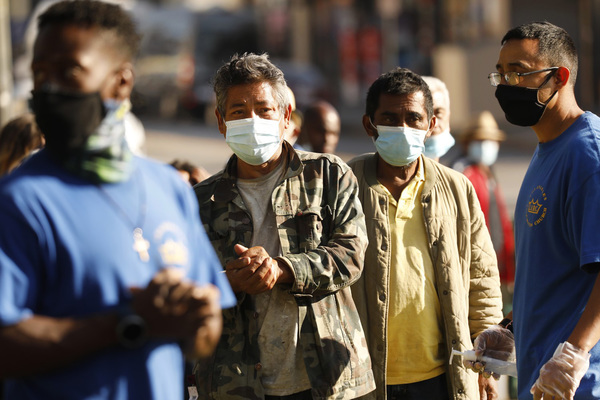
A modified stay-at-home order went into effect for much of California Saturday morning, part of a new effort to slow the rapid spread of the coronavirus.
Here are the details of the order:
_Prohibits most nonessential activity outside the home from 10 p.m. to 5 a.m. in purple tier counties. Activities banned include all gatherings with members of other households and all activities conducted outside one's residence, lodging or temporary accommodation with members of other households.
_Allows people to leave home to walk their dog or take walks with people they live with, buy groceries or pick up drugs at the pharmacy late at night, pick up or receive takeout food, travel to the emergency room or urgent care or for other essential purposes;
_Lasts through Dec. 21, though it could be extended.
_Does not apply to people experiencing homelessness. Nothing in the order prevents any number of people from the same household from leaving their residence, lodging or temporary accommodation, as long as they do not engage in any interaction with (or otherwise gather with) any number of people from any other household, except as specifically permitted by the order.
The restrictions are different from the statewide stay-at-home order Gov. Gavin Newsom issued in mid-March, in that they focus more on curbing late-night drinking and group gatherings.
Californians in the affected counties will still be allowed in the overnight hours to buy groceries, walk the dog, pick up restaurant takeout orders, visit doctors or other health care providers and other providers of essential services.
The order covers roughly 94% of Californians — 37 million people — who live in counties that are in the purple tier, the most restrictive in the state's reopening plan. In purple tier counties, the restrictions have forced many businesses to suspend or severely restrict the number of customers allowed indoors.
On Friday, L.A. County imposed its own new rules. They include, from the order:
_For nonessential businesses permitted to operate indoors — including retail stores, offices, personal care services — occupancy will be limited to 25% maximum capacity.
_The number of patrons at outdoor restaurants, breweries and wineries will be limited to 50% of the maximum outdoor capacity.
_The number of customers at outdoor cardrooms, mini-golf, go-karts and batting cages will be limited to 50% maximum outdoor capacity.
_Services at personal care establishments may be provided only by appointment to customers wearing face coverings by staff wearing face coverings. Those that require either the customer or the staff to remove their face covering, such as facials and shaves, are not permitted. Food and drinks cannot be served at these establishments to customers.
_Restaurants, breweries, wineries and all other retail establishments deemed nonessential must close their doors to the public from 10 p.m. to 6 a.m. But they can continue to offer takeout and delivery service during those hours.
With COVID-19 spreading at a rapid rate, officials have warned that other public health interventions may become necessary to stem transmission.
For the seven-day period that ended Friday, an average of 10,981 people in California were reported to be infected daily — a number that has more than doubled in just the last two weeks. That is even worse than the peak in the summer, which until now had been California's worst spike of COVID-19, according to a Los Angeles Times data analysis.
For the first time, California has recorded three days in the last week when more than 13,000 new infections a day have been recorded.