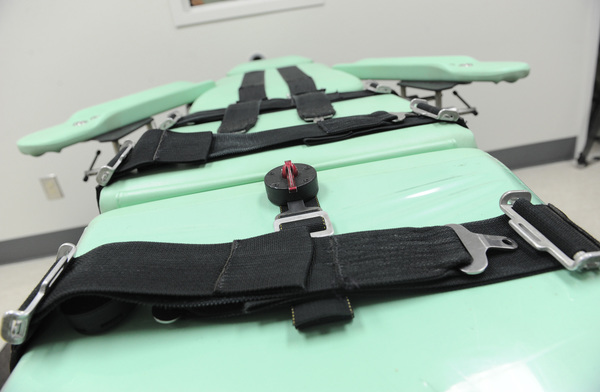
SAN FRANCISCO _ California has proposed a new method of lethal injection, but the two drugs that could be used to execute inmates are extremely difficult to obtain.
The new protocol, slightly revised from a previous proposal, would allow executioners to use a single infusion of Pentobarbital or Thiopental to put condemned inmates to death. Both drugs are barbiturates.
The U.S. Food and Drug Administration has barred the import of Thiopental, and the manufacturer of Pentobarbital has prohibited the drug from being used in executions, said Ana Zamora, criminal justice director of the ACLU of Northern California.
"The state cannot lawfully procure either of those drugs through a reputable channel," she said.
Kent Scheidegger, legal director of the pro-death penalty Criminal Justice Legal Foundation, agreed that drug availability remained a potential obstacle.
He said compounding pharmacies could make the drugs if the ingredients could be imported from Asia, an issue now before a federal court in Texas.
Scheidegger and his group joined prosecutors in winning passage of Proposition 66, a 2016 ballot measure intended to speed up executions. He said he expects the new protocol to become final within a month or two.
Other hurdles toward resuming executions still remain, however. Injunctions against executions are still pending in both federal and state court.
Those injunctions might be removed by the end of the year, said Scheidegger. His group has already moved to end the state injunction.
"None of them have any legal basis but it does take time to get these hurdles removed by the courts," he said.
Zamora complained the new protocol was essentially the same one rejected last year by a state law office before Proposition 66 became final.
It "contains a lot of the same problems, legal and practical problems, that the courts have been pointing to for years and years," she said.
Legal challenges have blocked executions in California for 12 years. More than a dozen death row inmates no longer have any appeals left but they could not be executed until the federal court case is resolved.
U.S. District Court Judge Richard Seeborg, a Barack Obama appointee now presiding over a Northern California case, will have to determine whether the new protocol violates the Constitution's ban on cruel and unusual punishment.
U.S. Supreme Court rulings favor proponents of the death penalty on the law, but courts move slowly. Whatever Seeborg decides is likely to be appealed.