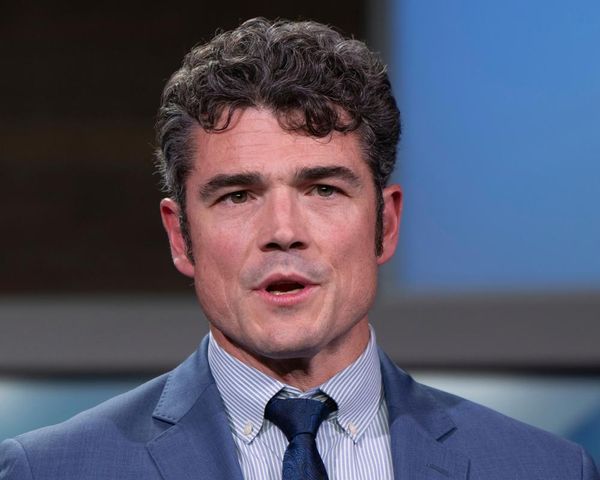
SACRAMENTO, Calif. _ Tony Mendoza, a former East Los Angeles elementary school teacher who moved swiftly from local to state government elected offices, resigned from the California Senate on Thursday as his colleagues moved to formally expel him after a series of sexual misconduct accusations.
The resignation was the culmination of an almost three-month saga that saw the Democrat stridently deny any improper conduct, all while accusing his fellow legislators of unfair treatment. He becomes the third state legislator to resign in the wake of allegations that have shaken the state Capitol community.
His resignation was announced just minutes before senators were poised to consider a debate on either expelling him or suspending him without pay for the rest of the year.
Mendoza submitted a fiery resignation letter moments before lawmakers were set to debate his fate, taking aim at Senate President Pro Tem Kevin de Leon, who he said "will not rest until he has my head on a platter to convince the MeToo movement of his 'sincerity' in supporting the MeToo cause."
Mendoza also left open the idea that he might run again for the seat this year, even after an immediate resignation.
In one allegation of an incident from 2008, Mendoza, who is married, was reported to have invited a 19-year-old intern to spend the night in an adjoining suite during a California Democratic Party convention. The investigation report included accusations that he "offered and subsequently had alcoholic drinks with the intern in the hotel suite."
The internal debate on removing him from office, according to those familiar with the discussions, focused on the impropriety described in the report's findings. Senators also considered Mendoza's increasingly combative posture against the investigation, which he described as lacking due process. Mendoza, whose Senate term was set to expire later this year, filed a lawsuit against the Senate last week arguing that his constituents have been unjustly denied representation.
Some privately feared an expulsion would set a dangerous precedent, opening the door for more frequent use of the Legislature's stiffest punishment.
Four of the women who made accusations worked for Mendoza as staffers and one worked as a lobbyist. The report said none found him to be physically aggressive or sexually crude but all understood him to be seeking sexual contact. Democrats debated disciplinary action in an hourslong closed-door meeting Wednesday, weighing punishments that ranged in severity from a formal censure to suspension with or without pay to expulsion.
"I was deeply disconcerted when reviewing the investigation summary," he wrote. "Though the summarized findings do not comport with my recollection or perception of the events described, I am immensely sorry if my words or actions ever made anyone uncomfortable."
Formal reprimands by either house of the Legislature are exceedingly rare. No state lawmaker has been censured since 1982, when a Republican senator from Newport Beach was rebuked for his calling abortion rights advocates "bull dykes" during a Los Angeles event. The last expulsion was far earlier, when four senators were removed in 1905 for accepting bribes. Two of those senators later served time in prison for the crimes.
Mendoza could have been suspended by the Senate, either with or without pay. In 2016, voters approved a state constitutional amendment allowing for the no-pay option _ a change sparked by criminal charges in 2014 against three Democratic senators. Two of those lawmakers _ former state Sens. Ron Calderon of Montebello and Leland Yee of San Francisco _ later pleaded guilty to corruption charges. The third, former Inglewood state Sen. Rod Wright, was convicted of perjury and voter fraud.
All three men continued to earn a state paycheck while suspended. Proposition 50 made clear that a lawmaker who was suspended could also be stripped of salary and per-diem travel payments.
GOP state Sen. Joel Anderson of San Diego said Thursday that if expulsion wasn't merited against the three senators in 2014, it wasn't appropriate in the case of Mendoza.
"The (Democratic) majority tabled that motion each and every day," he said. "And I brought it up multiple times. Now we have somebody who has been accused of something, who hasn't been found guilty of anything. Not a crime. And yet, we're talking about expelling that member. So the penalty of being accused of something is greater than being found guilty of eight felonies."
But other Republicans were early advocates for expelling Mendoza, proposing the action as soon as lawmakers reconvened in early January. That movement prompted Mendoza to voluntarily take a monthlong paid leave. The Senate voted to extend that leave of absence later that month, during which Mendoza has been receiving his annual $107,238 salary.
It is unclear when a special election to fill Mendoza's Senate seat will be held. Three Democrats have already said they intended to challenge Mendoza for a four-year term that begins in 2019.