SAN DIEGO _ A San Diego federal judge is contemplating a request by the American Civil Liberties Union to order all children affected by the Trump administration's "zero-tolerance" immigration policy to be reunited with their parents within 30 days.
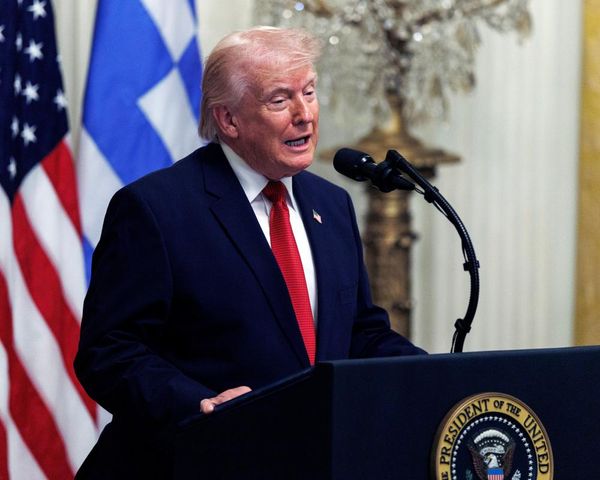
The request for an injunction _ asking the court to step in rather than leave it up to the government to act on its own _ comes after President Donald Trump last week responded to mounting public pressure by signing an executive order that halted the practice of separating children from parents who had been detained at the U.S.-Mexico border for illegal entry.
The shift prompted confusion as to how subsequent family arrests at the border will be handled and questions as to what the government's plans for reunification are.
Meanwhile, a new multistate lawsuit challenging the family separation practice was filed Tuesday in Washington state, with 16 states _ including California _ and the District of Columbia on board.
As for the San Diego case, attorneys for the government argued in a response filed Tuesday morning that the executive order already addresses the family separation concerns outlined in the ACLU lawsuit, and that federal agencies are working on reunification of the 2,000 or so families that remain apart.
"This Court should give the agencies time to take action, rather than issuing an injunctive order," the government's motion urges. "A court imposed process is likely to slow the reunification process and cause confusion and conflicting obligations, rather than speed the process of reunifying families in a safe and efficient manner."
Under U.S. Attorney General Jeff Sessions' "zero-tolerance" policy, which criminally charges all unauthorized immigrants caught crossing the border, defendants are detained within the criminal system, often allowed to plead guilty and sentenced to serve little to no prison time. That process usually takes a few weeks to a month, then they are taken into immigration custody for the civil deportation process to begin.
It is during the civil process in immigration custody that the ACLU is calling for reunifications.
In declarations, two officials from the Department of Homeland Security and the Department of Health and Human Services describe existing ways children are reunited with parents before deportation and how parents in civil immigration custody can speak with separated children via video or phone.
The declarations do not detail a process for reuniting families prior to deportation and says family residential centers where children and parents can be detained together have limitations.
The ACLU said that is why the court must intervene _ and points out that the executive order can be rescinded at any time.
"The government has no meaningful plan for swiftly ensuring that such reunifications occur," ACLU attorney Lee Gelernt's motion argues. "Thus, thousands of families remain separated, and many parents have no idea where their children are or how to find them. With each added day of separation, the terrible trauma inflicted by the government on both parents and children continues to mount. Many of the children are babies and toddlers who every night are crying themselves to sleep wondering if they will ever see their parents again."
The ACLU is making the injunction request as part of its class-action lawsuit filed on behalf of two women _ one who was arrested after crossing the border illegally and one who claimed asylum at the border _ who were separated from their children. U.S. District Judge Dana Sabraw earlier this month had decided the lawsuit against the government's family separation practice could move forward, calling the practice "brutal, offensive" and contrary to "traditional notions of fair play and decency."
Then, after Trump's executive order last week, Sabraw ordered a status conference to discuss the effect on the lawsuit. The ACLU requested the injunction then, but Sabraw said he wanted more briefing from both sides before ruling. He set out a briefing schedule for this week, but on Monday asked for expedited deadlines.
The ACLU is asking for the court to order the following: 1) reunify all children with their parents within 30 days, and within 10 days for children under 5 years old, except when the government has clear evidence that the parent is unfit or a danger to the child, or the parent is in a criminal facility that does not house minors; 2) provide parents telephonic contact with their children within seven days; 3) stop separating children from their parents except when there is clear evidence that the parent is unfit or a danger to the child, or the parent is in a criminal facility that does not house minors; 4) not remove separated parents from the United States without their children, unless the parent affirmatively, knowingly and voluntarily waives the right to reunification before removal.
"Parents who are facing imminent deportation without their separated children are in particularly grave need of immediate relief," the ACLU's brief argues.
In its filing, the ACLU included several declarations from attorneys and immigrant advocates who provide specific examples of clients who are awaiting deportation. They said they were given an option to be deported with their children, but after hearing of others who have been deported without their children, they fear the same will happen to them.
The process for parents to find where their separated children are located has also been challenging, Gelernt argues. A hotline number parents can call regularly puts callers on hold for 30-minute periods, a stretch that is "infeasible for detained parents." Lately, callers have been met with a busy signal.
Lawyers with the Department of Justice argue that a court injunction would unnecessarily restrict the ability of immigration authorities "to carry out its immigration enforcement mission and address smuggling concerns," and that the government must follow standards that protect children from parents who would pose a risk to the child's welfare or from smugglers.