(Editor's Note: Please be advised that this story contains details that may upset some readers)
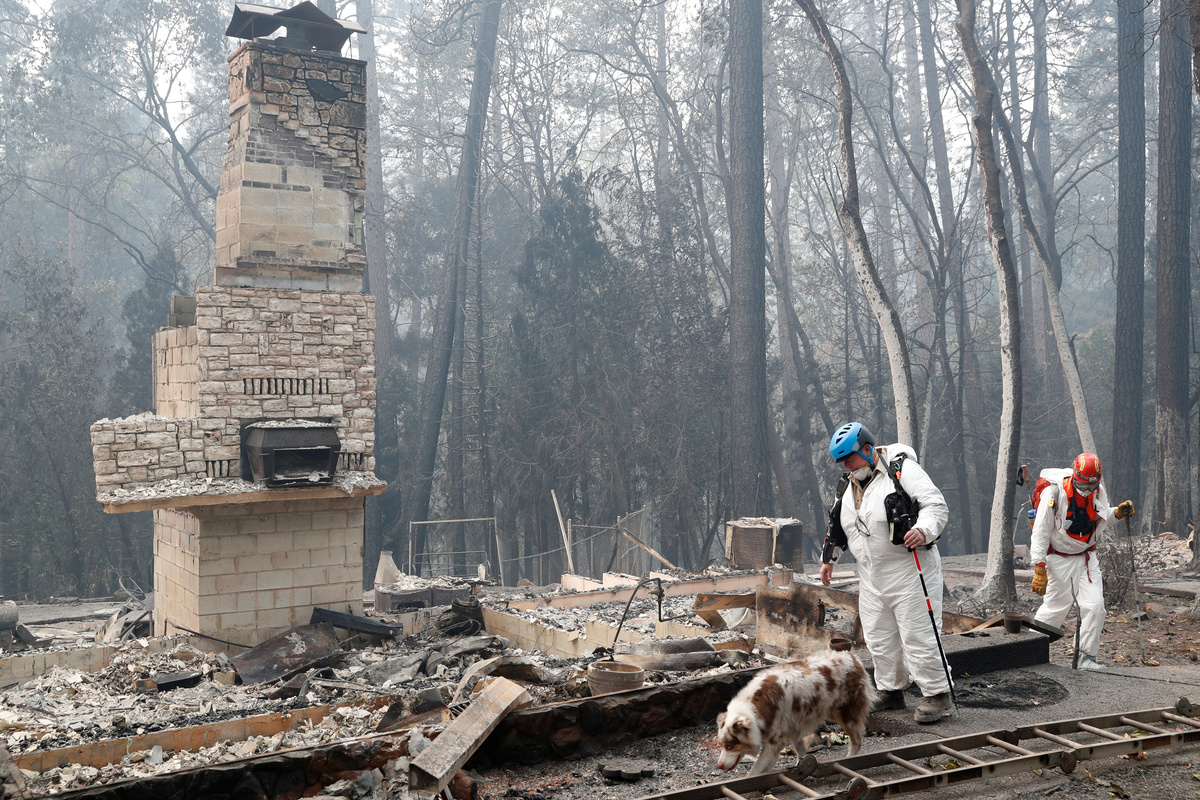
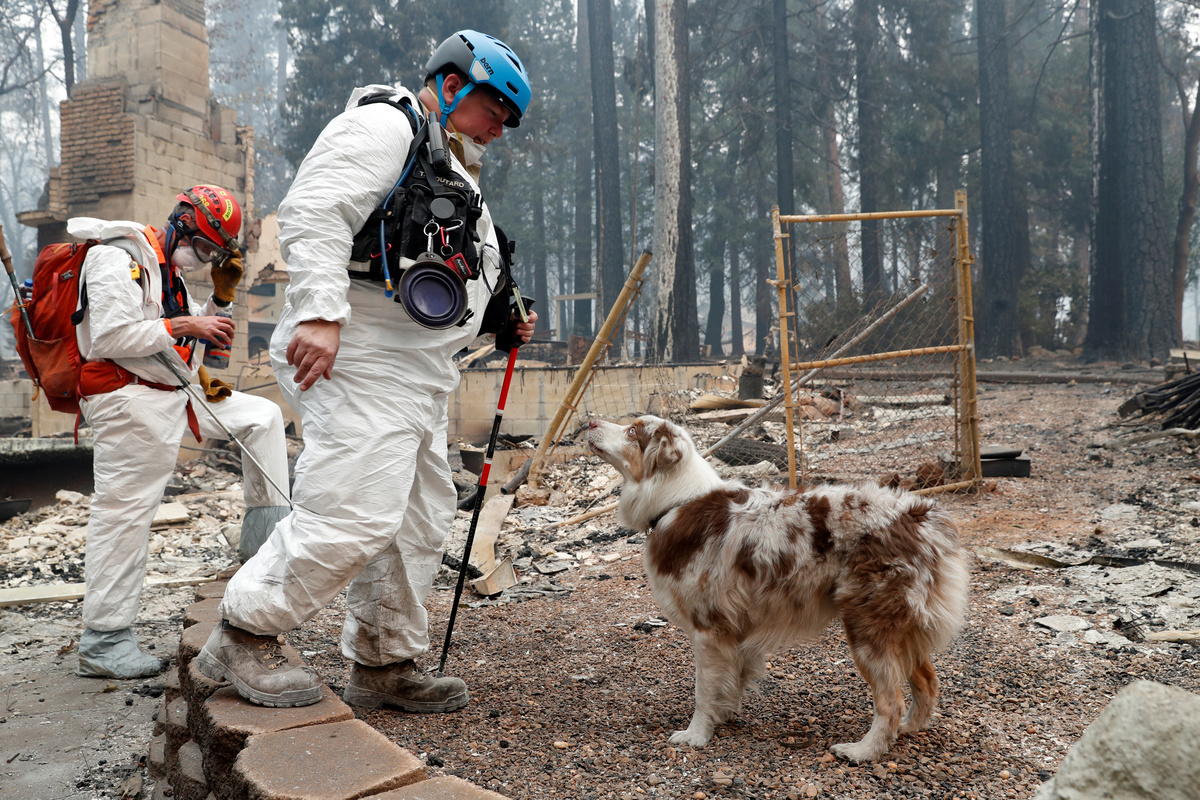
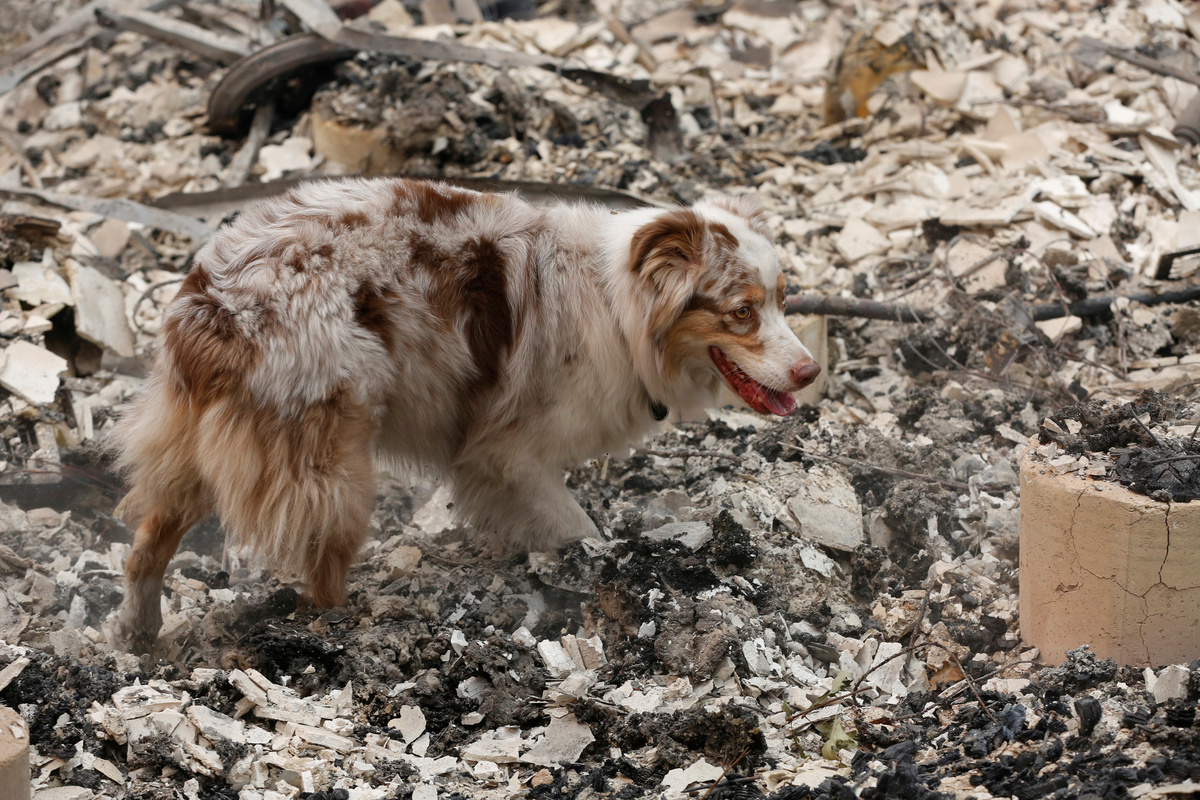
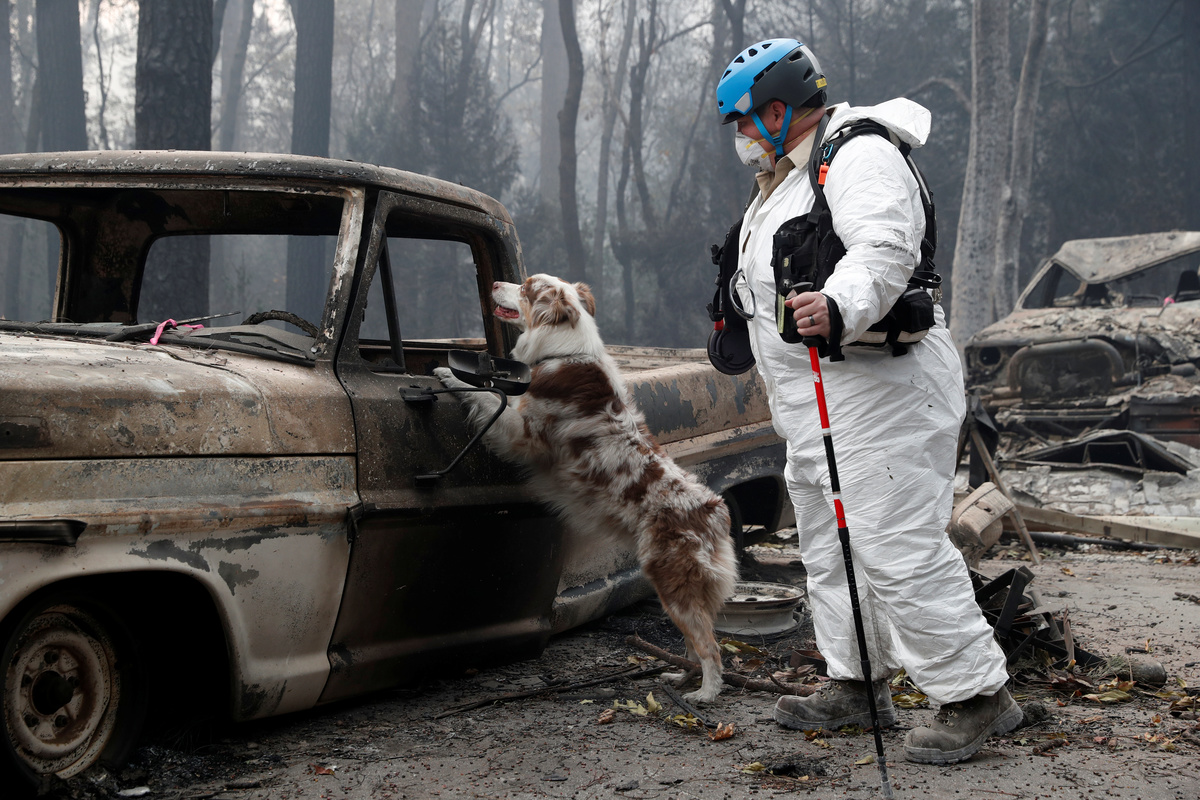
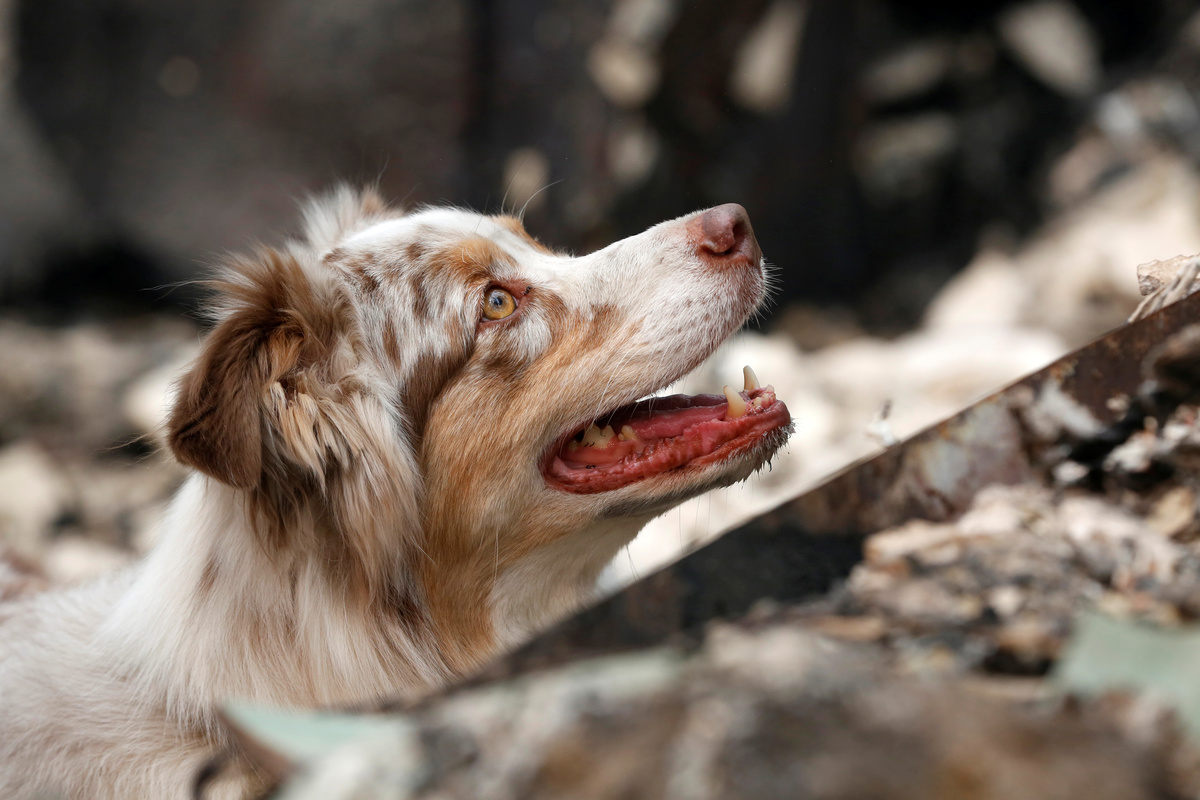
PARADISE, Calif. (Reuters) - A shaggy male Australian shepherd named IC darted nervously through the charred remnants of a house in Paradise, California, sniffing for victims of the deadliest blaze in the state's history.
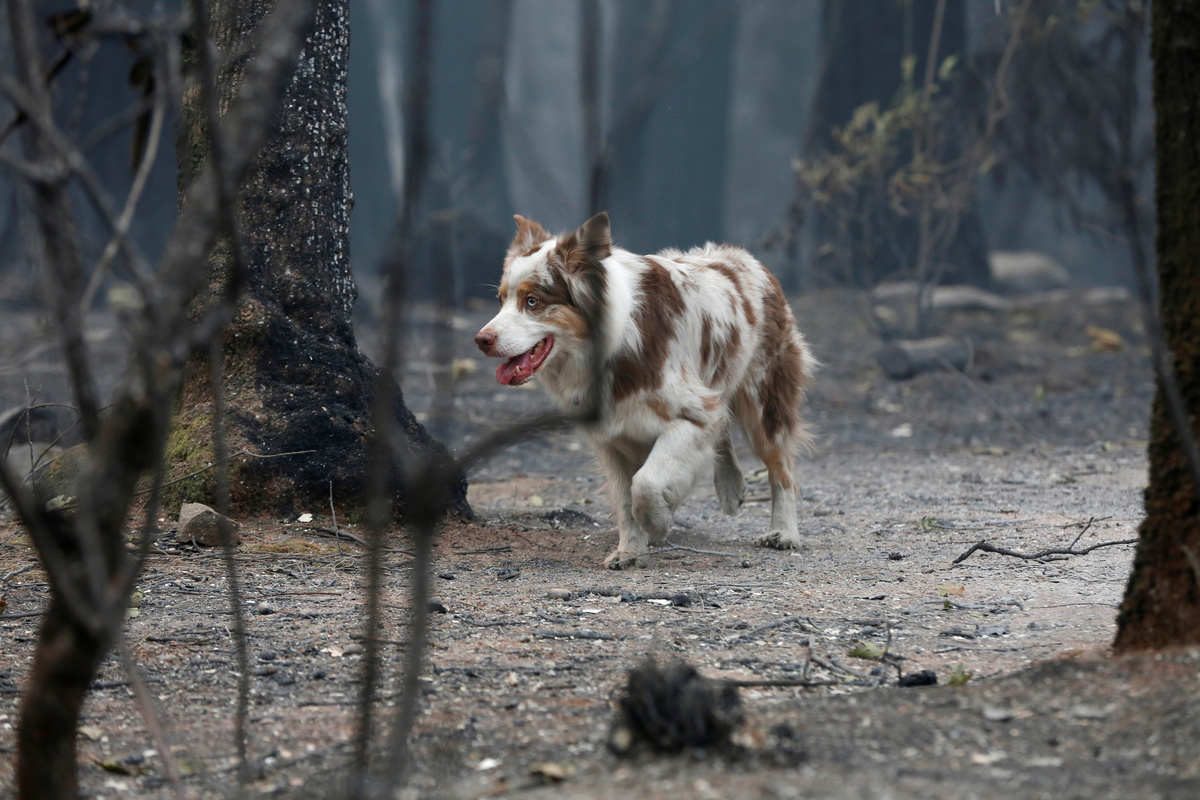
"He’s getting an overload of scent," said his handler, Trish Moutard, a volunteer with CARDA, the California Animal Rescue Dog Society, while searching properties on Forest Glen Road in Paradise. "It’s a new experience for him."
IC was among several cadaver dogs brought in to look for victims of the Camp Fire, which has so far killed 48 people and burned 135,000 acres (55,000 hectares). Fire fighters have said it was only 35 percent contained. Authorities said they have not accounted for nearly 230 people.
On Wednesday, a National Guard contingent was sent to Paradise, a town of about 27,000 in the Sierra foothills that has been largely reduced to ashes, to seek and identify human remains. They will join the cadaver dogs, coroner-led recovery teams and forensic anthropologists searching the ghostly landscape.
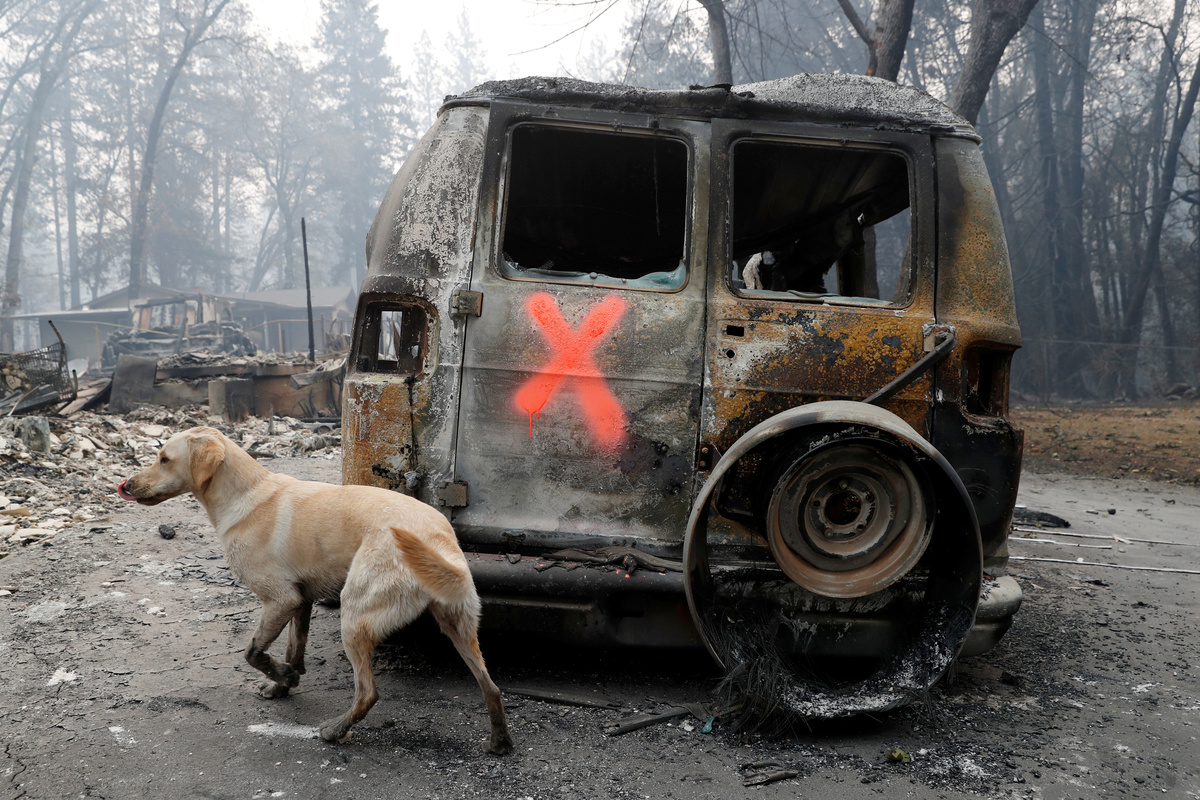
IC appeared agitated as he was instructed to sniff inside a car and a pile of rubble from the destroyed house - a brick chimney and burned trees the only things standing on the property.
Moutard said that she and IC had previously only worked house fires and the dog was overwhelmed by the size of the search area and multitude of scents from what was left of house after house.
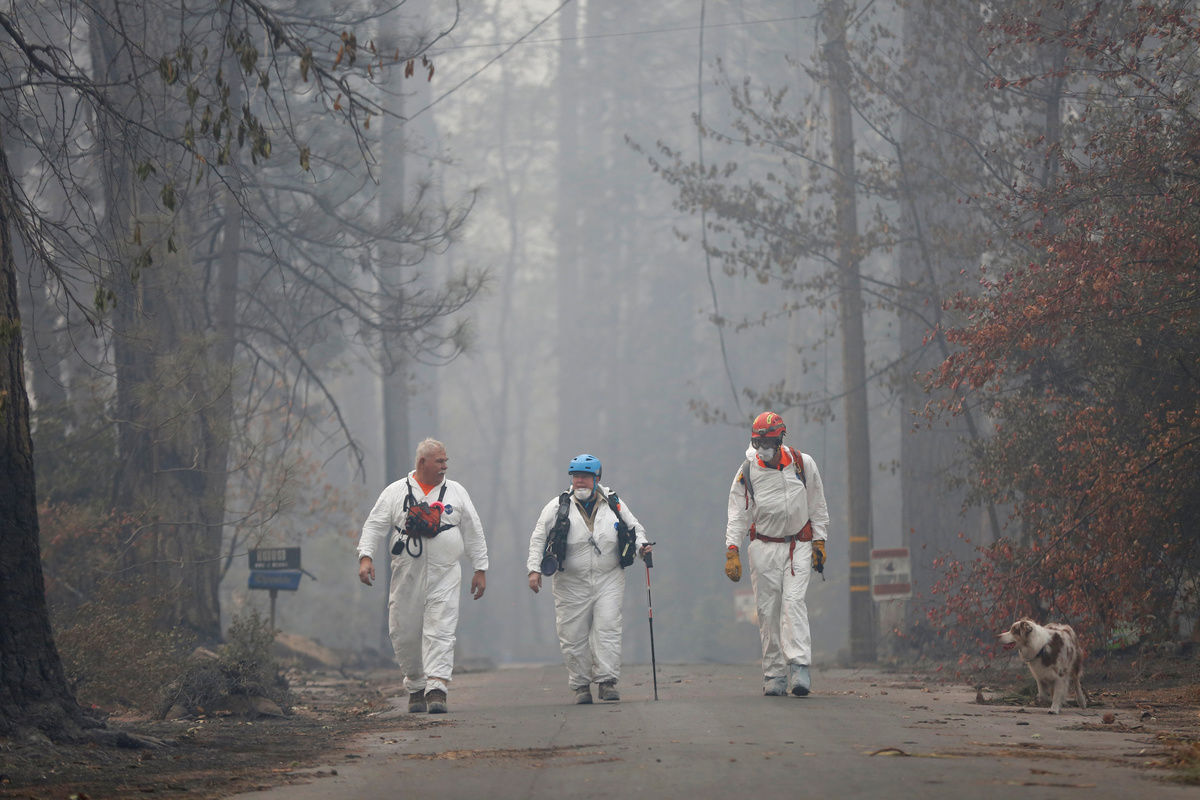
She said her method was to look for places where people may be trapped by fire, such as front and back doorways, or where they might take shelter, such as a bathtub.
"I generally try to look at what’s going to be the catch point for someone in a home," she said.
She stays alert for obvious body parts that would survive fire, “skulls often,” but also looks for imprints of bodies, a discolored area in the shape of a human, that may be the most obvious remnant.
“In a fire like this it may just simply appear as an outline,” she said. “What may be left is just literally the outline of a person.”
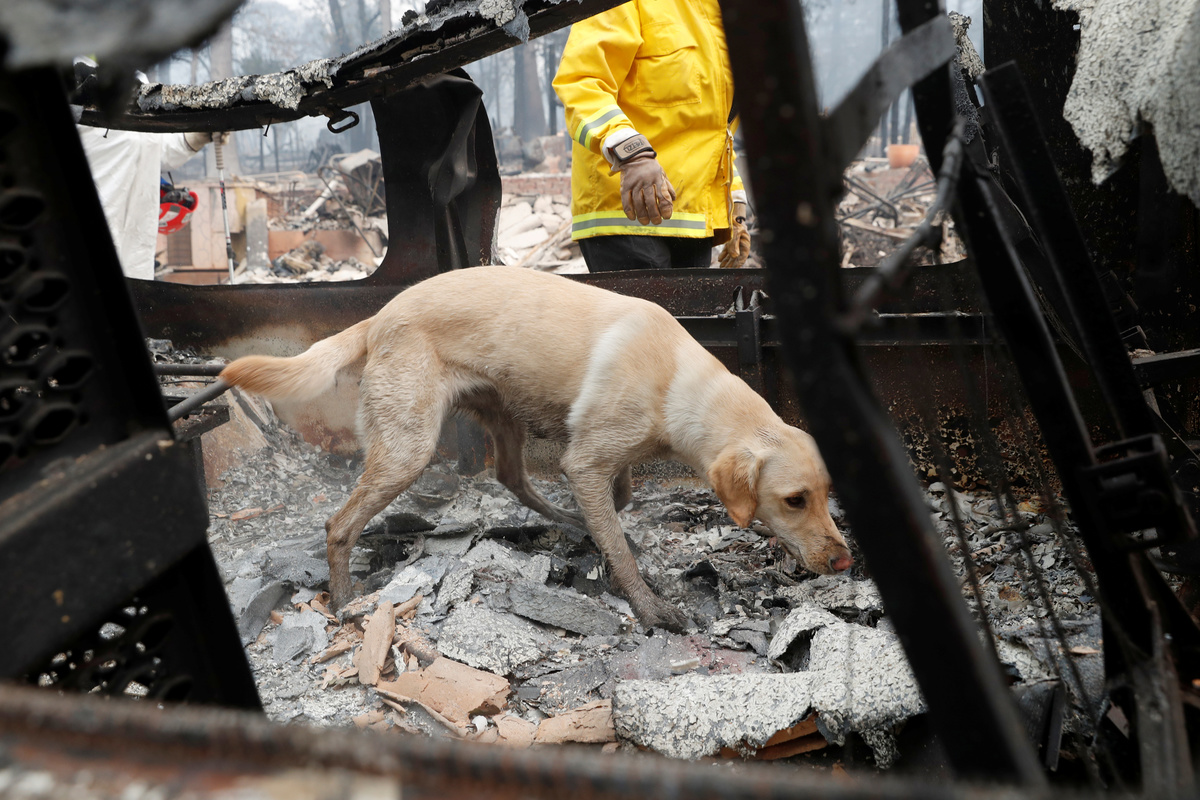
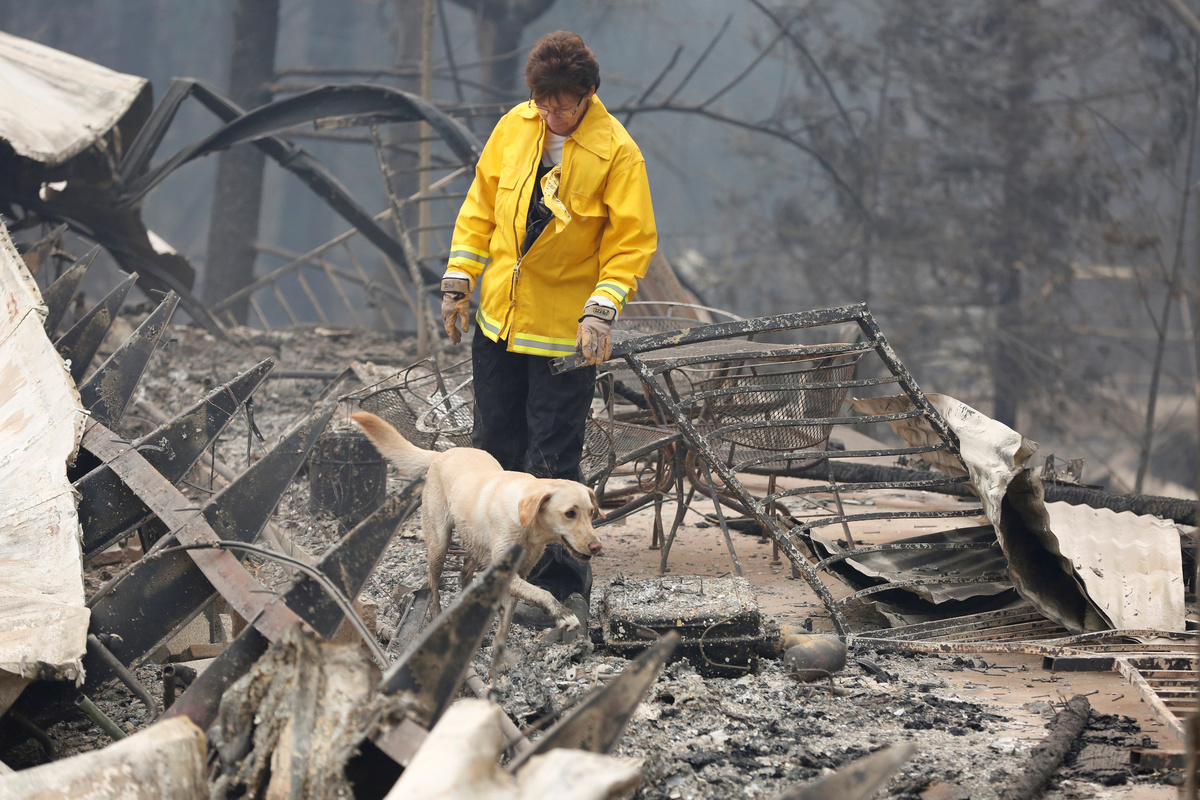
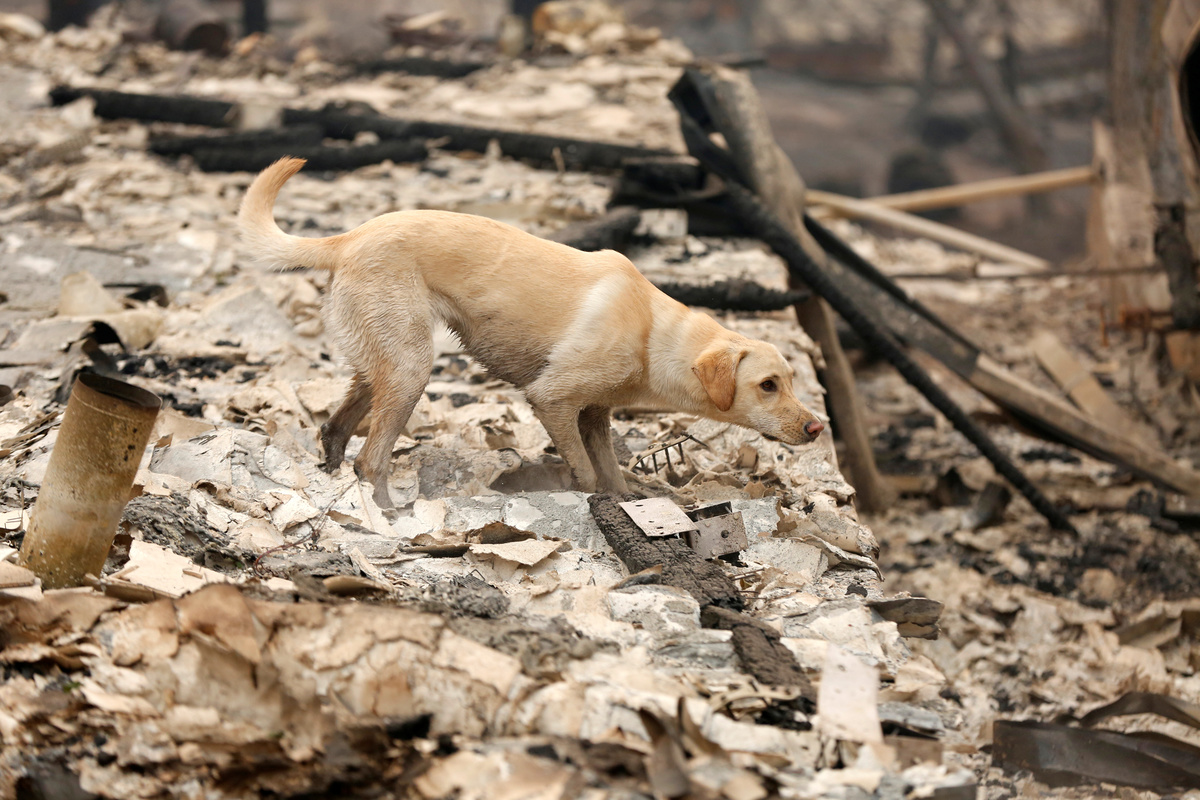
A husband-wife team, Karen and Larry Atkinson, worked their way through devastated properties near Eden Roc Drive in Paradise with their dog Echo, an English lab.
Echo dashed ahead, nose to the ground, and then returned to Karen, who would point the dog toward the next place to be searched.
She periodically shook talcum powder from a bottle to test the direction of the wind and make sure the dog searched the downwind side of each location so it would be easier to pick up scents.
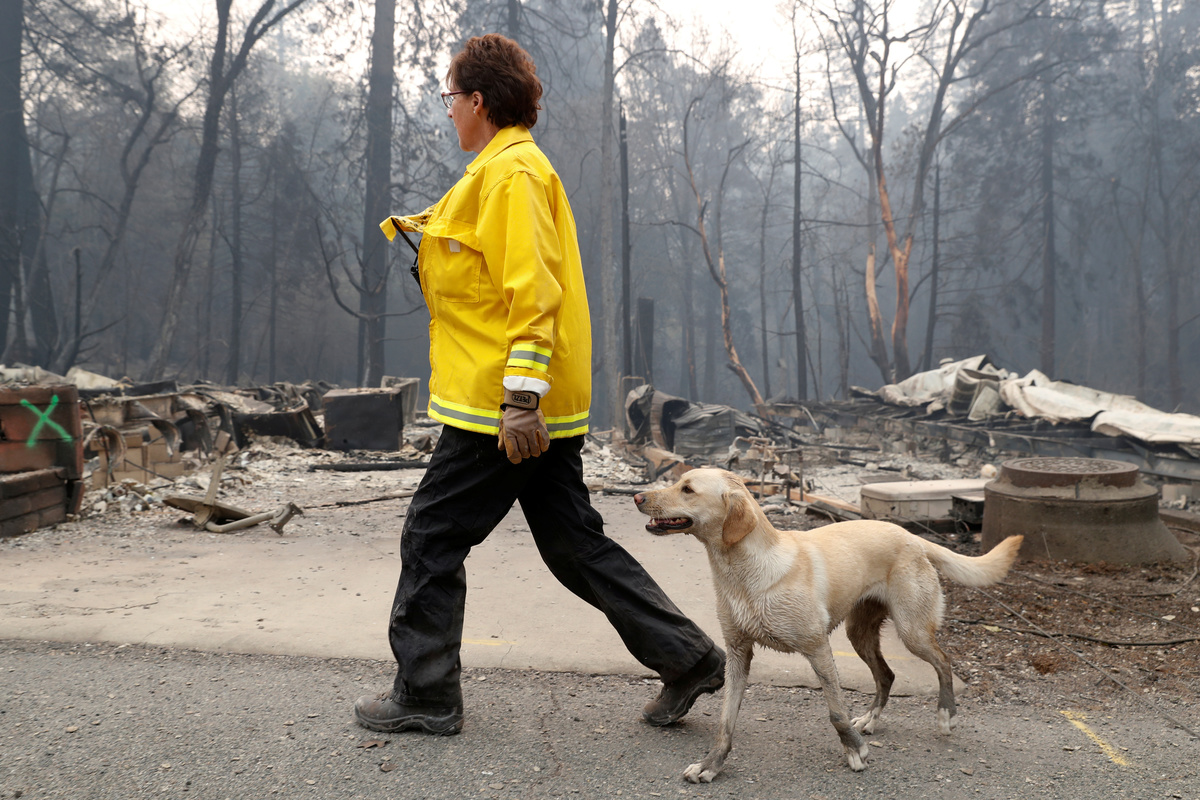
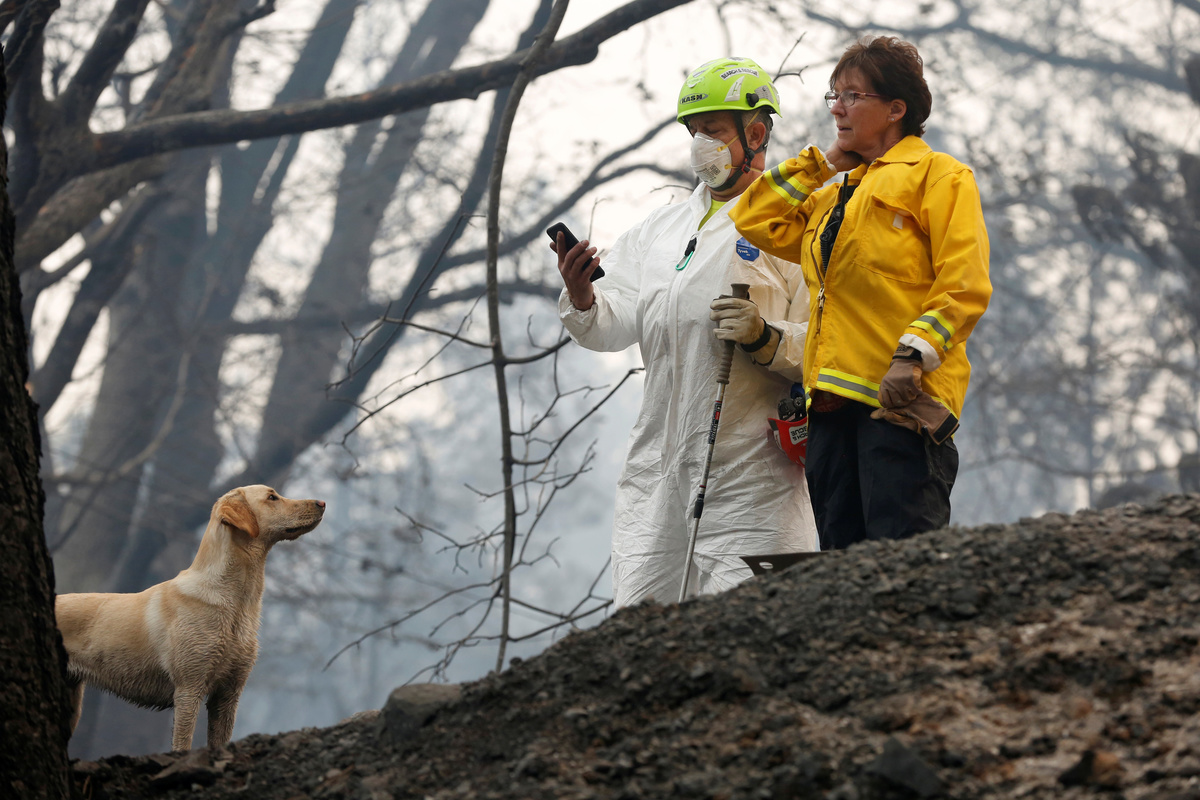
As they searched, the Atkinsons stayed alert for hazards: downed power lines, holes left by burned roots, and dangling tree branches, which they called “widow makers.”
Larry Atkinson said the search was painstaking because Echo was working through many scents to single out human remains.
"There’s a lot of scent everywhere, and it’s hard to nail down," he said.
(Reporting by Terray Sylvester; Editing by Dina Kyriakidou, Toni Reinhold)