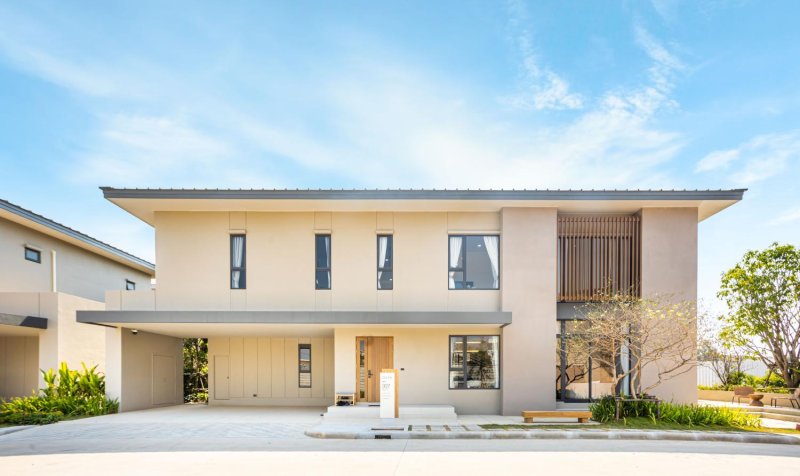
C.P. Land, a property developer owned by the Chearavanont family, is continuing to invest in and launch new residential projects in provincial markets, citing resilient purchasing power despite the sluggish economy.
Damrongsak Toongngern, the company's senior vice-president, said C.P. Land plans to invest around 4 billion baht in five new residential projects scheduled for launch this year.
"Four of the projects are located in provincial markets and one is in Bangkok, as purchasing power remains strong in several major upcountry markets," he said. "We found that 40% of homebuyers in these provinces purchase homes with cash."
The provincial projects are in Nakhon Si Thammarat, Nakhon Sawan, Phitsanulok and Khon Kaen.
The first three provinces have shown strong demand for low-rise housing, particularly single detached houses, while Khon Kaen has seen robust demand for condominiums, Mr Damrongsak said.
In light of this, the company plans to launch new low-rise housing projects in Nakhon Si Thammarat, Nakhon Sawan and Phitsanulok, and condominium projects in Khon Kaen.
In Bangkok, a new single detached house project is planned for the Ram Intra area.
He said demand for single detached houses in Nakhon Sawan was driven mainly by business owners, while demand in Phitsanulok came largely from medical professionals and civil servants.
The new projects in both provinces are being developed under the Solvani brand.
In Nakhon Sawan, the project is located on a 48-rai site in Muang district and comprises 201 units on plots starting from 52 square wah. Prices range from 6.9 million to 17 million baht. To date, 16 units have been sold and 14 have been booked.
"There is housing demand in these provinces, but many buyers do not know where to purchase a home," said Mr Damrongsak.
"One problem is that individual contractors are unable to complete construction projects as promised, particularly after many Cambodian workers returned to their home country last year."
A four-rai plot in front of the project in Nakhon Sawan is being developed through a joint venture with PTT Oil and Retail Business Plc, the flagship retail and lifestyle arm of the PTT Group. The development will comprise a PTT station, retail shops and a convenience store.
Residential demand in Khon Kaen is similar to that in Bangkok, with many residents preferring to dine out and spend less time at home, he said.
As a result, condos are more popular than low-rise housing. Some buyers are investors attracted by rental yields of 7-8% a year.
The company plans to launch a new condo project in Khon Kaen this year, comprising both low-rise and high-rise towers.
The move follows the successful launch of a 767-unit condo project last year, which is now 90% sold.
"Not every province is suitable for residential development. We have to consider GDP per capita, as unstable incomes can make property development challenging," said Mr Damrongsak.
"Each region has only a few standout provinces."