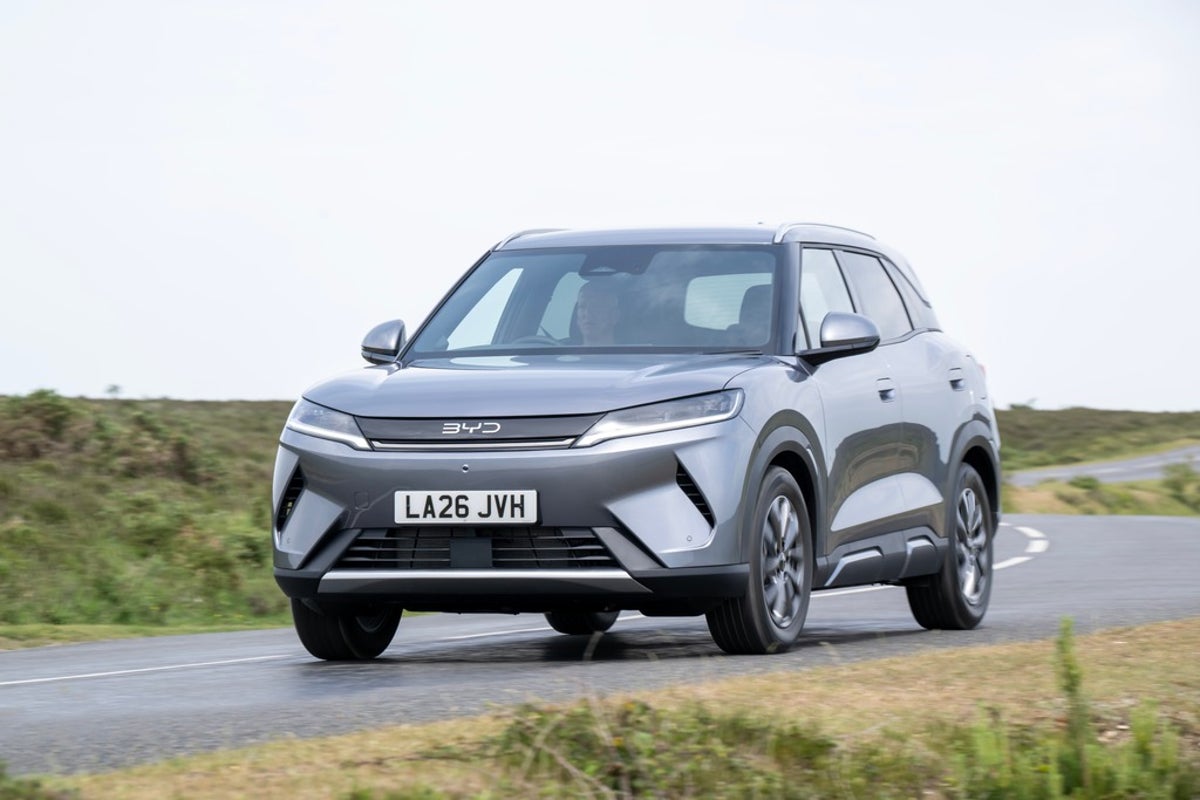
BYD has promised that every one of its models, apart from the smallest Dolphin Surf, will be offered with a choice of pure electric or plug-in hybrid power. And this, the Atto 2 DM-i, is where that starts.
It takes the compact SUV shape of the electric Atto 2 and adds BYD’s Super Hybrid DM-i powertrain, which means you get a battery big enough for most daily driving, a petrol engine for longer trips and the kind of range figure that makes the old “but what if I need to drive to Scotland?” argument look a bit tired.
There are two versions, Active and Boost, priced from £26,995 and £29,995 respectively, with the Boost driven here bringing the bigger battery, more power, more kit and up to 55 miles of electric-only range. Fill the tank and charge the battery, and BYD claims up to 621 miles overall. So it’ll not only go further than the electric version, it’s cheaper to buy, too.
What strikes you first is not the headline range, though, but the sheer quality and kit on offer. The £29,995 Boost model feels properly premium, with nice soft-touch plastics in all the right places and a high-quality feel to everything inside and out. There’s a lovely panoramic sunroof, plenty of tech and the sort of cabin finish that makes it feel a good few grand more expensive than it is.
The efficiency, range and electric-only range are seriously impressive, too. As value goes, it looks pretty sensational.
There is one clear downside: the ride errs on the side of firm. It’s not truly uncomfortable, but plush is not a word you’d use. It crashes over drain covers a bit and always feels slightly fidgety, even on the motorway. Given everything else on offer for the money, though, it’s a fault many buyers may be willing to overlook.
How I tested
I drove the BYD Atto 2 DM-i on familiar roads near Windsor, taking in the M25 and M4 motorways, driving through the towns of Windsor, Slough and Datchet and around faster country lanes. Of course, I checked how easy it was to park in a supermarket car park and assessed all the tech on board, too.
BYD Atto 2 DM-i: from £26,995, BYD.com
Independent rating: 9/10
- Pros: Excellent value, impressive quality, very efficient and packed with kit
- Cons: Fidgety ride, vague steering and limited colour choice
- Price from: £26,995
- Battery size: 7.8 or 18kWh
- Maximum claimed range: 621 miles
- Maximum charging rate: 6.6kW AC
Battery, range, charging, performance and drive
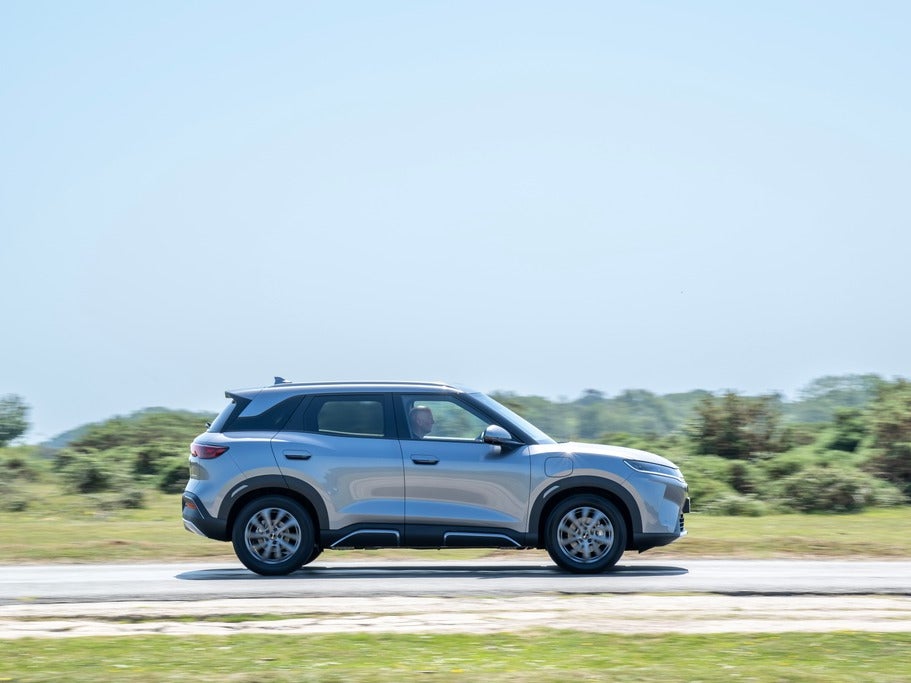
The Atto 2 DM-i uses BYD’s Super Hybrid with DM technology, which is already used in cars such as the Seal U DM-i and Seal 6 DM-i. The idea is simple enough from the driver’s seat: the car feels like it is running as an EV most of the time, with the petrol engine stepping in as a generator or, when needed, helping drive the car directly.
The Active model gets a 7.8kWh BYD Blade Battery and a total system output of 164bhp, giving it a 24-mile electric range, a 577-mile overall range and a 0-62mph time of 9.1 seconds. The Boost model driven here is the one most private buyers are likely to look at first, because it gets an 18.0kWh battery, 209bhp, a 55-mile electric range and a 621-mile combined range.
It is also usefully quick for this sort of car, with a 0-62mph time of 7.5 seconds and a top speed of 111mph. That means it feels responsive around town and more than happy enough joining motorways or nipping into gaps in traffic.
The plug-in hybrid powertrain is superb in everyday use. It’s very quiet and genuinely feels as if it is running on electric power most of the time, which for many people it probably will be. The switch between EV and petrol power is very smooth and you’ll only really hear the engine if you’re brutal with the throttle.
Charging is AC only, with the Active accepting up to 3.3kW and the Boost up to 6.6kW. BYD quotes a 15 to 100 per cent charge time of 2.7 hours for the Active and three hours for the Boost. There’s no DC fast charging, but with a battery of this size that should not be a major issue for most plug-in hybrid buyers.
Out on the road, the Atto 2 DM-i is mostly very easy to get along with. I drove it on familiar roads near Windsor, and tested it with the sort of mixed driving it’s most likely to do in the UK.
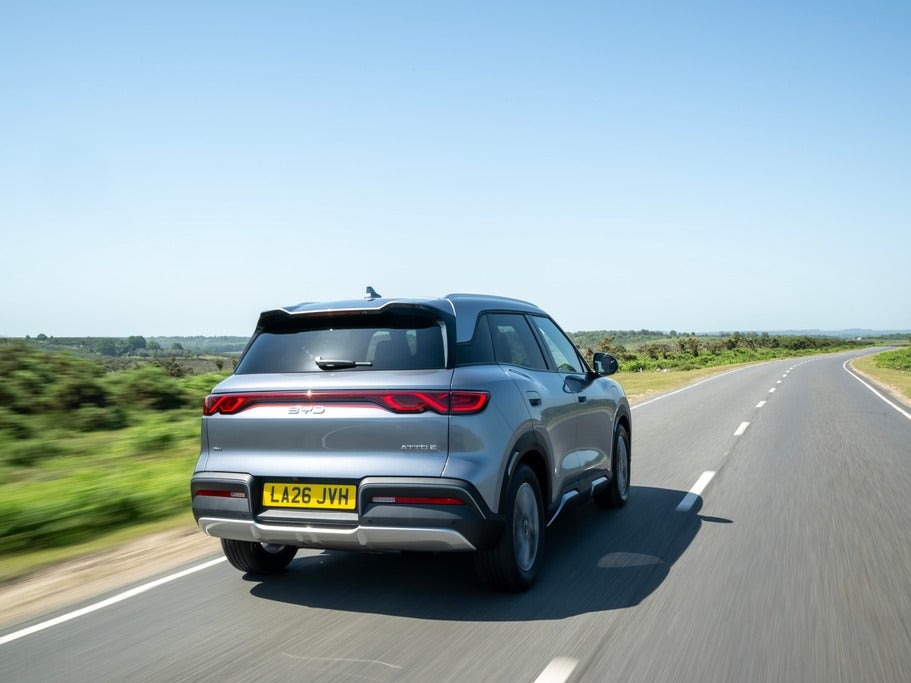
The ride is the only real letdown. It’s a bit too firm and never really relaxes in the way you might hope. It crashes over drain covers a bit and always feels slightly fidgety, even on the motorway. It is not enough to spoil the car, but it does take the edge off what is otherwise a very polished package.
The steering is light enough for parking and easy around town, although it does feel a bit vague. Visibility out is good, which helps when threading through busy streets or squeezing into a tight supermarket bay. However, there is one odd thing – the indicator makes a strange two-note noise that does not sound very indicator-ish at all.
Interior, practicality and boot space
The cabin is one of the car’s biggest strengths. The first impression is of a car that feels more expensive than it is, especially in the Boost model. There are nice soft-touch plastics in the places you notice most, the general finish is very good and everything has a proper quality feel. It feels premium in a way that many cars at this price do not.
The Boost also gets a lovely panoramic glass roof with an electrically adjustable sunshade, which brings loads of light into the cabin and helps the car feel more spacious. It is one of the features that makes the Atto 2 DM-i seem as if it should cost a few thousand pounds more.
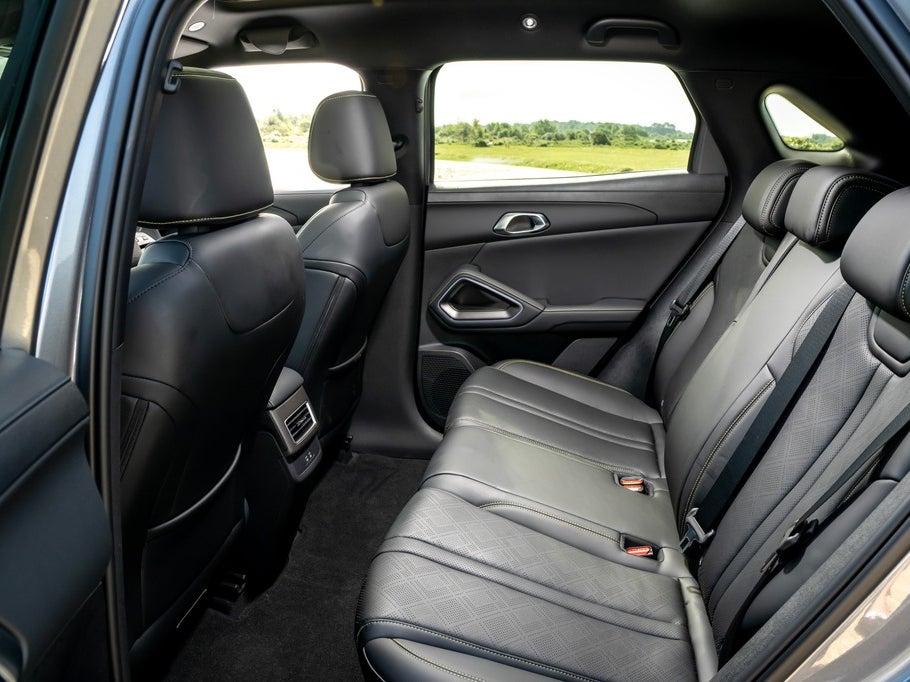
There is a flat floor in the back, which helps with rear-seat comfort, and BYD has made a few changes compared with the electric version. The gear selector has moved from the centre console to the steering column, there is now a glasses holder for the driver, a third rear headrest has been added and the front seats have a new design with adjustable headrests.
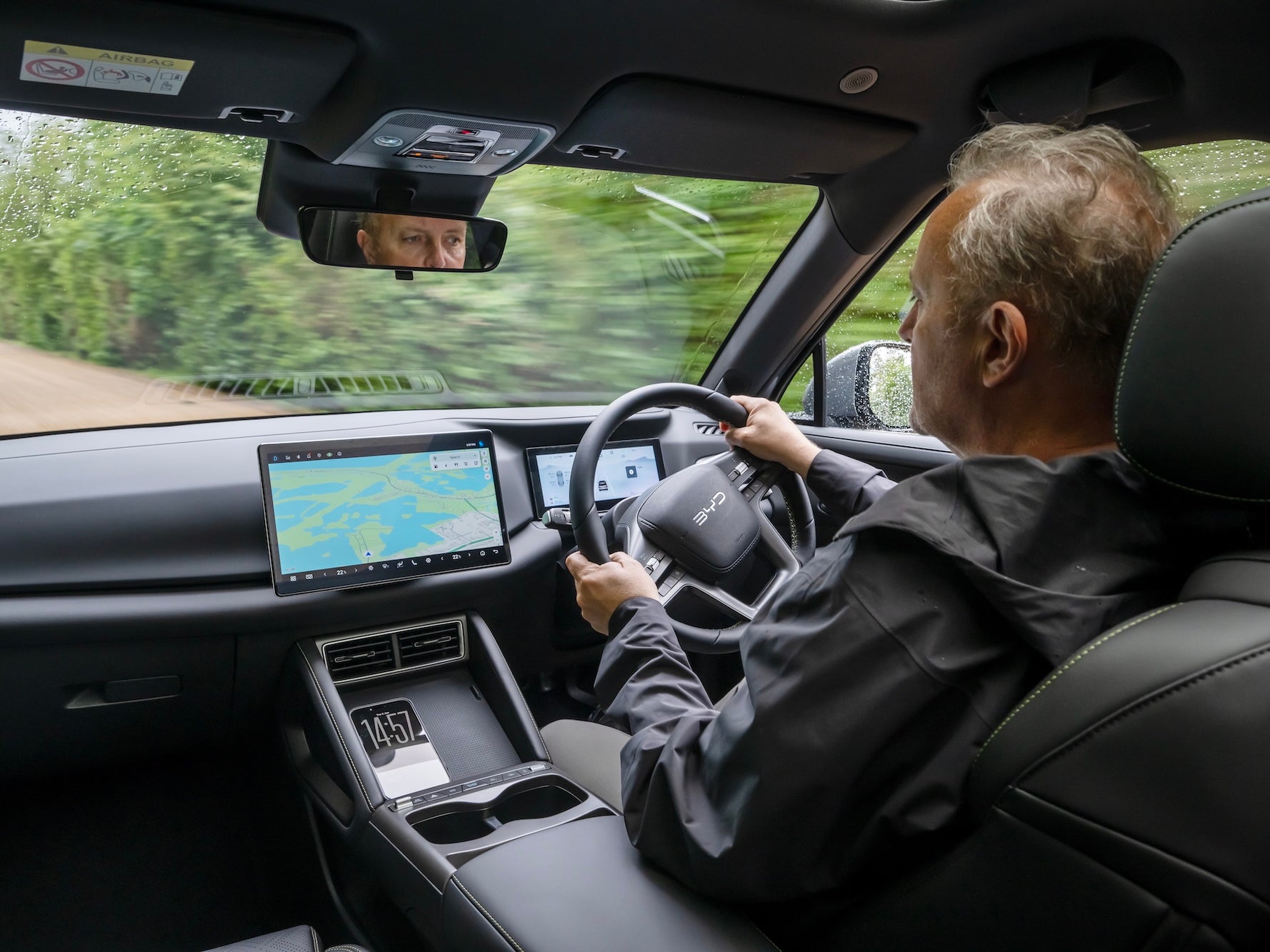
The centre console has a pair of cup holders, an armrest that opens to reveal extra storage and a control panel with physical switchgear for the windscreen de-mister, driving modes and audio volume. That is a welcome touch, because not everything needs to live on a screen.
One small irritation is the start button. It sits on that control panel between the front seats and blends in with four other buttons around it. It really should be a bit more obvious, perhaps by being bigger than the others, or given a splash of colour.
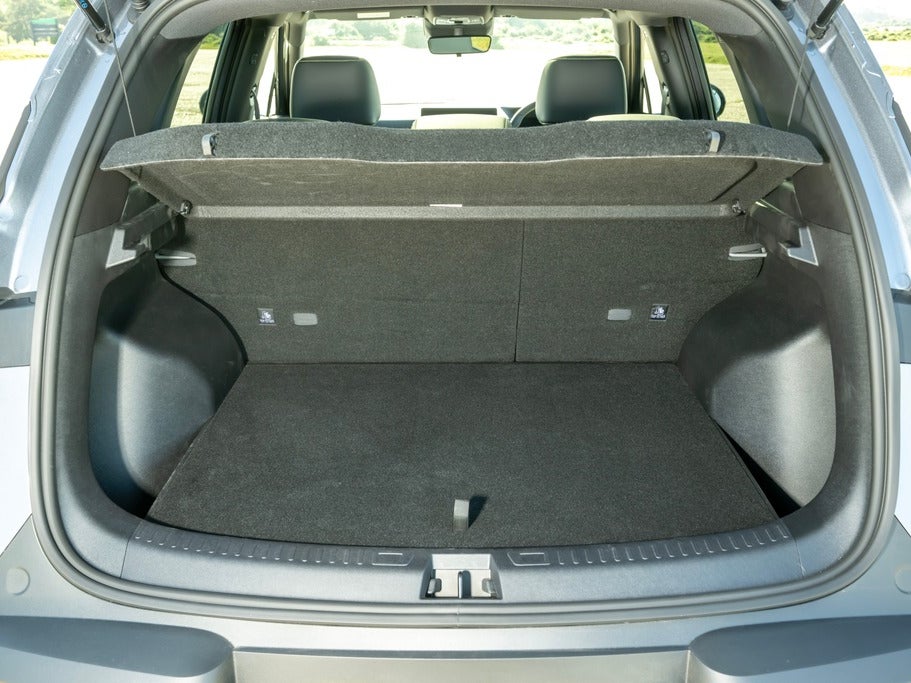
The boot is a healthy 425 litres with the rear seats in place, which is more than you’ll find in plenty of family hatchbacks. Fold the split rear seats down and that rises to 1,335 litres. The all-electric Atto 2 has a slightly smaller 400-litre boot, so the DM-i actually improves on that.
The Atto 2 DM-i can just about seat five if three in the back are close friends, and it also has a 750kg unbraked towing capacity. That is not going to make it a tow car for big caravans, but it gives it a bit of added usefulness for small trailers.
Technology, stereo and infotainment
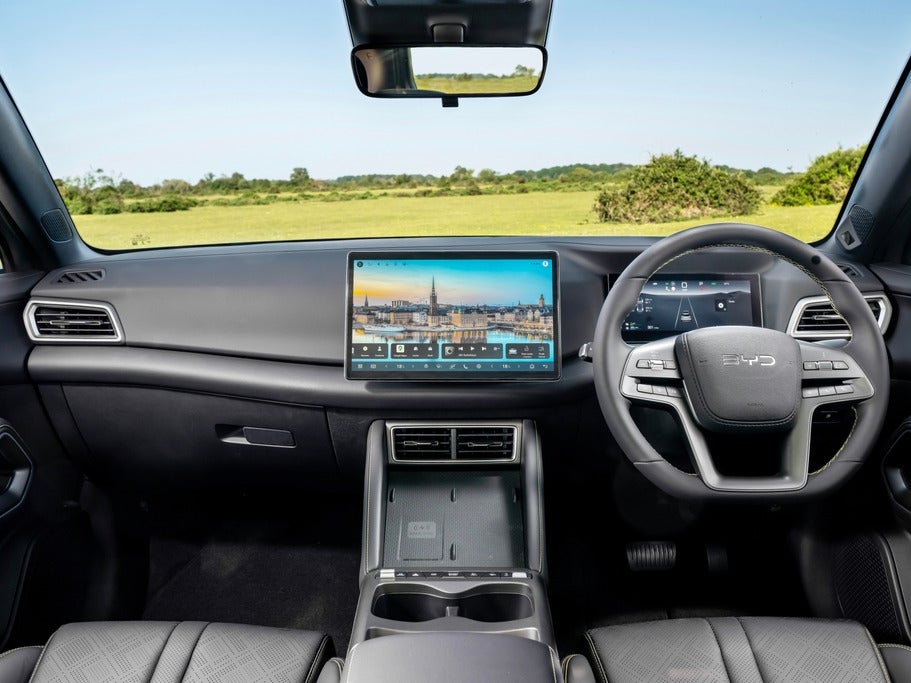
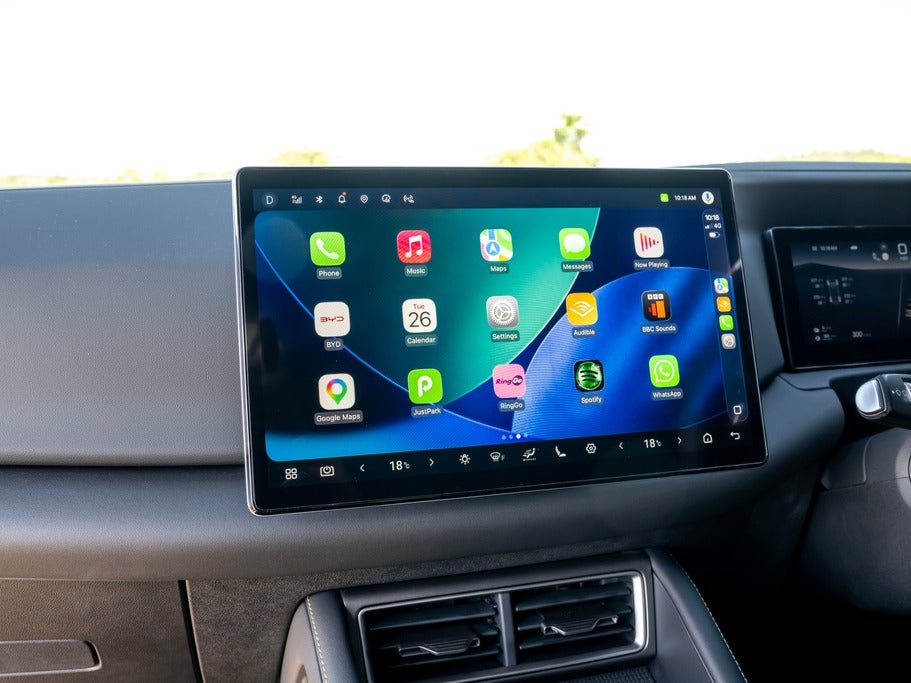
Technology is another area where the Atto 2 DM-i works hard for its money. Every version gets an 8.8-inch driver display and a 12.8-inch infotainment touchscreen.
Native Google apps are a good step forward, too, making the navigation much better to use – both from a usability and reliability point of view.
BYD says the touchscreen is bigger than the screens you’ll find in some rivals, and it is certainly easy enough to read and use. Oddly, though, it looks about an inch too small on the dashboard, as if the space around it could take something larger. Still, it works better than the systems in some other Chinese-made rivals, with quicker responses and a more logical layout.
The latest software includes multi-finger gesture control for the heating and ventilation, so you can adjust key functions without diving through endless menus. There is also BYD’s “Hi BYD” voice control system, now boosted by a smarter assistant using generative AI and large language models. BYD says it can handle more natural conversations, answer wider questions and support multi-turn dialogue.
The Boost model brings a long list of extra kit. It adds 17-inch alloy wheels, front parking sensors, a 360-degree camera, heated front seats with electric adjustment, a heated steering wheel, rear privacy glass, the panoramic roof with its electric sunshade and a 50W wireless smartphone charger.
It also gets Vehicle to Load, allowing external devices to be powered at up to 3.3kW. That could be handy for camping, charging kit away from home or running small electrical items.
Even the Active is well equipped, with metallic paint, 16-inch alloy wheels, LED headlights and taillights, electrically adjustable door mirrors, rain-sensing wipers, four USB-C ports, rear parking sensors, a rear-view camera, adaptive cruise control and smart key access via a phone or smartwatch.
Safety kit is comprehensive, too. Both versions come with full-length side curtain airbags, plus a lengthy list of driver assistance systems. That includes a driver monitoring system, adaptive and intelligent cruise control, intelligent speed limit control, emergency lane keep assist, lane departure assist, blind spot detection, door opening warning, traffic sign recognition, automatic emergency braking, hill descent control, forward and rear collision warning and rear cross traffic alert with automated braking.
The usual warning chimes are present, of course, although BYD has improved the usability of its systems in recent cars. The 360-degree camera is especially useful when parking, as I found in a supermarket car park.
Prices and running costs
The Atto 2 DM-i starts from £26,995 in Active form, while the Boost model tested here costs £29,995. That puts it in a very interesting place, because it is not just a cheap plug-in hybrid SUV; it is a cheap plug-in hybrid SUV that feels anything but cheap inside.
The Active gets the smaller battery and less power, but still comes with a long list of standard kit. The Boost is the more tempting version because it adds the bigger 18.0kWh battery, unlocks the full 55 miles of electric range, and gets more power – plus the sort of equipment that would usually push the price much higher.
Running costs should be one of the car’s major attractions, especially with a minimum claimed range of 577 miles . As ever with a plug-in hybrid, the real saving comes if you plug it in regularly and use a cheap overnight electricity tariff. Do that, and many daily trips could be done without using petrol at all.
The Boost’s 55 miles of electric range will be enough for many commutes, school runs and local trips. The combined range of up to 621 miles gives it the kind of long-distance flexibility that will appeal to buyers who like the idea of electric driving but still want petrol backup.
BYD’s warranty package is also strong, with a six-year manufacturer’s warranty and eight years’ cover for the battery and drivetrain. However, there’s not much choice when it comes to colour – a conservative range of just black, grey, white or blue.
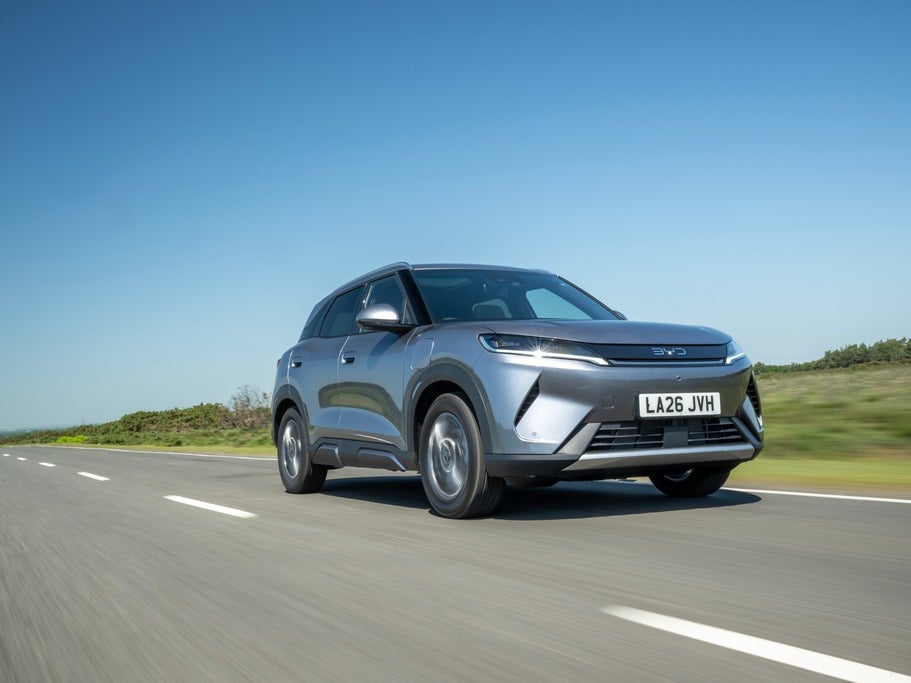
The verdict: BYD Atto 2 DM-i
The BYD Atto 2 DM-i feels like terrific value, with a premium cabin, generous kit, excellent efficiency and a very smooth plug-in hybrid system. Only its firm ride really lets it down.
BYD Atto 2 DM-i rivals:
- Vauxhall Frontera
- Citroen C3 Aircross
- Hyundai Kona
FAQs
How long does it take to charge?
The Atto 2 DM-i Active charges from 15 to 100 per cent in 2.7 hours using its 3.3kW AC charger. The Boost takes three hours with its more powerful 6.6kW AC charger.
How much does it cost – is it worth it?
Prices start at £26,995 for the Active and rise to £29,995 for the Boost. Given the quality, kit, electric range and efficiency on offer, the Boost looks especially strong value.
Does BYD replace batteries for free?
BYD covers the Atto 2 DM-i’s battery and drivetrain for eight years, while the rest of the car is covered by a six-year manufacturer’s warranty.
Why trust us
Our team of motoring experts have decades of experience driving, reviewing and reporting on the latest EV cars, and our verdicts are reached with every kind of driver in mind. We thoroughly test drive every car we recommend, so you can be sure our verdicts are honest, unbiased and authentic.
With more than 30 years of experience, Steve Fowler is one of the UK’s best-known automative journalists. Steve has interviewed key industry figures, from Tesla’s Elon Musk to Ford’s Jim Farley, and is a judge for both Germany’s and India’s Car of the Year Awards, as well as being a director of World Car of the Year. When it comes to electric vehicles, Steve reviews all the latest models for The Independent as they launch, from Abarth to Zeekr, and he uses his expert knowledge of car buyers' needs to provide a comprehensive verdict.