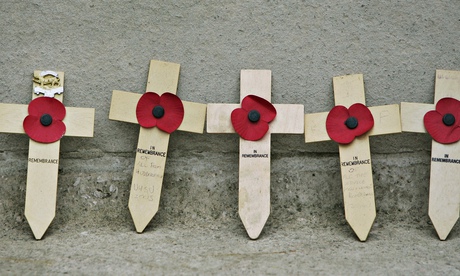
‘Nor the years condemn”, Cecil remarked. “What do you think that means?” After the Remembrance Day service at the local war memorial and as happens after such solemn events, some of us become a tad maudlin.
“Whatever it means, at least we have our memories,” Elizabeth replied in an attempt to cheer us up.
None of us had an answer to Cecil’s question and fairly soon we made our exits to wander off down our separate lanes of memory. It is one of the ironies of the “seventh age” that while we may have no idea where we put our keys or spectacles an hour ago, episodes from decades past replay vividly in our muddled minds.
Memory is not always an occasion for the cheerfulness implied by Elizabeth. Occasionally, I catch glimpses of the boy I once was, and realise that I have lived a life less well than my circumstance and aptitude warranted. The past is an uncomfortable country for an old man.
Yet the past is inescapable. I have little option but to sit there, in the muffled middle, like Captain Cat, in Under Milk Wood: visited by uninvited phantoms, whose presence reminds me of the roles I played. For these “drowned dead dears” were too often simply walk-on parts in my personal theatre, unnoticed as I delivered my lines centre stage. Nowadays they appear out of the blue, quietly to remind me of my offence.
And they do so without intent; they have no interest in me; like Captain Cat’s lost lover, Rosie Probert, they are forgetting. I was not necessarily memorable, and when I was, it was too often for less than creditable reasons.
At other times, provoked by an old letter, a snatch of a tune, or a waft of custard or cabbage, I set out in hope down memory lane, where I walk my blue remembered hills, eager to find again that land of lost content, a smile on my face ready to greet a past companion, only to find there is no smile in return. Instead I witness my younger self walking by on the other side or engaged in some act of malevolence, spite, betrayal, something that may even have changed another’s life, and I want to seek pardon but they have vanished and I am left to wonder.
But I can do more than wonder. For all its discomforts, the country of the past needs to be visited. I may not be able to put things right, to make amends but I can learn from those memories. The mistakes I have made, the follies, the falsehoods, the failures, these are signposts. They show me where I must go now, what I must do. I may not have much time left but while I may not be able to repair past damage, I can commit myself to atonement. I do not have to be condemned by the years.
In today’s world, the world that I helped create, there are many lying wounded in the ditch, many voices pleading in distress, many hands held out for support. They may belong to strangers, but, if chaos theory is right, then maybe by attending the present wounded, listening to the present voice, holding the present hand, I can compensate for past carelessness, and even restore some of its damage.
This is purpose enough for my old age. It is a time for grace, not favours; for engagement, not entitlement; for amendment, not absolution. Our years are only able to condemn us, if, too mindful of our present moment, we fail to fill what future we have with reparation for our past.