I'd like to talk about classical Japanese dancing this time.
Current classical Japanese dance -- called nichibu, short for nihonbuyo in Japanese -- can be said to have originated from kabuki and developed along with it. During the Edo period (1603-1867), people specializing in choreography emerged from the world of kabuki actors. They established their own schools and styles, and began to accept apprentices from outside kabuki.
In the subsequent long history of the dance, disciples of each school became independent and started their own schools. There are now so many that even the Japanese Classical Dance Association doesn't know the number. Major schools with many disciples include Hanayagi, Fujima, Wakayagi and Nishikawa.
Like people in other performing arts, classical Japanese dancers have lost many opportunities to perform due to the coronavirus pandemic, but they are striving to do what they can amid the current circumstances.
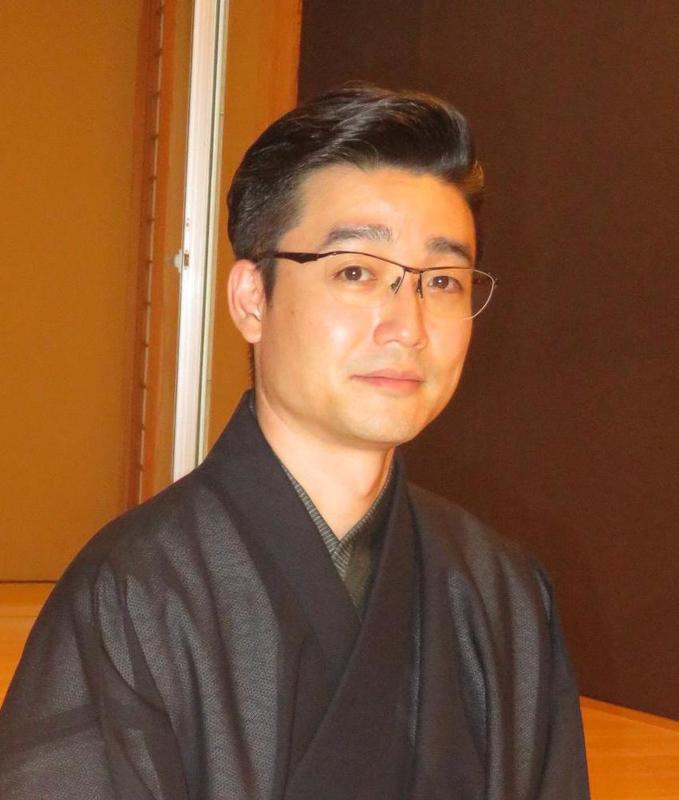
Onoe Kikunojo, the 44-year-old head of the Onoe school, has appeared in a one-minute promotional video aimed at conveying the charm of nichibu both at home and abroad. "I want to perform in a way that makes everything look beautiful," he said energetically in the video.
As part of an initiative by the kabuki business operator Shochiku Co., the video was uploaded this month on the travel guide site "Dive Japan" (https://dive-japan.com). It is available in English, Korean and both traditional and simplified Chinese, in addition to Japanese.
When I interviewed Kikunojo, he said: "The coronavirus pandemic has brought a crisis but also an opportunity. Taking this opportunity, I want to make classical Japanese dance successful as a business by going beyond the schools."
Kikunojo is also active as a choreographer of kabuki. "Kabuki is performed only by men, but today's classical Japanese dancers are overwhelmingly female," he said. "I always want to create jobs for them [female dancers] as well as places where they can play an active part, such as by developing a new stage targeting overseas audience members."
The Goyokai group of five talented dancers -- Nishikawa Minosuke, Hanayagi Juraku, Hanayagi Motoi, Fujima Ranko and Yamamura Tomogoro -- is scheduled to perform at a training facility of the Nishikawa school in the Akebonobashi Station in Shinjuku Ward, Tokyo, on July 24. The program is titled "An invitation to classical Japanese dance," and will start at 2 p.m. with audience capacity limited to 25 people. The performance will later be viewable online for a fee.
Led by Minosuke, the group has been forced to cancel its performances scheduled for this year one after another. "The upcoming event is like performing at an atelier. We want to continue this form of performance bimonthly at each member's training facility," Minosuke said.
As a supporting performer for the program, Kineya Gokichiro will perform nagauta singing, and Katsura Kichibo, a rakugo storyteller who is also adept at traditional Japanese dance, will serve as a moderator.
Tickets for the program can be purchased on the Goyokai website (http://www.goyokai.com), on which applications for online viewing also can be made.
-- Morishige covers traditional performing arts.
Read more from The Japan News at https://japannews.yomiuri.co.jp/