1. Choose the Right Heater Type
Your sauna heater choice shapes everything else about your sauna experience. There are three main types, but only two deliver authentic Finnish heat:
Wood-Burning Stoves
Wood stoves create the most traditional Finnish sauna experience. The firelight flickering against the walls, the scent of burning wood mingling with steam, and the richest, softest löyly you can achieve…all of these culminate into the authentic Finnish sauna experience.
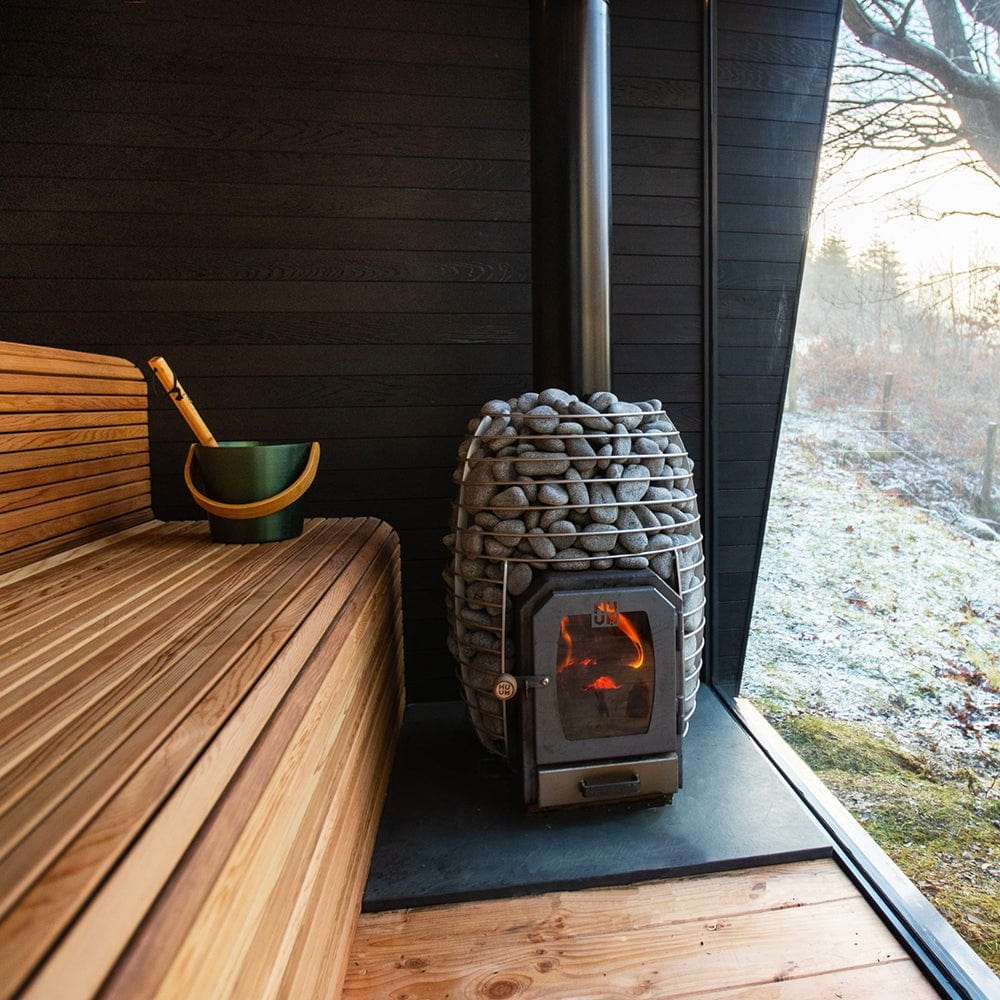
The fire heats a substantial mass of stones, typically 150-400 pounds, depending on the stove model. These stones act as heat reservoirs, radiating warmth throughout the session. When water touches their surface, the steam rises with remarkable softness, wrapping around your body rather than hitting you with sharp, dry heat.
Wood stoves also provide natural ventilation. As the fire burns, it continuously draws fresh air into the combustion chamber, creating subtle air movement that prevents the stagnant, oppressive feeling some electric saunas develop.
Why choose wood:
- Creates the most authentic Finnish atmosphere and steam quality
- Provides natural mechanical ventilation through the combustion process
- Ideal for outdoor saunas where chimney installation is straightforward
- The ritual of fire-building becomes part of the wellness practice
Electric Heaters
Electric heaters have become the dominant choice in Finnish homes and nearly all North American installations. They warm stones using heating elements rather than fire, and when properly designed with adequate stone capacity, they create excellent löyly.

Modern electric units offer precision and convenience that wood stoves can't match. Set your target temperature, schedule a preheat time in an app, and your sauna will be ready when you arrive home. The heat remains consistent throughout your session without requiring attention.
Why choose electric:
- Effortless operation through wall panels or smartphone apps
- Precise temperature control and programmable scheduling
- Clean operation with no wood handling, ash, or smoke
- Simpler installation for indoor saunas (though still requires 240V electrical)
- Consistent, predictable performance
2. Choose the Right Bench Layout and Construction
The bench configuration in your sauna plays a critical role in determining whether you experience authentic Finnish heat or simply sit in a warm room. This comes down to heat stratification. In a properly designed sauna, the hottest, steamiest air naturally rises and collects near the ceiling. Where your body sits within these temperature layers determines the quality of your sauna experience.
When you sit with your feet on the sauna floor, your body is exposed to two very different temperature zones at once. Your head occupies the warm upper air, while your feet remain in the coolest layer near the floor. This uneven heating leads to discomfort rather than the enveloping, uniform warmth that defines a true Finnish sauna.
The benchmark for authentic Finnish sauna design places your entire body, including your feet when seated, above the uppermost stones of the heater. This positioning ensures that your body remains within a single, consistent temperature zone. Heat is distributed evenly from head to toe, allowing steam from water poured over the stones to rise and fully envelop you. The result is a balanced, immersive warmth that lets you stay comfortable at higher temperatures for longer sessions.
3. Check out the ceiling height
Ceiling height is just as important as bench height itself. Because the hottest and most humid air rises, there must be enough space above your head, but not so much that the best air remains out of reach. Finnish design standards require 41–48 inches (approximately 1–1.2 meters) between your seated head and the ceiling. This range keeps the optimal thermal zone within your breathing space while allowing sufficient volume for proper air circulation.
4. The ceiling shape should direct heat towards the bathers
While the exterior roof of your sauna is important for weather protection and drainage, the interior ceiling shape has a far greater impact on your actual sauna experience. The ceiling determines how heat and steam move through the space. And sauna, at its core, is about heat and steam.
Interior ceiling geometry controls convection patterns that dictate where the hottest, most moisture-rich air collects. Finnish sauna designers refer to the highest point in a sauna as the "löyly pocket"—the zone where the hottest and richest steam gathers. In a well-designed Finnish sauna, the pocket forms where you sit.
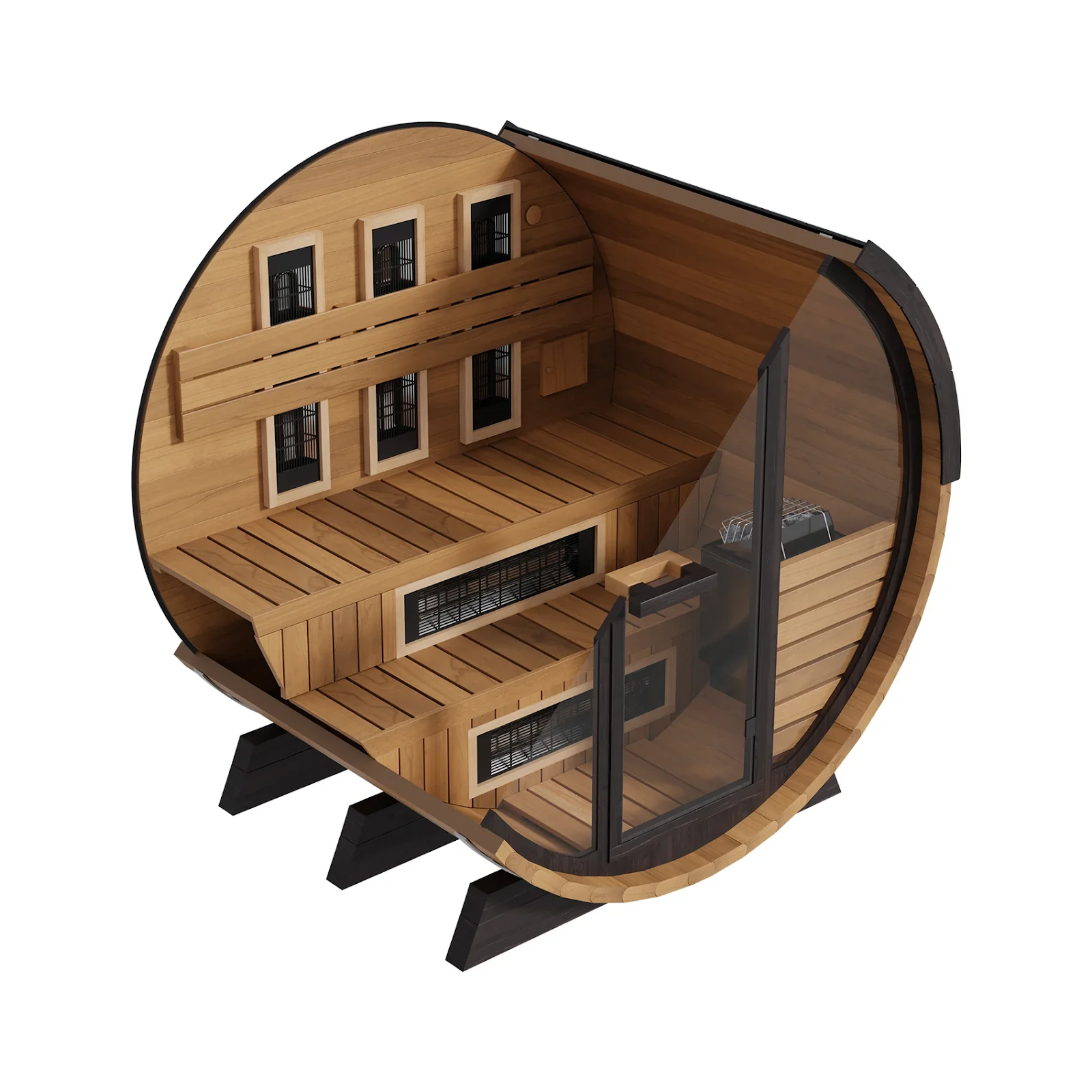
Poor ceiling designs allow the löyly pocket to develop in empty corners or above unused areas. Cathedral ceilings with peaks centered between benches, for example, draw the best air away from bathers. Barrel-vault ceilings that arch evenly across the space distribute heat broadly but fail to concentrate it where people actually sit. In both cases, valuable thermal energy is wasted, and you're left breathing average air while the richest steam lingers just out of reach.
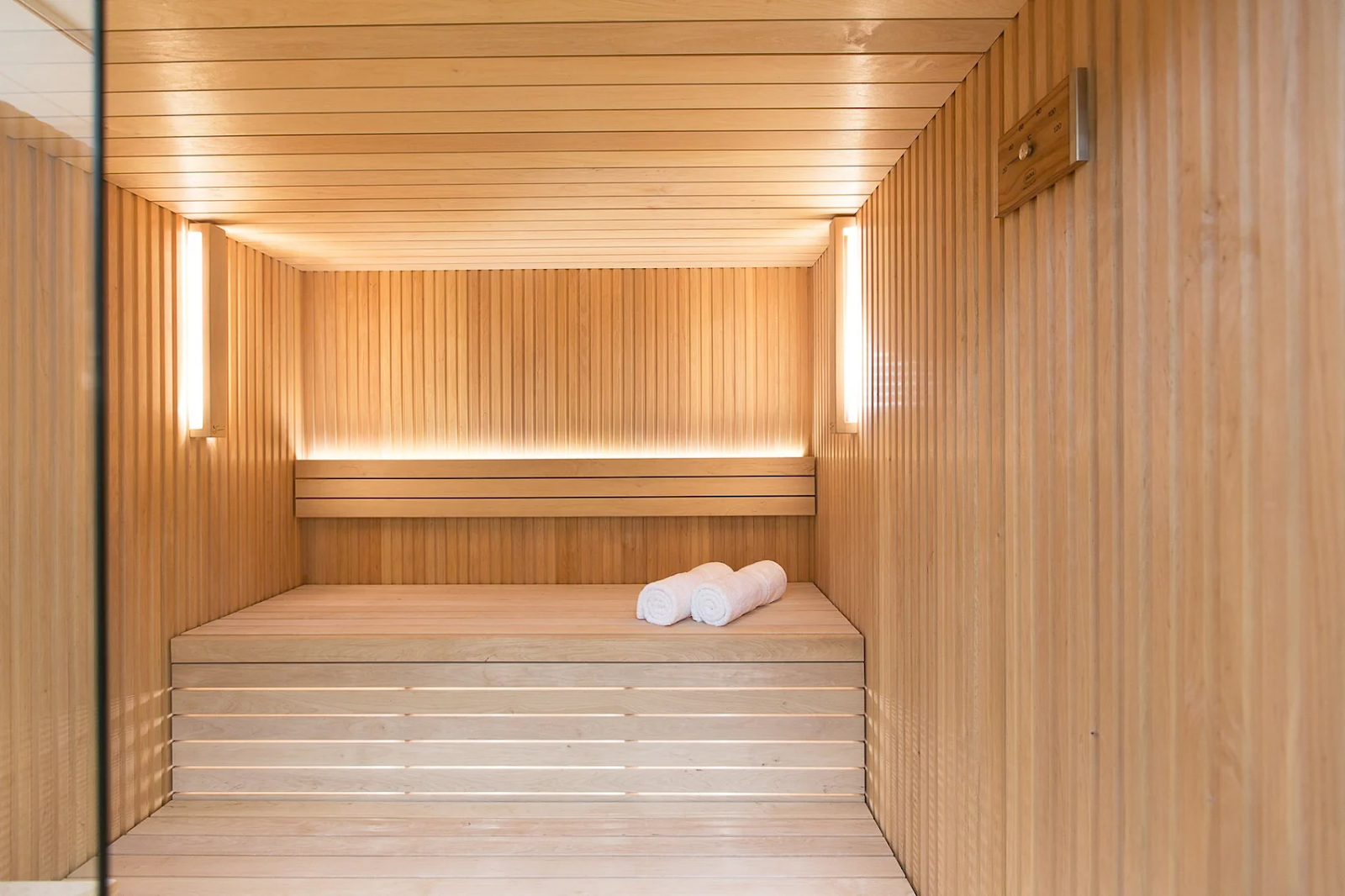
Flat ceilings offer a neutral solution. They neither actively guide heat toward bathers nor trap it in unusable spaces. With a flat ceiling, thermal stratification develops naturally based on bench height, heater placement, and ventilation. While not ideal, a flat ceiling can still support a quality sauna.
The most effective ceilings deliberately guide rising heat back toward the bathers. A ceiling that slopes downward from the back wall toward the heater, for instance, redirects convection currents over the upper bench. Similarly, gently curved ceilings that arc from the heater toward the primary seating area concentrate heat and steam where they're most beneficial. These designs work with natural convection to deliver the fullest löyly directly into your seating zone.
The exterior roof, by contrast, should be evaluated separately. Its primary job is protection, not thermal performance. A well-designed roof must shed water efficiently, remain weatherproof year-round, and prevent moisture intrusion. Flat or poorly sloped roofs can allow standing water, leading to leaks, insulation damage, and mold, especially in outdoor saunas.
4. Check out the ventilation system
Air movement and air quality are what separate mediocre saunas from exceptional ones. Finnish sauna design prioritizes ventilation above nearly every other thing, because airflow determines whether you're breathing fresh, oxygen-rich air or sitting in a heated box. Proper ventilation also softens the heat, creating a gentle, enveloping warmth rather than harsh, radiant intensity.
Without intake or exhaust vents to facilitate air exchange, oxygen levels decrease and stale air accumulates inside the sauna. This creates a very uncomfortable session – just imagine how it'd be!!
Wood-fired saunas manage ventilation naturally. The combustion process continuously draws fresh air into the firebox and exhausts it through the chimney, creating constant circulation. As long as the firebox loads from inside the sauna and includes an air intake, the system maintains excellent air quality with little additional design effort.
Electric saunas, by contrast, require a built-in ventilation system. Without combustion to drive airflow, these systems rely entirely on the builder's understanding of air movement. There are two major types of ventilation systems used in electric saunas:
Gravity-based ventilation:
These passive systems typically include a low-intake vent near the heater, a higher-exhaust vent on the opposite wall, and sometimes an adjustable ceiling vent for post-session drying. Circulation occurs as hot air rises and exits through the upper vents while cooler fresh air enters below, driven by temperature differences between inside and outside.
Mechanical-based ventilation:
Mechanical ventilation is the gold standard for electric saunas. These systems use fans to actively move air, either through exhaust-only setups or balanced intake-and-exhaust configurations. Continuous airflow maintains stable oxygen levels regardless of outdoor conditions, reduces temperature stratification, and promotes even heat distribution. Mechanically ventilated saunas allow deep, comfortable breathing throughout long sessions.
Conclusion
The Finnish sauna is a tradition that has sustained Finnish culture through the millennia. More than just a method of bathing, it reflects Finland's deep respect for nature, well-being, and balance in daily life. To understand the Finnish sauna is to understand that it is not defined by temperature alone, but by how heat moves, how air circulates, and how steam envelops the bather. When designed correctly, the sauna becomes a space for restoration, clarity, and connection, just as it has been for generations of Finns.