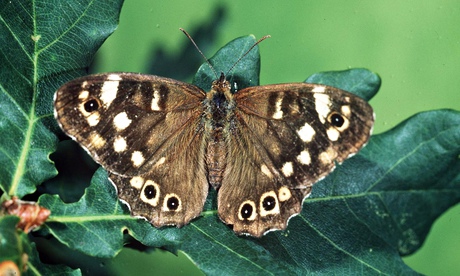
The sighting of a couple of speckled woods in autumn is an unremarkable event. But the two butterflies recorded in Essex are special: they are the 10 millionth record to be logged in a database stretching back to 1690.
The Butterflies for the New Millennium recording scheme is almost certainly the world’s most comprehensive insect dataset. The first butterfly recorded was a marbled white; the very latest were large and small white caterpillars which the custodian of this butterfly bible, Richard Fox, spotted in a tearoom garden while on half-term holidays this week in Devon.
Fox, a scientist for Butterfly Conservation, cannot help his recording habit (particularly since the iRecord Butterflies app was invented) and nor can a small army of mostly amateur naturalists who have created this great gift of data for scientists.
Speckled wood records were used in groundbreaking 1990s research which showed how butterflies are sensitive bellwethers of climate change. More recently, the data has shown that nature reserves are better for common butterfly species than the wider countryside: an obvious-sounding discovery, perhaps, but one with profound implications. It has been assumed that reserves established to protect a particular rarity would become pointless if climate change caused that species to depart; now it is clear they remain vital reserves for other species.
As the season draws to a mild close with red admirals still feasting on ivy flowers, it has been a disappointing year with a few exceptions, most pleasingly the small tortoiseshell revival. But in the long term, only the 10m-and-counting records will tell us how our butterflies, and the ecosystems they delineate, are faring.