The devil finds work. It is just not always easy to tell whose hands are the most idle. Barely 30 MPs, none of them members of the cabinet or shadow cabinet, turned up in the Commons for the debate on why Sir John Chilcot’s report on his inquiry into the Iraq war will be published at least five years later than promised. There may be little enough going on in Westminster right now as both parties concentrate on the election, but it is still far too much for many MPs.
Not that the Chilcot debate was a debate in any meaningful sense of the word as, come the final vote, there were no dissenters. Rather, it was a steady procession of MPs from all parties agreeing with each other that the delay in publication was unacceptably long. There was even the unnerving sight of former attorney general, Dominic Grieve, voicing support for George Galloway, though that could have been for the bit when the Respect MP said, “I could talk for hours. I usually do,” rather than his trademark polemic on how Tony Blair had duped parliament and had “fantastically, unbelievably and incalculably inflated the danger of fanaticism, extremism and terrorism”.
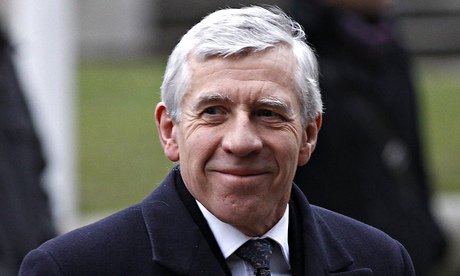
There were nuances of interpretation over what the delay meant, though. While most agreed the public would see it as a sign of an establishment cover-up, Jack Straw, the foreign secretary at the time of the Iraq invasion in 2003, offered another possibility. “There is an equal and opposite concern,” he said, “that they [the Chilcot inquiry] may feel obliged to respond to these pressures by conclusions more starkly drawn than the evidence would allow.”
The irony of a government minister who had been accused of taking the country to war on the basis of a sexed-up dossier accusing the subsequent inquiry for sexing up its own report into the government’s failings appeared to have passed him by.
But, having sewn the seeds of his future defence – if not of doubt, Straw remained in the chamber for the rest of the debate, doing his best to look unbothered, even when accused of lying by both Galloway and Labour’s Paul Flynn. If Straw has a guilty conscience, it does not seem to be troubling him unduly. À la recherche du guerre perdu.
With everyone having made sure to preface their speeches with the caveat that any discussion of Chilcot could only be unhelpful speculation until it was published, they all then felt at liberty to speculate to their heart’s content. “It was all the fault of the cabinet secretary, Sir Jeremy Heywood,” said David Davis. “No, it wasn’t,” replied Bernard Jenkin, an establishment man to the core. “Jezza is a member of the same club as me and a thoroughly decent cove. He would never do a thing like that.”
MPs were on much more secure ground when they could swap their own war stories. With the exception of Straw, all those present in the chamber enjoyed a good war and were happy to remind everyone of either how right they had been not to vote in favour of it or how deeply upset they had been at being misled. Sir Richard Ottoway was halfway through his own reminiscences of the Hutton report when his time was up. “I think I have only just scratched the surface,” he said plaintively. He meant the barrel.
While all this was going on, Norman Baker, the Commons’ leading conspiracy theorist – he remains convinced that David Kelly was assassinated by Tony Blair’s private hitman – thought he had detected another conspiracy. A conspiracy to prevent him speaking. Having failed to be called, he rushed up to the deputy Speaker to demand why not. The deputy Speaker immediately put him back to the bottom of his list.
Just before the end, though, Baker did get his chance. “I have a theory,” he said. “A theory which is mine...” Coming next week. How the Natural History Museum’s decision to get rid of Dippy the Diplodocus is all Chilcot’s fault.