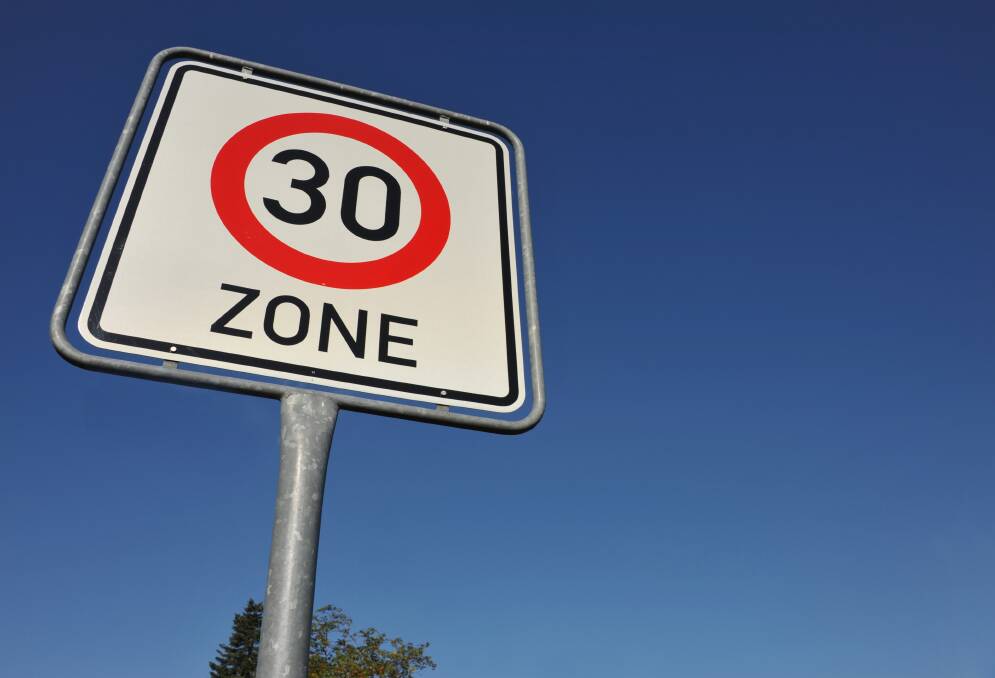
Some people have questioned if 30kmh speed limits are urgent and necessary, or are just a so-called "nanny state" policy.
In Newcastle, we're trialling 30kmh speed limits along the foreshore. NSW is one of five states and territories trialling or planning 30kmh speed limits.
30kmh speed limits on residential and shopping streets could reduce the Australian road death toll by 13 per cent, saving the economy $3.5billion every year.
Low-speed streets are also about creating more liveable cities, with low crime levels, more physically active citizens, increased social connectedness, increased spending in local businesses and lower levels of pollution.
Yet myths about 30kmh speed limits are misinforming public and political opinion. To outline the facts, we have busted five common myths.
Myth 1: 30kmh speed limits don't make a difference
Road trauma is the number one cause of death in school-aged children and kills more than 1100 Australians each year. Speed is the most common contributor to road trauma, more common than alcohol, drugs and fatigue.
Two-thirds of all NSW crashes occur in metro areas. In metro areas, 60 per cent of fatalities occur on local and collector streets with 50-60kmh speed limits.
The evidence is very clear, survival chance for a pedestrian being hit by a car jumps from just 10 per cent at 50kmh to 90 per cent at 30kmh.
To reduce serious injury risk, 40kmh speed limits aren't low enough. Reducing speed limits to 30kmh in high pedestrian zones, school zones and local traffic areas is urgently needed to reduce severe injuries.
Myth 2: 30kmh speed limits aren't popular
How supportive would you be of the local government reducing speed limits in neighbourhood streets to help create safer and more liveable streets for people? Well, according to a recent nationally representative poll, two-thirds of Australians say they are supportive.
The introduction of 30kmh speed limits around the world shows that popularity of 30kmh speed limits rapidly grows after they are implemented and residents begin to appreciate the many benefits of safer streets.
Myth 3: 30kmh speed limits will increase journey times
In urban areas, journey times are affected by more than the speed limit, such as traffic congestion and time spent waiting at traffic signals. For a typical journey to work, the difference between a 50kmh and 30kmh speed limit is less than a minute.
Safer and more liveable streets can decrease our reliance on the private car. By shifting private car trips to active and sustainable modes of transport, we can reduce congestion, and enhance population and environmental health.
Research from Transport for London has indicated that 20mph (30kmh) zones have no net negative effect on emissions due to improved driving style, e.g. smoother driving and less braking.
Myth 4: 30kmh speed limits are anti-motorist
Reduced speed limits are not anti-motorist and are not about banning cars or the ability to drive. 30kmh is a win-win-win, for street users, businesses and motorists, and major motoring groups agree.
Building on myth #3, there are even more reasons why reduced speed limits are not anti-motorist. Reduced speed limits can lead to fewer car crashes, in turn lowering insurance costs and time delayed in traffic from those crashes.
Myth 5: 30kmh speed limits are just so the government can gain more from fines
Speed limits are a low-cost tool in the governments' toolbox against road deaths. Of course, not everyone obeys speed limits, with two-thirds of Australians admitting to speeding. Speed enforcement and street design changes may also be needed in some cases to reduce driver speed and improve conditions for all street users.
Enforcement works and ensures credibility, because no single solution will work alone. For best results, state and territory governments will combine multiple tools to reduce speed, such as speed limits, public education, driver training, speed enforcement and street design.
Signposting
Not convinced? More myths to bust? Check out the Australian campaign 30please.org and the global United Nations Road Safety Week campaign #Love30 happening this week.
Our call to action for all state and territory governments is to urgently introduce 30kmh default urban speed limits. We call for streets that are safe, accessible, enjoyable and equitable for all. Building streets for life: it starts with 30kmh.