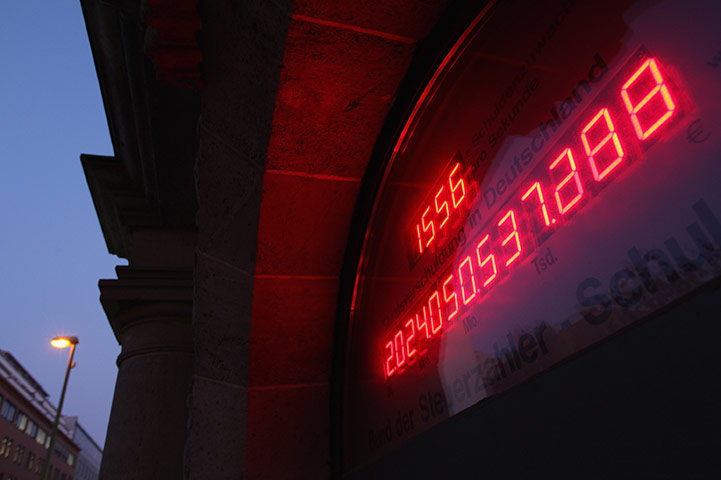
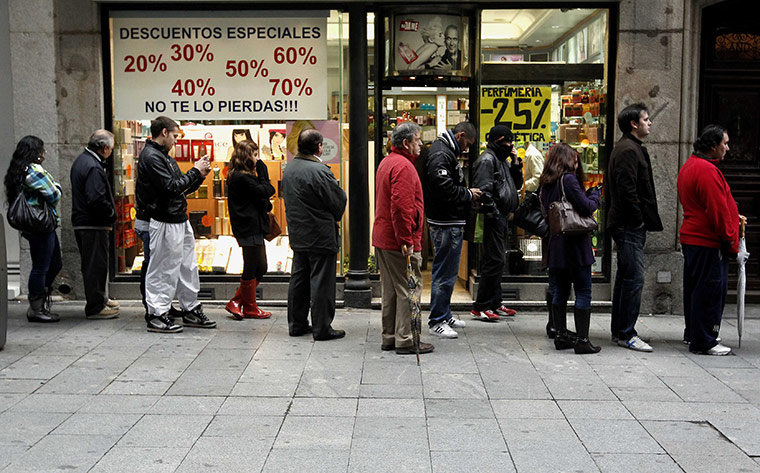
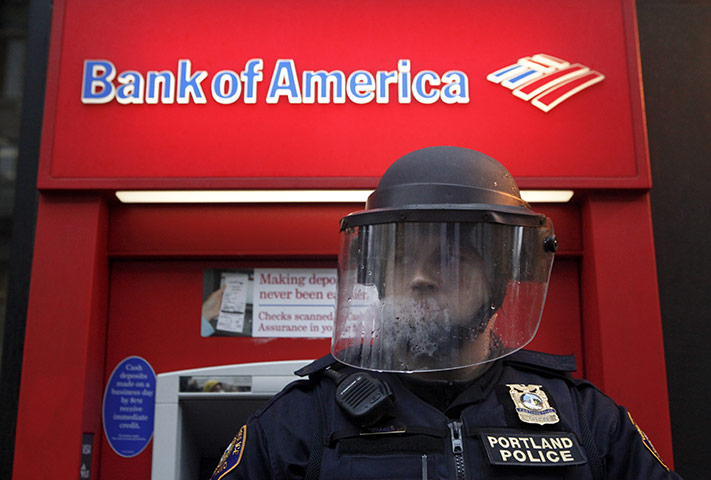
Global financial markets prepared for the euro's endgame after the sovereign debt crisis spread to Germany, the 'stability anchor' of the single currency, and investors shunned its government bonds. Europe's biggest economy suffered what analysts called a 'complete and utter disaster' as it managed to sell only two-thirds of its 10-year bonds at auction. 'It's a vote of no confidence in the entire eurozone,' one said. Stock markets slumped, the euro fell to a recent low and France came under renewed pressure after it emerged it could be forced to pump more emergency aid into rescued lender Dexia. Both countries were forced to deny reports that a €90bn restructuring plan for Dexia was being renegotiated. Picture: A debt meter, ostensibly showing the current level of the German national debt, reads over €2tn at the Federation of Tax Payers in Berlin, Germany. Photograph: Sean Gallup/Getty ImagesA landslide victory by Mariano Rajoy's People's party (PP) in Sunday's general election did nothing to stop Spain's debt problems worsening as the prime minister elect remained powerless to calm the markets. Spaniards were proud of having avoided an Italian-style government of unelected technocrats after they gave conservative Rajoy the go-ahead to introduce reform and impose further austerity. But commentators warned that he had only limited options. 'None of his predecessors have accumulated as much power as he will have,' said Jesús Ceberio, a former El País editor. 'But, paradoxically, none had such little room for manoeuvre.' Picture: People queue up to buy El Gordo Christmas lottery tickets in Madrid Photograph: Andrea Comas/ReutersAmerica announced stress tests for six big banks amid fears that the eurozone crisis had made the UK's financial system more vulnerable to a major shock than at any time since Lehman Brothers collapsed in 2008. The US Federal Reserve said Bank of America, Citigroup, Goldman Sachs, JPMorgan Chase, Morgan Stanley and Wells Fargo would be tested for a global market shock. This test will be based on price and interest rate movements similar to those in 2008, and also on 'additional stresses related to the ongoing situation in Europe'. Picture: A policeman in riot gear defends a Bank of America branch as protesters march past in Portland, OregonPhotograph: Natalie Behring/Getty Images
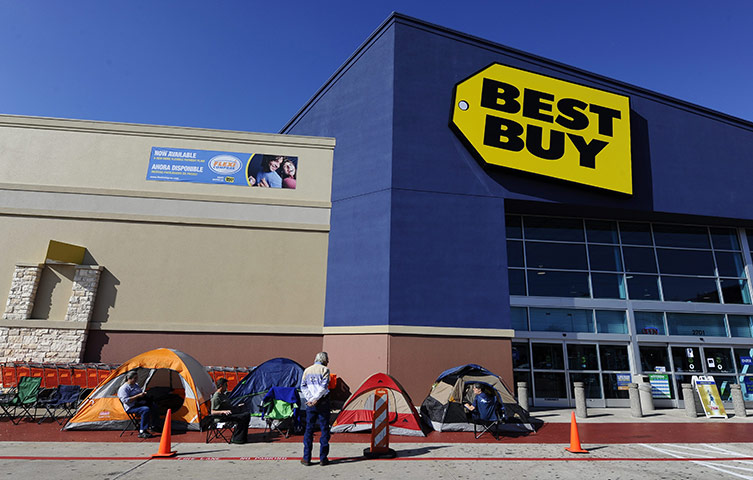
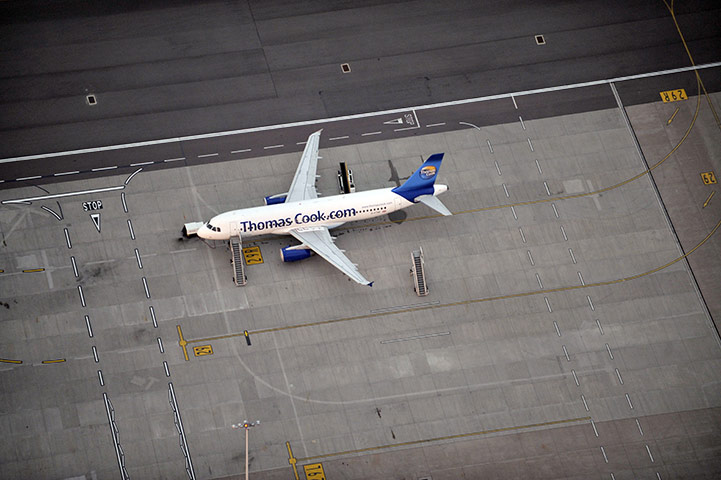
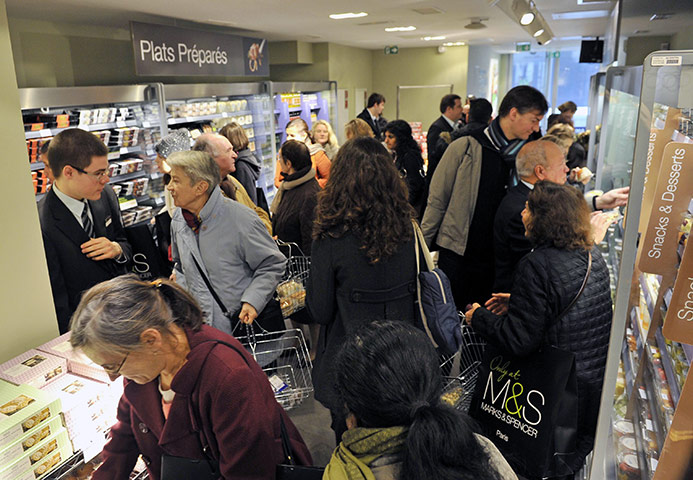
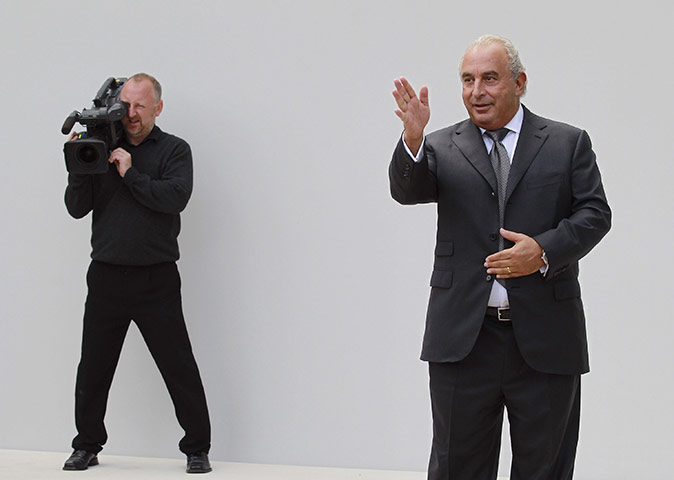
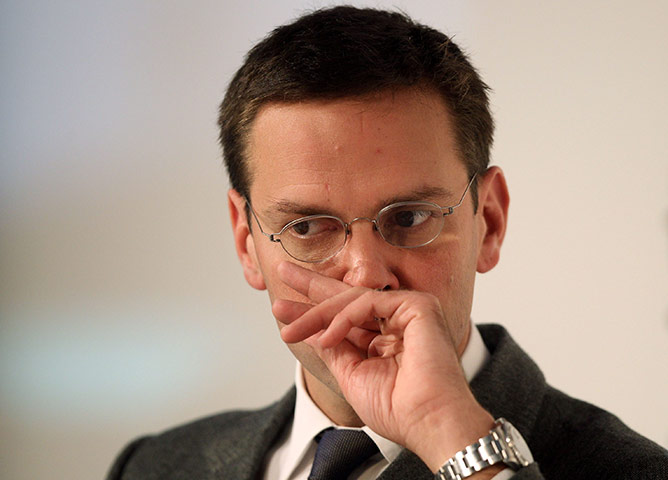
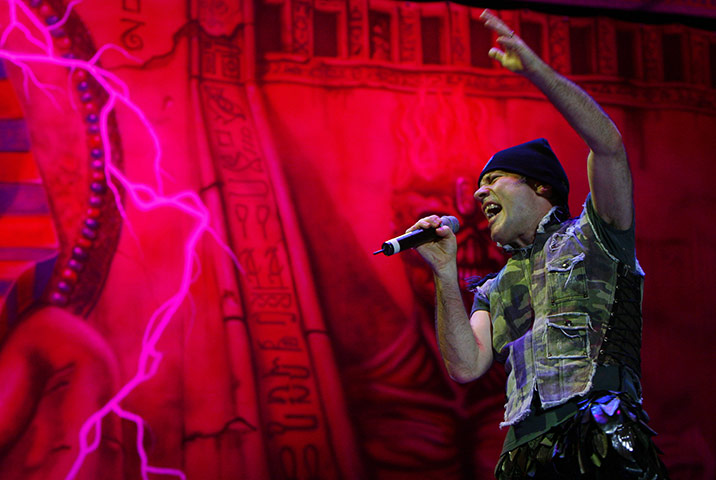
Growing discontent about the gulf between rich and poor was underlined by official figures showing the gap between Britain's highest and lowest paid workers has widened dramatically over the past year. As public sector workers prepare for the biggest strike since the Winter of Discontent in 1979, the Office for National Statistics (ONS) revealed that workers in the worst paid jobs – such as dinner ladies, hairdressers and waiters – have seen their pay fall sharply in real terms, fanning fears about families' ability to cope with soaring food and energy bills. The bottom 10th of earners saw their pay creep up just 0.1% between 2010 and 2011 while the top 10th saw their pay grow 18 times fasterPhotograph: Darrin Jenkins/AlamyMeanwhile it emerged that Bank of England policymakers voted unanimously to press ahead with the latest £75bn round of quantitative easing earlier this month, amid fears that the eurozone crisis could spark a new credit crunch in the UK. Minutes of this month's monetary policy committee meeting showed that some of its nine members warned that more quantitative easing could be necessary 'in due course'.Photograph: Christopher Furlong/Getty ImagesLego Ninjas, Let's Rock Elmo, iPads, Kindles, 'shape shifter'' clothes to hide all that Thanksgiving turkey and cut-price 3D TVs for next month's holiday blowout: these are the hot items experts say 150 million Americans will be fighting for – sometimes literally – on Black Friday. Marking the traditional start of the festive shopping season, it is so-called because it's the day retailers hope their accounts will move from the red into the black – and the annual shopping bacchanal has even bigger hopes pinned on it this year. Picture: People sit outside the Best Buy store in Mesquite, Texas waiting for Black FridayPhotograph: Larry W. Smith/EPAThomas Cook is reassuring holidaymakers it is business as usual for its flights, hotels and travel agents after the debt-laden tour operator admitted it was in urgent talks with bankers to raise a further £100m – just a month after it last asked its lenders for £100m. The holiday company, which was founded in 1841 and now provides 7 million breaks for British travellers every year, already owes nearly £1bn to lenders including 17 banks and its debt could top £1.5bn by the end of the year. The value of the company plunged by 75% on the stock exchange making it worth just £87m. In a message on Twitter, the embattled tour operator said: 'Our holidays are fully protected and can be booked with complete confidence.'Photograph: Ben Birchall/PAA decade after it shut up shop in France and Europe – a decision it would come to regret – Marks & Spencer is returning to Paris with the opening of a new flagship French store on the world's most famous avenue, the Champs Elysées. It had been a long 10 years of rumour, speculation, emails, cajoling and petitions from British expats who missed the comforts of their former homeland largely unavailable in France: Earl Grey tea, streaky bacon, salt and vinegar crisps and even, yes, pork pies. Well before the doors opened, however, it was clear the Brits abroad were going to be disappointed. The tea, bacon, crisps, pies, along with such peculiarly British specialities as crumpets, scotch eggs and sausage rolls were there. But with the provisions squashed into barely 100 sq metres of the 1,400 sq metre store, it was clear something had had to give, and that something was the food Photograph: Adrian Brooks/ImagewiseThe seriousness of the high street downturn was laid bare as boss Sir Philip Green reported a near 40% drop in profits at his Topshop-to-BHS fashion empire and warned of plans to shed 250 UK stores. Profits before exceptionals at Arcadia tumbled from £213.2m to £133.1m in the year to 27 August, a decline of nearly 38%, with Green cautioning that the mild weather had bought no respite in the new financial year. 'The warmest October and November on record have made autumn trading much tougher,' he said. 'Winter goods are tough'Photograph: Olivia Harris/ReutersPressure continued to mount on James Murdoch before next week's annual meeting of BSkyB, after the Labour MP Chris Bryant wrote to 40 major shareholders urging them to vote against his re-election as chairman of the satellite broadcaster. Bryant, who intends to attend the annual meeting, told major investors that he was 'deeply concerned that the re-election of James Murdoch as chairman would do serious damage to BSkyB and to the overall reputation of the UK's standards of corporate governance'. He is concerned that Murdoch may have misled parliament about what he knew about the phone-hacking affair and reckons investors share his concernPhotograph: Miguel Villagran/Getty ImagesIron Maiden frontman and pilot Bruce Dickinson has vowed to resurrect a UK airline which has gone into administration. In the past, Dickinson flew for Astraeus Airlines and this week he captained its last flight, flying a Boeing passenger jet from Jeddah in Saudi Arabia to Manchester. The singer is forming a plan to save the airline, which was owned by an Icelandic-based travel group but is based at Crawley in West Sussex. It is understood that the business would continue to work by leasing planes to major carriers to cover routes when needed, as it did previously. Picture: Bruce Dickinson during an Iron Maiden concert in Costa Rica Photograph: Monica Quesada /Reuters
Sign up to read this article
Read news from 100’s of titles, curated specifically for you.