Get all your news in one place.
100's of premium titles.
One app.
Start reading
The Independent UK
The Independent UK
Business
Ben Chapman

Business news - live: Pound gives up gains after DUP says it will oppose freshly agreed Brexit deal

The pound soared against the dollar and euro after the EU and UK agreed a Brexit deal this morning.

Sterling surged 0.9 per cent to $1.29 after Jean-Claude Juncker confirmed that the two sides had reached an agreement after talks went down to the wire. However, the pound later gave up the gains after Boris Johnson's DUP allies quashed his hopes of progress by declaring they will oppose the plan. 

Elsewhere, WHSmith agreed a $400m deal to buy US travel retailer Marshall and RBS boosted its Brexit contingency fund to £8.2bn.

Welcome to The Independent's live coverage of business and economics events.
 
WHSmith has agreed to buy US retailer Marshall for $400m, Asda has cut fuel prices and the pound is down against the dollar after the DUP said it could not support Boris Johnson's Brexit deal as it stands.


Domino's UK to quit four overseas markets amid falling sales
 
The British arm of Domino's is to exit Iceland, Norway, Sweden and Switzerland because of declining sales.
 
"We have concluded that, whilst they represent attractive markets, we are not the best owners of these businesses. The board has therefore decided to exit the markets in an orderly manner," said outgoing chief executive David Wild.
 
In the UK, Domino's is in the midst of a long-running battle with store operators who are angry at the declining share of profits they take.
 
Mr Wild said: "Normal working practices continue to be impacted by our franchisee dispute.
 
"As we said at our interim results, this situation is complex and we expect a resolution to take time, certainly into 2020. We remain committed to working with our franchisees to agree sustainable win-win solutions."
 
 
WHSmith snaps up US retailer
 
WHSmith has continued its march into the US by snapping up North American retailer Marshall Retail for $400m (£3122m).
 
Bosses said they had first started watching the business around four years ago when they made an active decision to pursue the 3.2 billion dollar US travel market.
 
The previous owners of Marshall launched a sales process over the summer as WHSmith came out on top.
It means the retailer now has a further 170 stores in North America, including 59 in airports, with the remaining in busy tourist hotspots including Las Vegas.
 
Incoming chief executive Carl Cowling, who starts the new job in November, said: "We've known the business for about four years. We've been watching the market for years trying to think of the best ways to break in."
 
The deal comes a year after WHSmith bought travel accessories business InMotion for £155m.
 
Press Association
Asda cuts fuel prices
 
Asda is cutting petrol and diesel prices by 2p and 3 p respectively.
 
Motorists will pay no more than 121.7p per litre for petrol and 125.7p per litre for diesel, Asda said.
 
The RAC said other fuel retailers were failing to pass on falling wholesale prices to drivers.
 
Simon Williams, fuel spokesperson for the RAC, said: "Drivers are losing out badly, paying around 7p a litre more for petrol than they should be.
 
"This means a driver filling up a 55-litre family car is paying £3.85 too much.
 
"For some reason, in the last year or so our biggest retailers haven't been as transparent with their pricing as they have been in the past, which means motorists all over the country lose out as a result of them taking more margin than they have previously."
Pound latest
 
-0.2847% against the euro - €1.1542
 
-0.2758% against dollar - $1.2783
Three mobile customers are having difficulty getting signal.

Three has admitted on Twitter that there is an "issue" affecting "some users" and that it was working to solve it, after initially denying there was any network-wide problem.

"We do have an issue which is impacting voice and data services for some customers at the moment," it wrote to affected users that complained to its Twitter account. "We're working hard to get everything back to normal as soon as we can."

It had initially been suggesting that the problem is with individual devices or SIM cards – despite the fact the problem is being reported everywhere.

No error message or alert was given about any outage, leaving people unable to get an internet connection, text messages or phone calls, and without any notification that there is a problem.

Three has completely stopped working

No details are available on provider’s website, main Twitter page or its support account
 
BREAKING: A senior EU official has said there will be no Brexit negotiations with Boris Johnson at the two-day leaders’ summit beginning today in Brussels, according to Reuters.
 
The bloc has not yet received the text of an agreement, the official said.
UK retail sales flat in September
 
UK retail sales were flat in September compared with August, a slightly better performance than a 0.2 per cent dip forecast by economists. Compared with a year earlier, sales rose 3.1 per cent.
 
On the three-month measure, which strips out some of the typical volatility in the figures, sales inched up by 0.6 percent from the April-June quarter.  
RBS boosts Brexit contingency fund by a third
 
RBS has increased a support fund for small businesses by more than a third to help them deal with Brexit disruption.
 
The bank - which has a less-than-stellar reputation with Britain's SME's after it was found to have pushed many to the wall and sold off their assets to repair its own balance sheet - has added an extra £2.2bn to the fund, taking it to £8.2bn
 
The state-backed lender said it had already committed £5.6bn of the fund.

Paul Thwaite, commercial banking managing director at RBS subsidiary NatWest, said: “We are very much open for business and want to be the bank that supports the UK’s businesses through this uncertain time.”
“Retail sales in September show a small degree of growth, despite very poor weather for much of the month. This growth is despite the turbulent times and uncertain future. It appears that consumers are starting to stockpile in anticipation of a no-deal Brexit,” said Duncan Brewer, retail expert at Oliver Wyman.
 
“We expect consumers to tighten their purse strings in the coming months. Our research shows that households will be worse off by £810 annually in the case of a no-deal Brexit, even including the government’s planned no deal tariff schedule.”
 
He added: “As retailers have been trying to weather the Brexit storm, they haven’t been able to make structural changes that are needed for long-term survival on an ever-more competitive high street.”
More on those retail sales figures.
 
Lisa Hooker, consumer markets leader at PwC, says they are better than they first appear.
 
“While many will focus on the slight decline in retail sales reported by the ONS in September vs. August, looking behind the headlines, retail sales actually increased by a respectable 3.6% year-on-year excluding petrol.
 
“Indeed, there has been growth, albeit modest, in every major category of retail, confirming what British consumers told us in our own consumer sentiment survey last month, where, despite an 8 point decline in sentiment since the Spring, we found that consumers were still more optimistic than at any point during the last recession or recovery period."
 
Moneysupermarket found comfort in its energy division in the last three months as fears that Ofgem's new price cap would make customers less likely to change energy supplier, proved false.
 
The company said that revenue from its home services division, which is mainly includes energy, rose 21% compared to the same period last year, to £17.7 million.
 
Alongside volatility in its insurance segment, which represents nearly half of all sales, the energy boom helped lead to an overall revenue rise of 4% to £100.9 million.
 
Meanwhile, its money division "underperformed due to continuing challenges in product availability", the firm said.
Banks and other financial services have not offered significantly better deals via the site, meaning fewer people switch to a different product.
 
Press Association
Number of UK businesses in significant distress up 40% since Brexit referendum

The number of UK businesses in significant financial distress has soared 40% in the three years since the EU referendum, according to a report.

Insolvency specialists at Begbies Traynor said 489,000 companies are now in significant distress, with property, construction, retail and the travel sectors suffering hardest - an increase of 22,000 since the same time last year.

It comes at a difficult time for businesses, with many complaining that they are being left in the dark over what happens next in the Brexit process.

Several big-name companies have failed in recent years, including Toys R Us, Carillion and Thomas Cook, with others said to be struggling as big spending decisions are put on hold.

Julie Palmer, partner at Begbies Traynor, said: "With a considerable increase in the number of businesses suffering significant financial distress in the last three years there is growing frustration among businesses that they cannot plan for the future and the whole economy is lagging as a result.

"Much investment is on hold as businesses have their hands tied by not knowing what the state of play will be post-Brexit and whether the agreements or contracts they currently have in place will still be valid following the expected withdrawal, which is contributing to stifled growth nationwide."

Press Association

BREAKING: Brexit deal is now done, says Jean Claude-Juncker
 
Jean Claude-Juncker has confirmed the reports: a Brexit agreement has been reached.
 
Boris Johnson faces uphill struggle on new Brexit deal as talks go down to the wire

Boris Johnson faces an uphill fight to keep his pledge to leave the EU at the end of the month.

Negotiators failed to strike an agreement on Wednesday despite working overtime in Brussels, although leaders still hope to be able to scrutinise a final accord at the summit in the EU capital.

The prime minister could yet be forced into an extension by parliament after EU member states said it was now too late for leaders to formally sign-off the plan in Brussels. If no agreement is in place by Saturday – when parliament will meet for an extraordinary weekend sitting – the prime minister by law has to ask for a delay.

Boris Johnson on brink of new Brexit deal

Prime minister could still be forced to extend Article 50 after deadlines missed
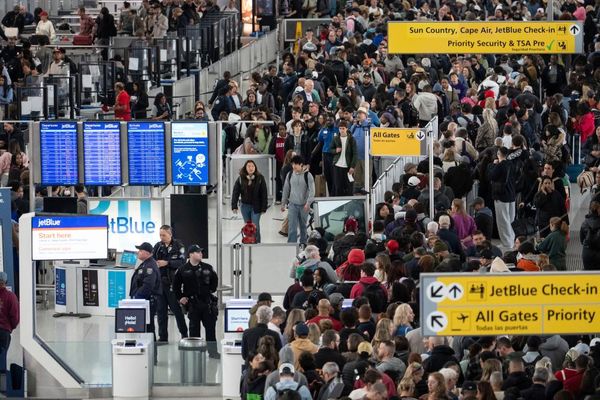
Pound jumps after Brexit deal agreed
 
Sterling is up 0.9 per cent so far against the dollar to $1.29, after the UK and EU agreed a Brexit deal.
 
DUP does not back Brexit deal
 
The prospect (or lack thereof) of a Brexit deal is driving all of the movements in the pound at the moment.
 
 
And the DUP is not behind the deal. If Johnson had enough MPs backing the deal, the pound would no doubt have risen further than it has so far.
 
Marc Ostwald, global strategist and chief economist at ADM Investor Services International, says: “This takes no deal off the table.”
 
But he notes that the pound had already strengthened substantially in the past week on hopes of a Brexit deal, limiting today’s further rise.
 
Doubts over whether the deal that has just been agreed will be approved by UK parliament are also keeping a lid on the pound.
 
“What we really need is some more clarity on how the parliamentary arithmetic is going to work out, so it’s going to stay choppy for the time being,” he said.
Ministers will have to decide which companies to save and which to let go after no-deal Brexit, says report
 
If the UK crashes out of the European Union without a deal at the end of the month, the government will be flooded by so many appeals for help from affected businesses that it will have to decide “who to save and who to let go”, a new report has warned.
 
The study by the Institute for Government said “no amount of preparation” by the government can eliminate the risks. Assessing ministers’ efforts to prepare the UK for no deal, it cited boxer Mike Tyson: “Everyone has a plan until they get punched in the mouth.”
 
Thousands of businesses can be expected to be hit by an unpredictable range of problems ranging from the imposition of new tariffs and trading barriers to congestion at ports and airports, falling demand, a collapse in sterling, tighter credit conditions, and changes to the rules on the movement of data and people.

Ministers will have to decide which companies to save and which to let go after no-deal Brexit, says report

Responding to efforts to prepare for no deal, think tank quotes Mike Tyson: ‘Everyone has a plan until they get punched in the mouth’
Sign up to read this article
Read news from 100's of titles, curated specifically for you.
Already a member? Sign in here
Related Stories
Top stories on inkl right now
One subscription that gives you access to news from hundreds of sites
Already a member? Sign in here
Our Picks
Fourteen days free
Download the app
One app. One membership.
100+ trusted global sources.