DAVOS, Switzerland -- The annual meeting of the World Economic Forum ended here Friday. Many of the national and corporate leaders who attended the four-day conference expressed concern over U.S-China trade friction and the breakdown of multilateral cooperation.
Amid signs of a global economic slowdown, the world's leaders will be pressed to come up with specific actions to improve the situation.
Optimism fades
German Chancellor Angela Merkel expressed concern about the "America first" attitude of the United States and similar tendencies elsewhere, and emphasized the importance of maintaining multilateral frameworks.
"We should think about our national interest while taking the interests of other countries into consideration, and from that create win-win situations that are the precondition for multilateralism," she said in a speech Wednesday.
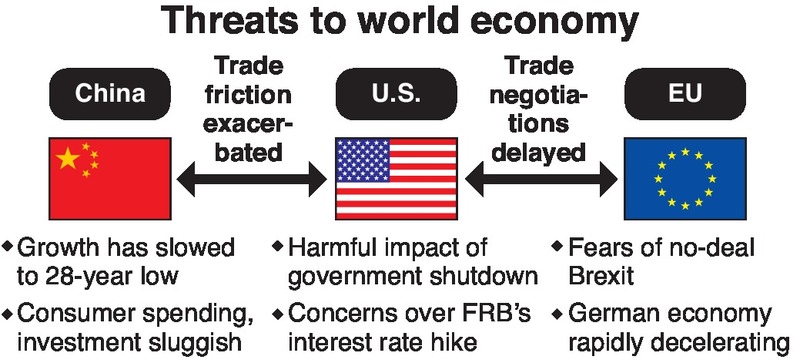
Compared to last year's conference, which was dominated by optimism over the global economy, many of this year's attendees pointed to risks. These include the tit-for-tat over tariffs that the United States and China have engaged in, and the growing possibility Britain will leave the European Union without an agreement, a so-called hard Brexit.
The major accounting firm PricewaterhouseCoopers released the results of a survey of CEOs of major global companies to coincide with the Davos meeting.
About 30 percent of respondents said they expected a slowdown in the global economy in the following one-year period, six times the number in last year's survey.
International Monetary Fund Managing Director Christine Lagarde said: "Does that mean a global recession is around the corner? No. But the risk of a sharper decline in global growth has certainly increased."
Trump absent
Despite attending last year, both U.S. President Donald Trump and British Prime Minister Theresa May were absent from Davos this year, the former due to a government shutdown and the latter to deal with Britain's exit from the EU.
Neither did Chinese President Xi Jinping attend. The Chinese economy grew at a rate of 6.6 percent in real terms in 2018, the slowest rate of growth in 28 years.
The absence of leaders from major nations gave the impression that amid a rising sense of crisis, the world is without anyone at the helm.
Japan raises profile
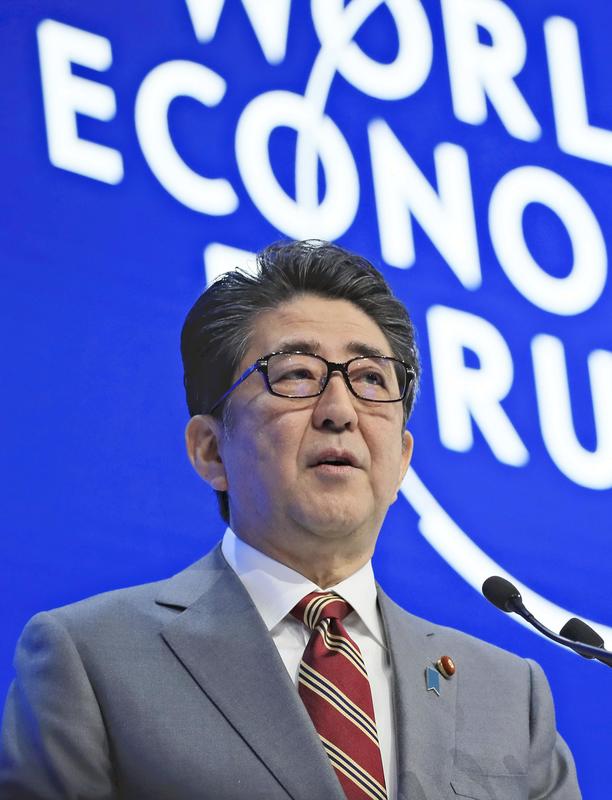
In contrast, Prime Minister Shinzo Abe, attending for the first time in five years, made his presence known.
He praised the Trans-Pacific Partnership and Japan's economic partnership agreement with the EU in a keynote address Wednesday.
"Now, later this year, in June, in Osaka, Japan, we will be hosting this year's G20 Summit. Let us make it a chance to regain optimism for the future. I call on all of you to rebuild trust toward the system for international trade," Abe said.
Japan has maintained good relations with the United States and its long-strained ties with China have started to improve.
"Better relations between the United States and China would go a long way to resolving the anxieties of managers and others around the world. Japan should show leadership and help patch things up between the two countries," Suntory Holdings Ltd. President Takeshi Niinami said.
Read more from The Japan News at https://japannews.yomiuri.co.jp/