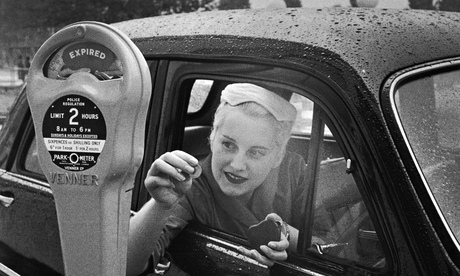
That familiar piece of British street furniture, the parking meter, is on its way out on the south coast. Brighton and Hove council has taken the first step towards scrapping the cash-for-parking system in favour of phone payments, and is to get rid of half of its coin meters immediately.
The council estimates it will save £250,000 and transport councillor Ian Davey insists: “It’s actually a lot easier than messing about getting the right change. You can also top up your parking time remotely if you need to stay longer, which is a lot easier than walking back to the car.”
With buses in London no longer accepting cash, work canteens and vending machines moving rapidly towards being card-only, and even schools looking for parent payments for special events to be made online, it could well seem that the days of British coinage are numbered. There is even an unemployed man who reportedly begs in Mayfair and offers a chip and pin machine to those who don’t have any spare change.
Industry body the Payments Council believes we are on track for 2015 to be the first year in which we spend more via cards and other non-cash payments than we do using the “real money” of notes and coins.
The forecast is based on the fact that cash transactions per year have been fairly flat whereas non-cash is steadily increasing. In 2011 there were 20.6 billion cash transactions versus 16.9 billion non-cash. The estimate for 2014, which will be confirmed in May, is for 19.4 billion cash and 19.2 billion non-cash exchanges, but 2015 is expected to see non-cash transactions surge to 19.9 billion compared with 19.0 billion in cash.
Mark Bowerman of the Payments Council said: “We’re not predicting the end of cash. It’s about giving people more choice really. It used to be that at some places you just couldn’t pay by credit card. Now there are some places where you can’t use cash, but I don’t think taking away that option is helping.
“But there are far more options in general about how you pay, and there’s still a ceiling of around £5 where we’re more comfortable using cash. Anything over that and we’re more comfortable using cards. Cash isn’t going to disappear. We’re a long, long way from a cashless society.”
Nevertheless mobile payment systems are developing at a dizzying pace, with Apple, Google, Samsung, PayPal and others all scrambling to launch systems and secure a slice of a growing market.
Cash is used for day-to-day purchases by virtually everyone, and for around 3.5 million people is the only payment method they use. Cash-only buyers tend to be on low incomes and in receipt of benefits, and cash is often seen as supporting careful budgeting: the tangibility of notes and coins means people know exactly how much they have available to spend.
The Microsoft co-founder and philanthropist Bill Gates has recently been giving speeches pushing the idea of a “digital currency” for developing countries, leading to criticism that it would only force the poor into dependence on banks that have been notoriously unwilling to accept them as customers for years.
The highest users of cash in the UK are students, older people, and those with a disability. A survey last year by Citibank into what method of payment was used for small purchases found that just half of people in their 50s said cash, while among the under-30s just 30% said they would use cash.
But, especially for poorer people, cash remains essential, according to John Howells, chief executive of the Link cash machines network. He pointed out that the UK now has 69,000 ATMs, up 58% from the number we had in 2003, although poverty campaigners say that a disproportionate number of the 28% of ATMs that charge people to access their money are in deprived areas.
“Cash is a vital part of the way we lead our lives,” said Howells. “It’s certainly going to endure, and its use is especially important for lower-income groups and is significant from a financial inclusion perspective.”
He forecasts that we will still be spending £690m a day in cash in 2020 – even if, as seems likely, we won’t be feeding any of it into parking meters.